Patients across Queens, Elmhurst, and Jackson Heights love the life-changing body results they achieve with GLP-1 medications such as semaglutide, retatrutide, and newer combination therapies. But many are surprised by how much their face changes along the way.
Rapid weight loss doesn’t affect the face the same way it affects the body. While body fat often reduces gradually, facial fat pads shrink quickly, especially in the cheeks, temples, and under-eyes. The result can be a tired, hollow, or prematurely aged appearance—even while your health is improving.
This is why so many GLP-1 patients later search for solutions the moment they notice these changes—often wishing they had acted sooner.
This guide explains what GLP-1 patients wish they knew earlier about facial changes and how fillers, fat grafting, and surgical options can help restore natural facial balance.
1. Facial Hollowing Happens Fast—Sometimes Within Weeks
The most delicate areas of the face lose volume first:
- Cheeks
- Under-eyes
- Temples
- Jawline
Common early signs include:
- Sunken or tired-looking eyes
- Sudden visibility of wrinkles
- Loss of cheek fullness
- Shadows around the mouth
- A sharper—but older—appearance
Why this happens: GLP-1 medications cause fat cells to shrink rapidly. Facial fat pads are small and structural, so when they deflate, the skin cannot tighten fast enough—creating hollows and shadows.
If you are still deciding how to approach weight loss, you can learn more about the medical weight loss program and how facial changes can be planned for along the way.
Leva Medical • Queens, NY
Want help losing weight safely?
Dr. Jean-Paul Leva and our team can tell you if it is right for you. Learn more about our medical weight loss program.
Book a consult →2. It’s Not Aging—It’s Structural Volume Loss
Many patients panic and believe they’ve “aged overnight.”
The truth is far more reassuring:
You’re not aging—you’ve lost the structural support beneath your skin.
That’s why the change feels dramatic but reversible. Facial volume loss is:
-
Predictable
-
Treatable
-
Preventable
Once volume is restored, patients are often shocked by how quickly their face looks refreshed again.
This is the same principle behind many high-profile facial rejuvenation cases people search for online—such as Kris Jenner face lift before and after discussions. The difference? GLP-1 patients can often achieve natural results without aggressive surgery when treated early.
3. Early Treatment Makes Everything Easier
Patients who address facial changes early benefit from:
-
Fewer syringes or smaller fat-grafting sessions
-
Less risk of sagging over time
-
A more natural, balanced look
-
Avoidance of an “overfilled” appearance
Many GLP-1 patients consider treatment when facial changes become noticeable but before deeper laxity sets in.
4. Fat Grafting Offers Natural, Long-Lasting Volume After GLP-1 Weight Loss
Fat grafting is a natural option for facial hollowing after rapid weight loss.
Ideal for:
-
Cheeks
-
Deep under-eyes
-
Temples
-
Jawline support
Why patients prefer it:
-
Uses your own fat
-
Soft, natural texture
-
Long-lasting improvement
-
Restores youthful proportions—not puffiness
Because it uses your own tissue, fat grafting is a common choice among GLP-1 patients. Like any procedure, it carries risks, including swelling, bruising, asymmetry, lumps, and partial loss of the transferred fat, so a consultation is the place to discuss whether it suits you.
5. Fillers Offer Fast, Subtle Corrections
For patients wanting immediate improvement with minimal downtime, fillers remain an excellent option.
Common treatment areas:
Fillers restore structure quickly and can be combined with fat grafting for a layered, natural result.
6. The Neck and Jawline Change Too
GLP-1 weight loss often reveals lower-face concerns, including:
-
Early jowling
-
Loose neck skin
-
Submental fat pockets
-
Loss of jawline definition
Effective solutions include:
-
Neck liposuction
-
Lower-face tightening
-
Jawline fillers
-
Structural fat grafting
The goal isn’t to look “tight”—it’s to look fit, healthy, and proportionate.
7. You Don’t Need to Wait Until Weight Loss Is Finished
One of the biggest regrets patients share is waiting too long.
You can start treatment when:
-
You notice hollowing
-
Your weight stabilizes—even temporarily
-
Your face looks tired or imbalanced
Early intervention protects long-term facial structure and keeps your appearance aligned with how good you feel.
Planning Your Facial Restoration After GLP-1 Weight Loss
Every face loses volume differently, so a treatment plan should be built around your anatomy, your weight-loss stage, and your goals. A consultation is the right place to review which areas have changed, whether fillers, fat grafting, neck liposuction, or a combination makes sense, and what recovery may look like for each option.
It also helps to understand the risks before you decide. Fillers can cause swelling, bruising, tenderness, lumps, or asymmetry. Fat grafting can cause swelling, bruising, asymmetry, irregularities, and some loss of the transferred fat over time. Liposuction can cause swelling, bruising, numbness, contour irregularities, and scarring. Discussing these openly helps you set realistic expectations.
The aim is a face that looks lifted, refreshed, and confident—never overdone.
Related services:
Frequently Asked Questions
Do all GLP-1 patients develop “Ozempic Face”?
Not everyone, but many people experience some degree of facial volume loss, especially with rapid weight loss.
Is fat grafting better than fillers?
Each has a role. Fat grafting offers soft, long-lasting volume using your own tissue. Fillers are suited to faster, subtle corrections. A consultation helps determine which fits your face.
Can facial changes reverse naturally?
Usually not. Once facial fat pads shrink, volume generally needs to be restored to regain fullness.
When should I treat facial hollowing?
Many patients consider treatment as soon as changes appear or once weight stabilizes, since addressing hollowing earlier often makes correction simpler.
Can fillers and fat grafting be combined?
Yes. Many patients benefit from a combined approach for natural balance.
About Leva Medical
Leva Medical has offices in Queens (94-06 59th Ave, Suite E9, Elmhurst, NY 11373) and in Northport, Long Island (320 Laurel Rd, Northport, NY 11768).
Call (718) 699-9737 to book a consultation with our board-certified doctors.
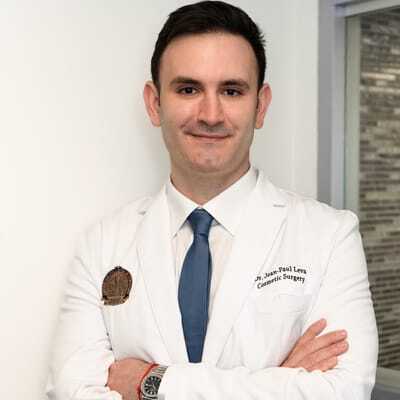
Dr. Jean-Paul Leva
Dr. Jean-Paul Leva, FACS is board certified in cosmetic and general surgery. Dr. Jean-Paul Leva, FACS obtained his Doctor of Osteopathic Medicine degree from ...