Introduction
Few transformations have sparked as much conversation as Kris Jenner’s facelift. The “momager” of the Kardashian family has been open about her cosmetic enhancements, and her refreshed, youthful look has become a common reference point for people thinking about facial rejuvenation.
Many people mention Kris Jenner when describing their facelift goals: lifted, elegant, and natural. Here is what a facelift does, which techniques exist, what recovery usually involves, which risks to know about, and how a similar refreshed look may be approached.
Key Takeaways
- Kris Jenner’s facelift shows what is possible with modern facial rejuvenation.
- Modern facelifts aim for natural, youthful results without a “pulled” look.
- Techniques vary: mini facelift, deep plane facelift, neck lift, and non-surgical options such as fillers.
- A facelift can be tailored for subtle, elegant rejuvenation.
- Many patients return to work and social activities in about 1–2 weeks, and results are long-lasting.
What Is a Facelift?
A facelift (rhytidectomy) is a surgical procedure that tightens sagging facial tissue, smooths deep folds, and repositions fat and skin for a more youthful contour. It addresses signs of aging such as:
- Jowls or sagging along the jawline
- Deep nasolabial folds (“smile lines”)
- Drooping cheeks or midface volume loss
- Loose skin on the neck
Kris Jenner’s results likely combined a lower facelift with neck tightening and volume restoration, giving her face a smooth, firm, yet natural finish. Only her own surgical team knows the exact details, so any description of her procedure is an informed estimate based on what is visible.
Kris Jenner’s Facelift: What It Shows
When Kris shared footage of her facelift on Keeping Up with the Kardashians, viewers saw how modern surgical techniques can prioritize subtlety over overcorrection.
Her results appear to reflect:
- Deep plane lifting: repositioning muscle and fat layers beneath the skin for natural movement.
- Strategic volume replacement: likely through fat grafting or fillers to restore fullness.
- Careful incision placement: incisions placed around the ears and hairline so that scars are easier to conceal.
The outcome is a refreshed version of herself, not a different person. That is the goal most facelift patients describe: looking rested and like themselves, only a few years younger.
Modern Facelift Options
Depending on your anatomy and goals, facelift techniques vary:

- Mini facelift: focuses on early jowling and mild laxity in the lower face, with shorter incisions.
- Deep plane facelift: lifts the deeper tissue layers along with the skin, which can help create a natural, unpulled result.
- Neck lift: addresses loose neck skin and banding, and is often combined with a lower facelift.
- Non-surgical options: fillers and other injectables can restore volume, but they do not lift sagging tissue the way surgery does.
A well-planned facelift is customized to enhance natural features rather than change them. The right approach depends on skin quality, bone structure, the degree of sagging, and personal goals, all of which are evaluated at a consultation.
Benefits & Realistic Results
Patients can expect:
- A smoother jawline and tighter neck
- A more youthful cheek and midface
- Reduced folds and skin laxity
- Long-lasting rejuvenation
Results vary by skin quality, age, and overall health. A facelift does not stop the aging process, so the face continues to age naturally after surgery, but from a refreshed starting point. Healthy habits such as sun protection and not smoking help maintain the result.
Recovery and Aftercare
- First 7–10 days: bruising and swelling are most noticeable; rest and follow all aftercare instructions.
- Weeks 1–2: after a facelift or neck lift under general anesthesia, many patients return to work and social activities in about 1–2 weeks.
- Month 1: swelling continues to subside and the face looks more refreshed and natural.
- Months 3–6: final contours reveal themselves as scars mature and fade.
A smaller neck lift or neck lipoplasty done under local anesthesia usually has shorter downtime, often days rather than weeks. Following aftercare instructions closely and keeping follow-up visits supports a smooth, safe recovery.
Risks to Know About
Like any surgery, a facelift carries risks. These can include bruising and swelling, hematoma (a collection of blood under the skin), temporary numbness, visible scarring, asymmetry, and changes in skin sensation. Smoking, certain medications, and some health conditions can raise the risk of complications. Your medical history and these risks are reviewed in detail before any procedure is planned.
Facelift Cost
The cost of a facelift depends on the technique, whether a neck lift or fat grafting is added, and the type of anesthesia.
The exact price is set at the consultation.
Cosmetic procedures are self-pay. Payment options can be reviewed in office after the exact plan and total are known.
We offer financing through Cherry and Alphaeon, subject to credit approval.
Frequently Asked Questions
How long does a facelift last?
Facelift results are long-lasting. How long they hold depends on skin type, genetics, sun exposure, and lifestyle, since the face keeps aging naturally after surgery.
Can I combine a facelift with other procedures?
Yes. Many patients combine a facelift with blepharoplasty (eyelid surgery) or fat grafting for more complete rejuvenation. Combining procedures can change recovery time, which is discussed at the consultation.
Is a facelift painful?
Some discomfort is expected after surgery and is managed with medication. Many patients describe a feeling of tightness more than sharp pain.
What’s the difference between a facelift and fillers?
Fillers restore volume temporarily, while a facelift physically lifts and tightens deeper structures for long-lasting results.
How soon can I return to work?
After a facelift under general anesthesia, many people return to work and social activities in about 1–2 weeks, depending on swelling and bruising. Smaller local-anesthesia neck procedures often need only days.
Can men get facelifts too?
Yes. Facelift techniques can be tailored to maintain masculine features, such as a strong jawline and natural hairline placement of incisions.
How much does a facelift cost in Queens, NY?
The cost depends on the technique and any added procedures; the cost section above explains how the price is set.
About Leva Medical
Leva Medical has offices in Queens (94-06 59th Ave, Suite E9, Elmhurst, NY 11373) and in Northport, Long Island (320 Laurel Rd, Northport, NY 11768).
Call (718) 699-9737 to book a consultation with a board-certified surgeon.
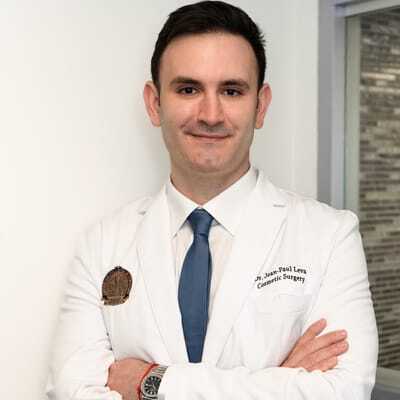
Dr. Jean-Paul Leva
Dr. Jean-Paul Leva, FACS is board certified in cosmetic and general surgery. Dr. Jean-Paul Leva, FACS obtained his Doctor of Osteopathic Medicine degree from ...