Are you tired of looking in the mirror and seeing dark circles, hollows, or wrinkles under your eyes? Imagine refreshing your appearance with a natural, long-lasting option. Under-eye fat transfer is a cosmetic procedure that could be the answer to your concerns. This post explores how the procedure compares to dermal fillers, what the recovery process looks like, and how it can be combined with other treatments for more complete facial rejuvenation.
Key Takeaways
- Under-eye fat transfer is a cosmetic procedure that restores volume and smoothness to the area using your own fat.
- A long-lasting option for people over 40 who are new to fillers: this age group often has more noticeable volume loss, and the lasting effect of fat transfer can reduce the need for the repeat treatments that fillers require.
- Bruising usually fades in about 7 to 10 days, and most people return to work in about a week. Results are long-lasting, though touch-ups may be needed over time. The procedure can be combined with other facial treatments.
Understanding Under Eye Fat Transfer
With age, the delicate skin under the eyes can lose volume, resulting in dark circles and hollows. Under-eye fat transfer addresses these issues by using your own fat to restore volume and smoothness to the under-eye area. This treatment is suitable for individuals who:
- are in good overall health
- are not excessively slim
- are not pregnant
- do not smoke, or are willing to stop
How does the process unfold, and how does it compare with dermal fillers? The sections below cover the specifics of the procedure and who it suits.
The Procedure
The under-eye fat transfer procedure involves the following steps:
- Harvesting a small amount of fat from a donor area, usually the abdomen, through a tiny opening using liposuction techniques.
- Purifying the harvested fat so that only healthy fat cells are used for the transfer.
- Carefully injecting the purified fat into the under-eye area.
- Filling in hollows and softening the shadow that makes dark circles and wrinkles look deeper.
The procedure can be done under local anesthesia. The end result is a refreshed, natural look achieved using tissue from your own body.
Ideal Candidates
Good candidates for under-eye fat transfer are adults who have volume loss, wrinkles, or hollows under the eyes, are in good overall health, and have realistic expectations about the results. Factors such as age, smoking, and blood-thinning medications can affect candidacy. Blood work and medical clearance come first, diabetes must be controlled, and smokers must stop.
A consultation is the right place to find out whether you are a candidate and what result is realistic for you.
Comparing Under Eye Fat Transfer and Dermal Fillers
Under-eye fat transfer and dermal fillers both address volume loss under the eyes, but each has its own advantages and limitations. The next sections look at the pros and cons of fat transfer to help you make a well-informed decision.
Advantages of Fat Transfer
One of the main advantages of under-eye fat transfer is its natural, long-lasting result. Because fat transfer uses your own fat cells, the risk of an allergic reaction is low, although complications can still occur, as with any procedure. The fat that survives behaves like normal fat, so results can last longer than those of dermal fillers.
Fat transfer is also versatile. Beyond the under-eye area, it can be used to correct volume loss in other facial areas, such as the cheeks or the nasolabial folds.
Dermal fillers remain a good option for many people. Filler can soften an under-eye hollow, is FDA-approved for under-eye hollows, and requires no donor site.
Limitations of Fat Transfer
Despite its advantages, under-eye fat transfer has some limitations. These include:
- The procedure is more involved than dermal fillers, because a small liposuction harvest is needed to collect the fat cells.
- This can mean a somewhat longer recovery.
- Fat survival and the final result can be less predictable, and some grafted fat is absorbed.
- Risks include swelling, bruising, infection, bleeding, asymmetry, and small lumps or unevenness from the grafted fat, and occasionally a touch-up is needed.
A consultation lets you weigh these limitations against the advantages for your particular needs.
Recovery and Results: What to Expect After Under Eye Fat Transfer
Understanding the recovery process and setting realistic expectations for results is important. The sections below explain the recovery timeline and how long results can last.
Recovery Timeline
Bruising usually fades in about 7 to 10 days, and most people return to work in about a week. Swelling is common in the first days. Follow your surgeon's post-operative instructions, such as applying cold compresses and using eye drops as prescribed, to ease discomfort and support healing.
Over the following months, the final result becomes visible as the transferred fat settles and any remaining swelling subsides.
Longevity of Results
The durability of results is one of the most attractive aspects of under-eye fat transfer. Results are long-lasting and can last for many years. Factors such as genetics, natural aging, and the technique used can affect how long they last.
Some fat absorption in the first months is normal and expected. Touch-ups may be needed over time because of natural aging or additional fat absorption.
Cost
At Leva Medical, under-eye fat grafting starts at $5,500.
The exact price is set at the consultation.
Financing is available.
Combining Under Eye Fat Transfer with Other Procedures
For a more complete facial rejuvenation, under-eye fat transfer can be combined with other cosmetic procedures. The sections below cover pairing it with lower blepharoplasty and other facial treatments.
Lower Blepharoplasty
Lower blepharoplasty, or lower eyelid surgery, can be performed together with under-eye fat transfer to treat bulging fat pads (eye bags) in the lower eyelid. Combining the procedures can remove the bag and fill the hollow beneath it, so the under-eye line looks smooth.
At Leva Medical, lower eyelid surgery is done from inside the lower lid (transconjunctival) with a fine-tip instrument, so there is no visible scar.
At Leva Medical, the fat pads are removed or trimmed, and usually a small amount of fat taken from the belly through a tiny opening is placed along the under-eye line so the area looks smooth, not hollow.
Lower eyelid surgery has its own risks, including dryness, asymmetry, a change in lower-lid position or shape, temporary or rarely lasting double vision, and, very rarely, bleeding behind the eye that can threaten vision, which is an emergency that needs care right away.
Additional Facial Treatments
Beyond lower blepharoplasty, laser skin treatments can be combined with under-eye fat transfer to improve skin texture and pigment, complementing the volume restored by the fat transfer. Pairing fat grafting with other facial treatments allows a more tailored approach to facial rejuvenation.
Summary
Under-eye fat transfer can refresh your appearance and address concerns such as hollows, shadows, and fine wrinkles. It offers natural, long-lasting results using your own fat cells, with a low risk of allergic reaction. It also has limitations, such as a longer recovery than fillers and less predictable fat survival. If you are considering this treatment, a consultation will help determine whether under-eye fat transfer is the right choice for you.
Related Treatments
Frequently Asked Questions
How long does fat transfer last under eyes?
Under-eye fat transfer results are long-lasting and can last for several years. Fat is harvested from a donor area, typically the abdomen, and injected along the lower eyelids to soften hollows and shadows. Some grafted fat is absorbed in the first months, and what remains behaves like normal fat. Sleeping face-up with your head raised in the early weeks and following your surgeon's aftercare instructions, including avoiding strenuous activity, support healing.
How much does under eye fat transfer cost?
The cost section above gives the starting price, and the exact price is set at the consultation.
How do you get rid of lumps under your eyes after fat transfer?
Small lumps or unevenness are a known risk of fat grafting. If you notice any, contact your surgeon, who will examine the area and recommend treatment, which can include medication or a touch-up.
How to restore fat under eyes?
Volume under the eyes can be restored with fat transfer or with hyaluronic acid filler. Filler is FDA-approved for under-eye hollows and can soften them without surgery, while fat transfer uses your own fat for a long-lasting result.
What is the estimated recovery time for under-eye fat transfer?
Bruising usually fades in about 7 to 10 days, and most people return to work in about a week. The final result keeps refining over the following months.
About Leva Medical
Leva Medical has offices in Queens (94-06 59th Ave, Suite E9, Elmhurst, NY 11373) and in Northport, Long Island (320 Laurel Rd, Northport, NY 11768).
Call (718) 699-9737 to book a consultation with a board-certified surgeon.
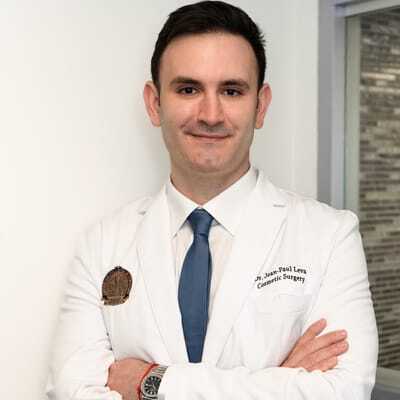
Dr. Jean-Paul Leva
Dr. Jean-Paul Leva, FACS is board certified in cosmetic and general surgery. Dr. Jean-Paul Leva, FACS obtained his Doctor of Osteopathic Medicine degree from ...