If you are comparing xeomin vs botox price, the answer is usually: Xeomin can be a little cheaper, but the final bill depends more on units, injector skill, and the area treated than on brand alone. This guide breaks down cost, dosing, results, safety, and practical questions so patients can make informed decisions before booking injections.
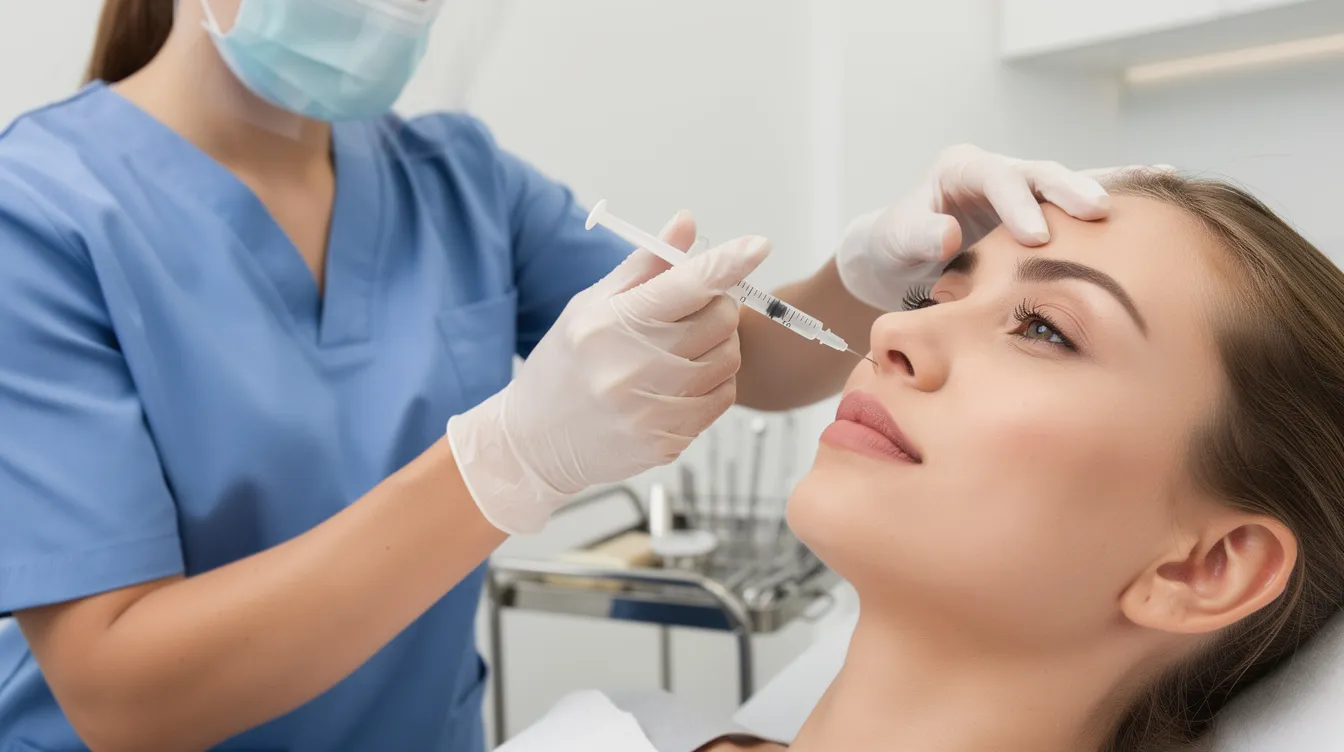
Quick Take: Botox vs Xeomin Price Snapshot
As of 2025, the average cost for Botox treatments ranges from $10 to $20 per unit, while Xeomin is priced at $10 to $17 per unit, with Xeomin often requiring slightly fewer units for comparable results in some practices. Cosmetic treatment costs in New York City can vary widely depending on the provider, treatment area, and muscle strength.
The injector’s credentials can significantly influence the cost of treatment, with board-certified specialists typically charging more. Geographic location and real estate overhead play a role in the cost of injecting Botox and Xeomin in New York City, especially in high-rent neighborhoods. Provider expertise, product pricing, and clinic overhead all affect the final cost.
What Are Botox Treatments and Xeomin Uses (FDA Approved Uses)
Botox and Xeomin are botulinum toxin products made from botulinum toxin type a. They work by blocking nerve signals to facial muscles and underlying muscles, relaxing movement for wrinkle reduction. Although people often say they have the same active ingredient, each active ingredient is formulated differently.
For cosmetic use, botox cosmetic has broad fda approval for moderate to severe glabellar lines, crow’s feet, and forehead lines in specific treatment patterns. Xeomin is fda approved for severe glabellar lines in adults, and many providers also use it off-label in other cosmetic areas.
For medical conditions, botox is used for cervical dystonia, chronic migraines, excessive sweating, bladder issues, spasticity, and eye muscle disorders, according to MedlinePlus. Botox is also approved for treating excessive sweating, a medical condition that Xeomin does not specifically address. Some price guides incorrectly claim, “Both Botox and Xeomin are FDA-approved for treating chronic migraines, helping to reduce the frequency and severity of migraine attacks”; ask your clinician to verify current labeling and insurance rules. Xeomin and Botox can also be used to alleviate pain associated with temporomandibular joint (TMJ) disorders by relaxing the jaw muscles, though this is commonly off-label.
Areas Treated: Brow Lift, Crow’s Feet, Glabellar Lines
A brow lift with botulinum toxin is usually subtle. The injector targets small muscles around the brow tail to create natural looking results without freezing expression.
Crow’s feet usually need more units because the area wraps around both eyes. Both injectables are commonly used to smooth out wrinkles in the forehead by relaxing the muscles responsible for frowning or raising the eyebrows.
Glabellar lines, also called frown lines, are the classic comparison point. Both products are effective in treating glabellar lines, also known as frown lines, by relaxing the muscles in that area to achieve a smoother appearance. The typical FDA-studied pattern is about 20 units across five injection sites.
Pricing Breakdown Per Unit and Total Cost (per unit vs Botox)
Injections for cosmetic treatments can be priced per unit or as a flat rate per treatment area. Manufacturer and formulation costs affect the pricing of Botox and Xeomin, with Xeomin being potentially less expensive to manufacture.
Area | Botox estimate | Xeomin estimate |
|---|---|---|
Glabellar frown lines | 20 units, about $200-$400 | 20 units, about $200-$340 |
Forehead | 20-30 units, $240-$600 | 20-25 units, $200-$425 |
Full-face bundle | $500-$1,000 | $450-$900 |
A standard forehead treatment might require 20-30 units of Botox costing between $240-$600, compared to 20-25 units of Xeomin costing $200-$425, resulting in an average savings of 10-20% for Xeomin. The overall expense for a session varies by treatment area, with Botox often bundled at $500-$1,000 and Xeomin at $450-$900 for full-face treatments, reflecting a potential cost-saving for Xeomin.
Sample Cost Scenarios
For frown lines only, 20 units at $15 per unit for botox costs about $300. The same units of Xeomin at $12 per unit cost about $240.
For forehead plus crow’s feet, a patient may need 44 units. At $15 per unit, botox vs Xeomin could mean $660 for botox and $528 for Xeomin at $12 per unit.
With repeat treatments every three to four months, many patients spend thousands per year. If patients choosing Xeomin save 10-20% per treatment session, annual savings can become meaningful.
Units and Dosing Guidelines (per unit)
Clinical studies show both Botox and Xeomin demonstrate comparable efficacy when used in equivalent doses, with Xeomin being exchangeable with Botox using a simple 1:1 conversion ratio. In plain terms, providers often use the same units when comparing both botox and xeomin for glabellar lines.
Common unit counts:
Glabellar lines: about 20 units
Forehead lines: 10-30 units
Crow’s feet: 12-24 units per side
Standard cosmetic session of Xeomin: typically 20 to 50 units depending on facial muscle strength
Providers may alter dosing when a patient has stronger muscles, deeper wrinkles, asymmetry, a tighter budget, or a history of developing resistance.
Botox Results, Xeomin Effects, and Recovery Time
Botox results usually begin in 3-7 days and peak around two weeks. Xeomin may have a faster onset for some patients, with some studies showing visible effect around day three; a head-to-head study is available through PMC.
Most patients see results lasting three to four months. Some report Xeomin lasts slightly longer, while others notice no difference. Recovery time is minimal: mild redness, swelling, or bruising may appear on the skin near injection sites, but most people return to normal routines quickly.

Patient Experiences: Botox vs Xeomin
Patient experiences are mixed but predictable. Many patients say both xeomin and botox feel similar, while others notice Xeomin kicks in sooner or feels lighter. People who have developed antibodies or are worried about antibody formation sometimes ask about Xeomin.
Cost satisfaction usually depends on transparency. Ask for unit count, per unit price, and whether touch-ups are included. Before-and-after photos also help you judge consistent results, especially for a brow lift, crow’s feet, or glabellar treatment.
Safety, Side Effects, and FDA Approved Considerations
Possible side effects of both products include mild swelling, bruising, tenderness at the injection site, headaches, and drooping eyelids. Common side effects of both Xeomin and Botox include mild swelling, bruising, or tenderness at the injection site, headaches, and drooping eyelids. Some patients also report flu like symptoms.
Serious complications from Xeomin and Botox, such as ptosis, are rare, occurring in less than 1% of cases when administered by trained professionals. Both Xeomin and Botox have a low side effect rate of less than 5%, with most side effects being mild and temporary. Still, complications can include allergic reactions, swallowing issues, or spread of toxin effect; review the FDA Xeomin label for boxed-warning language.
The main difference is formulation. Xeomin is distinguished by its “naked” formulation, containing only the pure botulinum toxin type A without any accessory proteins, which may reduce the risk of resistance and allergic reactions. Xeomin is often described as a pure form injectable, a naked injectable, or having just one ingredient in the neurotoxin complex. Botox contains the neurotoxin along with several complexing proteins, forming a larger molecular complex, which may increase the risk of antibody formation over time. Xeomin has a significantly lower protein load compared to Botox, with approximately 0.6 ng of clostridial protein per 100 units, while Botox contains about 5 ng per 100 units, potentially decreasing the risk of neutralizing antibody development.
Value Over Time: Cost, Frequency, and When Xeomin Beats Botox
Xeomin usually wins on price when the clinic charges less per unit and the patient needs long term treatment. If you treat multiple areas three or four times per year, even small savings matter.
Xeomin may also be worth discussing if botox results have faded faster than expected, if a patient is developing resistance, or if there is concern about accessory proteins. However, if a trusted injector charges the same for botox and Xeomin, the financial advantage may disappear.
Practical Guide: How To Budget For Botox Treatments
Budget by treatment area, not just brand. Ask whether pricing is per unit or flat rate, then estimate annual cost using three to four visits per year.
Also ask about loyalty programs and ‘tox banking’ options, which are available for both Botox and Xeomin to reduce treatment costs. These programs can help patients prepay, earn rewards, or lower the cost of repeat treatments. Compare neurotoxins with other skin options, too; chemical peels may improve texture but will not relax muscles like botulinum toxin type treatments.
Consultation Checklist Before Booking (vs Botox Decision Aid)
Before booking, ask:
How much experience do you have with botox treatments and Xeomin?
Are you a board-certified dermatologist, nurse injector, or one of the plastic surgeons in the practice?
What is the written quote by brand, units, and area treated?
How many more units might be needed if my muscles are strong?
What follow-up policy applies if results are uneven?
What potential risks apply to my medical history?
Is this treatment cosmetic, medical, or off-label?
A good injector will explain botox vs Xeomin clearly, including cost, safety, and expected results. The best choice is not always the cheapest product; it is the treatment plan that fits your anatomy, budget, and goals.
Frequently Asked Questions
What is the typical price difference between Botox and Xeomin?
Botox costs $10-$20 per unit while Xeomin costs $10-$17 per unit. Xeomin may be 10-20% cheaper overall, though final costs depend on units needed, injector skill, treatment area, and geographic location rather than brand alone.
How many units are typically needed for frown lines?
The standard FDA-studied pattern for glabellar frown lines is approximately 20 units across five injection sites. Both Botox and Xeomin use a 1:1 unit conversion ratio, meaning the same number of units applies to each product.
When will I see results from Botox or Xeomin injections?
Botox results typically begin in 3-7 days and peak around two weeks. Xeomin may show visible effects around day three for some patients. Most people see results lasting three to four months before repeat treatment is needed.
What areas can be treated with these products?
Common treatment areas include glabellar frown lines, forehead lines, and crow's feet. Botox has broader FDA approval for these areas, while Xeomin is FDA-approved for severe glabellar lines, with other uses often off-label.
What is the recovery time after injections?
Recovery is minimal. Mild redness, swelling, or bruising may appear near injection sites, but most people return to normal routines quickly without significant downtime required after treatment.
Learn more: Botox & Fillers at Leva Medical


-2.jpg?width=2000&height=2000&name=Copy%20of%20YouTube%20Thumbnail%20-%20Life-Changing%20Cosmetic%20Surgery!%20(Document)-2.jpg)


