Learn more: Eyelid Surgery at Leva Medical
Key Takeaways
Upper blepharoplasty recovery is usually most intense in the first 3 days, when initial swelling, swelling and bruising, and tightness peak before improving.
Most patients return to light activities and work around 7 to 10 days post-surgery, with full recovery generally indicated by 2 to 3 months later.
Taking upper blepharoplasty recovery photos day by day helps you track progress, compare changes, and set realistic expectations.
Sleeping with your head elevated, using cold compresses, and avoiding intensive exercise help reduce swelling and support optimal recovery.
Final results after upper eyelid surgery often look clear by 3–6 months, while the final, mature result of the scar and contour after upper blepharoplasty is usually achieved around 6 to 12 months post-surgery.
Introduction: What “Day by Day” Upper Blepharoplasty Recovery Really Means
Upper blepharoplasty is a surgical procedure that removes or repositions excess skin, muscle, or fat from the upper eyelids. In skilled oculoplastic surgery or plastic surgery, incision sites are usually hidden in the natural eyelid creases of the upper lids.
This guide explains eyelid surgery recovery time from the actual surgery through several months. It focuses on upper eyelid surgery only; lower eyelid surgery or combined procedures can create more pronounced early eyelid swelling. Use this as education, not a replacement for your consultation appointment, pre surgical consultation, or surgeon’s advice from an oculoplastic surgeon.
Why Take Upper Blepharoplasty Recovery Photos Day by Day?
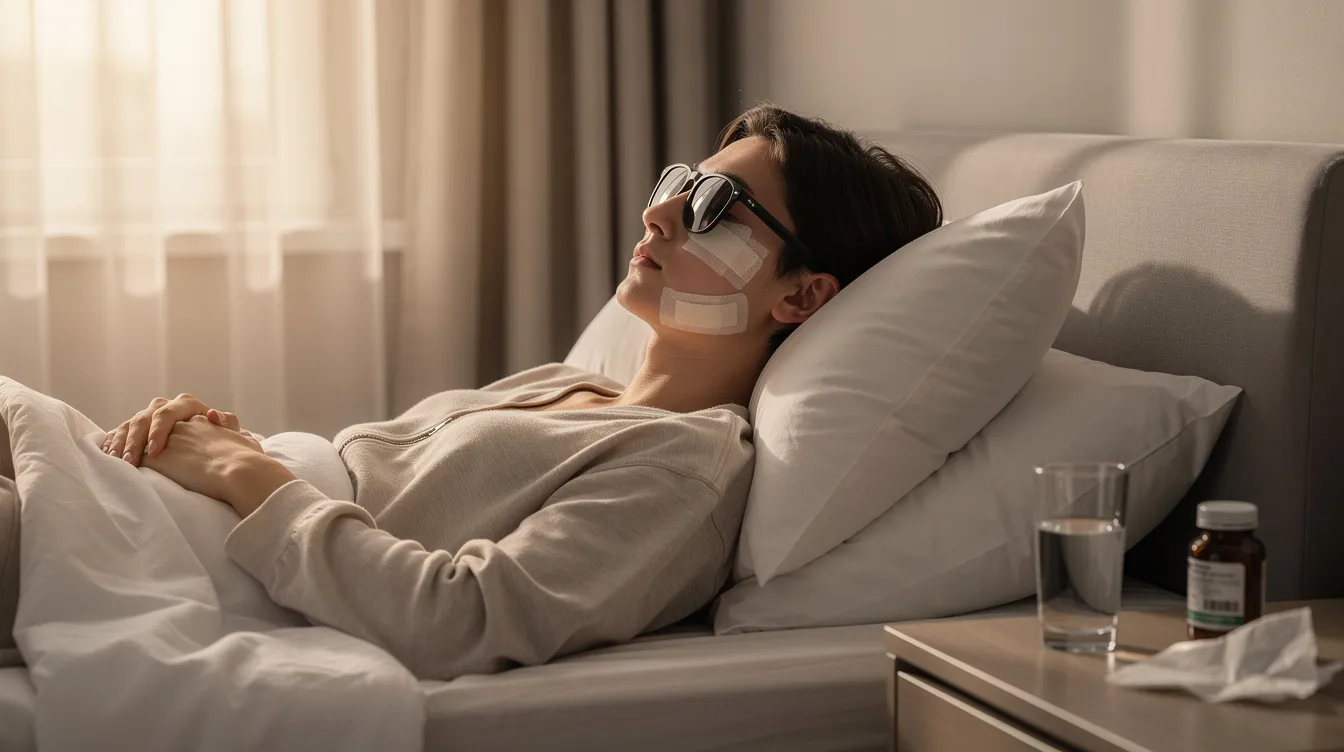
Daily recovery photos create a visual diary of the blepharoplasty recovery period. Taking day-by-day photos during recovery from upper blepharoplasty helps patients track their healing progress and visualize changes in swelling and bruising over time.
Good surgery recovery time photos use the same lighting, distance, angle, and neutral facial expression. A day eyelid surgery recovery album can show when bruising changes color, when incision lines settle, and when eyelid shape starts looking natural. Photos taken during the recovery process can clarify typical changes at each stage, helping patients set realistic expectations for their healing journey. Daily recovery photos can serve as a motivational tool, allowing patients to see their progress and encouraging them to remain patient through the healing process.
Day 0–Day 2: Immediately After Surgery and the Peak Swelling Phase
The first 48 hours are dominated by anesthesia wearing off, tightness, and the body’s healing process beginning. Most patients experience swelling, bruising, and tightness as the body begins the healing process after upper blepharoplasty.
Day 0 and Day 1 upper blepharoplasty recovery photos often show puffy upper eyelids, mild redness, ointment near the lashes, and faint incision lines. Common post-operative sensations include burning, tearing, and a gritty feeling, along with potential blurry vision due to ointment application. Visual symptoms during recovery may include redness, puffiness, purple bruising, and a tension sensation due to swelling.
By Day 2, expect swelling to intensify. During the first few days after upper blepharoplasty, swelling and bruising are most noticeable, and patients may experience puffiness, tightness, or blurred vision. Eyelids may feel heavy, tight, and highly sensitive to light during the peak phase of recovery. Patients typically experience tightness and mild discomfort during recovery, which is managed with cold compresses and medication, including prescribed pain medication when needed.
Keeping your head elevated while resting can help reduce swelling and promote a more comfortable recovery after upper blepharoplasty. Cold compresses can help alleviate swelling and discomfort during the initial recovery phase after upper blepharoplasty.
Day 3–Day 5: The Turning Point in Eyelid Surgery Recovery
Day 3 can look dramatic, but it is often the turning point. Recovery after an upper blepharoplasty follows a predictable pattern with peak swelling and bruising occurring within the first 3 to 4 days, and complete tissue maturation taking up to 6 months. During the first three days after upper blepharoplasty, patients typically experience significant swelling and bruising, with discomfort peaking during this period.
In photos, deep purple bruising may shift toward green or yellow. In the initial days following upper blepharoplasty, it is common for patients to experience increased swelling and bruising, which may intensify before starting to improve. By Day 4–5, many patients notice less puffiness and slightly better crease definition.
Incision lines may look pink, dry, or lightly scabbed. Thick crusting, active bleeding, or spreading redness is not expected. Keep using head elevation, avoid rubbing, minimize swelling with surgeon-approved care, and follow your surgeon’s instructions closely.
Day 6–Day 10: Stitches Removal and “Socially Acceptable” Photos
Stitches from upper blepharoplasty are generally removed between days 5 to 7 post-surgery. This often makes upper blepharoplasty recovery photos look cleaner about a week after surgery.
By Day 7–10, visible bruising is usually lighter brown or yellow, residual bruising is easier to conceal, and eyelids look less swollen. By the end of the first week, many patients can return to work if their jobs are not physically demanding, as bruising often fades and swelling decreases during this time. By the end of the first week, most patients notice a reduction in swelling and bruising, and many can return to work if their jobs are not physically demanding.
Many patients feel ready for desk work or light social activities in this window. However, patients should avoid wearing contact lenses and eye makeup for the first few weeks following eyelid surgery to prevent irritation and support healing, unless their surgeon specifically clears an earlier return. Heavy lifting, hot yoga, and high-intensity cardio can increase blood flow and blood pressure, which may prolong swelling.
Week 2–Week 4: From “Post-Op” to Nearly Normal
By two weeks post-surgery, most visible bruising has resolved, and while some mild swelling may persist, eyelids generally appear more natural and comfortable for social interactions. Most patients can expect to see significant improvement in swelling and bruising within the first two weeks after upper blepharoplasty, although full recovery may take 1 to 3 months.
Week 2 photos often show thin pink incision lines, healing skin, mild fullness, and upper eyelid surgery recovery that looks better in casual photos than close-ups. Between weeks three and four, the eyelids typically show significant improvement, with residual swelling continuing to fade and incision lines becoming less noticeable.
Most patients will notice that the majority of swelling subsides and their eyelids appear more natural by weeks 3 to 4 after surgery, although some internal healing continues. Protect the first few weeks carefully: use sunglasses, avoid sun exposure on scars, and continue gentle habits for proper healing.
Month 2–Month 6: Watching Final Results Emerge
Eyelid surgery recovery does not end when bruising disappears. At 2–3 months, most photos show smoother contours, minimal residual swelling, and scars blending into the upper lid crease.
By 4–6 months, final results become more reliable: softened skin texture, more natural-looking creases, and less visible scarring even with closed eyes. Subtle asymmetry in early recovery photos often improves as healing progresses. Age, skin quality, smoking, genetics, and surgical technique all influence the recovery timeline.
How to Take Helpful Upper Blepharoplasty Recovery Photos
Consistent photos make it easier to see true upper blepharoplasty recovery rather than lighting changes.
Use this simple system:
Take photos in the same room, ideally with soft front-facing natural light.
Capture straight-on eyes open, straight-on eyes gently closed, and both side views.
Take daily photos for the first week, every few days until Week 4, then monthly until Month 6.
Keep images in a dated folder so you can share specific concerns with your surgeon.
Practical Tips to Support a Smooth Eyelid Surgery Recovery
These habits support a smooth recovery and help photos look better over time:
Sleep on your back with the head elevated above the heart for at least the first week.
Use cold compresses only as directed to reduce swelling without irritating incision sites.
Avoiding strenuous activities, heavy lifting, and bending over for at least two weeks post-surgery is crucial to support healing after eyelid surgery.
Avoid intensive exercise and strenuous exercise early; intensive exercise can increase blood flow and hinder healing.
Stay hydrated, limit salty foods, do not smoke or vape, and aim for a good night’s sleep.
Follow your surgeon’s instructions, including drops, ointments, cleansing, and follow-up visits.
What’s Normal vs. When to Call Your Surgeon
Some changes look alarming but are completely normal: mild asymmetry, temporary dryness, tightness when blinking, changing bruise colors, and a pulling sensation as the eyelids feel tight.
Call your surgeon if recovery photos show sudden worsening after improvement. Sudden severe pain not relieved by medication, changes in vision, excessive swelling of one eyelid, or persistent bleeding are concerning symptoms during recovery. Severe pain, pus-like discharge, rapidly spreading redness, or inability to open one eye normally should be treated as urgent.
Most issues are minor, but prompt communication keeps your recovery journey safer.
FAQ: Upper Blepharoplasty Recovery Photos and Healing Timeline
How long does it really take to look “normal” after upper eyelid surgery?
Most patients look socially comfortable by 10–14 days, though close-up photos may still show mild swelling and pink incision lines. By 4–6 weeks, casual photos often look close to normal. Full scar and contour maturation usually takes 3–6 months, and sometimes up to a year.
What do typical day-by-day upper blepharoplasty photos show in the first week?
Days 1–3 usually show peak swelling, puffy lids, bruising, ointment shine, and mild blurry vision. Days 4–5 show early improvement and changing bruise colors. Days 6–7 often look cleaner after stitch removal, with less dramatic discoloration.
Can I wear makeup in my recovery photos, and if so, when?
Makeup is usually delayed until incisions are sealed and sutures are removed, often around 7–10 days, but your surgeon decides. Start with gentle products and avoid eyeliner or shadow directly on the incision line. Take occasional bare photos to document true healing.
What position should I sleep in to help my eyes look better in morning photos?
Sleep on your back with your head elevated using pillows or a wedge. This limits overnight fluid pooling in the upper eyelids. Avoid stomach sleeping or pressure on one side, which can worsen morning asymmetry.
Why do my recovery photos show one eyelid more swollen than the other?
Mild side-to-side swelling differences are common because each eyelid has different anatomy and circulation. Small asymmetries usually improve over the first few weeks. Contact your surgeon if one side becomes suddenly painful, increasingly swollen, or continues worsening after the first week.

-2.jpg?width=2000&height=2000&name=Copy%20of%20YouTube%20Thumbnail%20-%20Life-Changing%20Cosmetic%20Surgery!%20(Document)-2.jpg)


