Tuberous breast correction surgery addresses one of the most under-recognized congenital breast deformities, restoring a natural breast shape and improving symmetry for women who have lived with constricted, asymmetric, or underdeveloped breasts since puberty. Whether you are just learning about this condition or actively planning a procedure, this guide walks through every stage, from assessment to recovery, so you can approach your first consultation with confidence.
Overview Of Tuberous Breast Correction In Plastic Surgery
A tuberous breast deformity, also called tubular breast deformity or constricted breasts, is a developmental anomaly that becomes apparent during puberty. Tuberous breast deformities involve a constricted breast base and high inframammary fold, meaning the connective tissue at the base restricts normal radial growth. Tissue herniation causes glandular tissue to push into the areola, producing an enlarged nipple areola complex and a characteristic conical shape that may point downward.
Tuberous breasts affect 1-5% of women, though many cases go undiagnosed. The condition can appear on one or both breasts, and breast asymmetry is common in tuberous breast deformity. Beyond physical appearance, the psychosocial impact is significant: many women report diminished self esteem, body shame, and difficulty with clothing fit. Tuberous breasts can also prevent effective breastfeeding due to insufficient breast tissue development.
Classes of tuberous breast deformities range from mild to severe, and the corrective approach spans both cosmetic surgery and reconstructive surgery. Mild cases may require only volume enhancement, while severe cases demand tissue rearrangement, base expansion, and sometimes staged procedures.

Assessment And Candidacy For Breast Surgery
Proper candidacy begins with a thorough evaluation. Characteristics include breast constriction and areolar herniation, and the condition is diagnosed based on several measurable features:
Breast base constriction: Reduced horizontal and vertical base width compared to a normal breast skin envelope.
Areolar herniation: Degree of glandular protrusion through the areola and overall areola diameter.
Breast asymmetry: Differences in breast volume, nipple position, and breast fold height between sides.
Inframammary fold position: How high the breast fold sits relative to normal anatomy.
Surgeons typically classify the deformity using established systems such as the Grolleau (Types I–III) or von Heimburg classification to guide surgical planning. Preoperative imaging, including 3D photogrammetry for volume estimation, may be used alongside a review of the patient's medical history. Patients should have stable weight, realistic aesthetic goals, and good general health.
Surgical Techniques: Breast Augmentation And Breast Implants
Tuberous breast correction often requires multiple surgical techniques performed in combination. Breast augmentation is commonly combined with reshaping techniques to address volume deficiency and the constricted base simultaneously. The procedure typically lasts between 2 to 3 hours under general anesthesia.
Implant Placement
Choosing where to position the implant matters:
Placement | Advantages | Considerations |
|---|---|---|
Subglandular | Easier access, less animation deformity | May show edges in thin breast tissue |
Subfascial | Added soft tissue coverage without full muscle involvement | Best when overlying tissue is adequate |
Submuscular / dual-plane | Masks implant edge, helps lower pole expansion | More recovery discomfort, animation possible |
Implant Type and Size
Breast implants are selected based on anatomy. Silicone gel implants are commonly preferred for their natural feel. The surgeon will choose implant size based on the released base width to avoid overfilling, which can create an unnatural upper pole or malposition.
Managing Severe Skin Tightness
Tissue expansion may be necessary for severe tuberous breast cases. A tissue expander is placed first to gradually stretch the deficient breast skin envelope, followed by a final implant at a second stage. This approach carries a higher complication rate (approximately 23%) compared to single-stage techniques.
Incision and Scoring
Periareolar incisions are a popular choice for glandular reshaping in tuberous breasts because they allow simultaneous areola reduction and access to the lower pole. An alternative is the inframammary fold incision, which provides excellent access for base release. Radial scoring of the lower pole involves making controlled cuts through the constricting fibrous ring to allow the breast tissue to expand into a rounder shape.
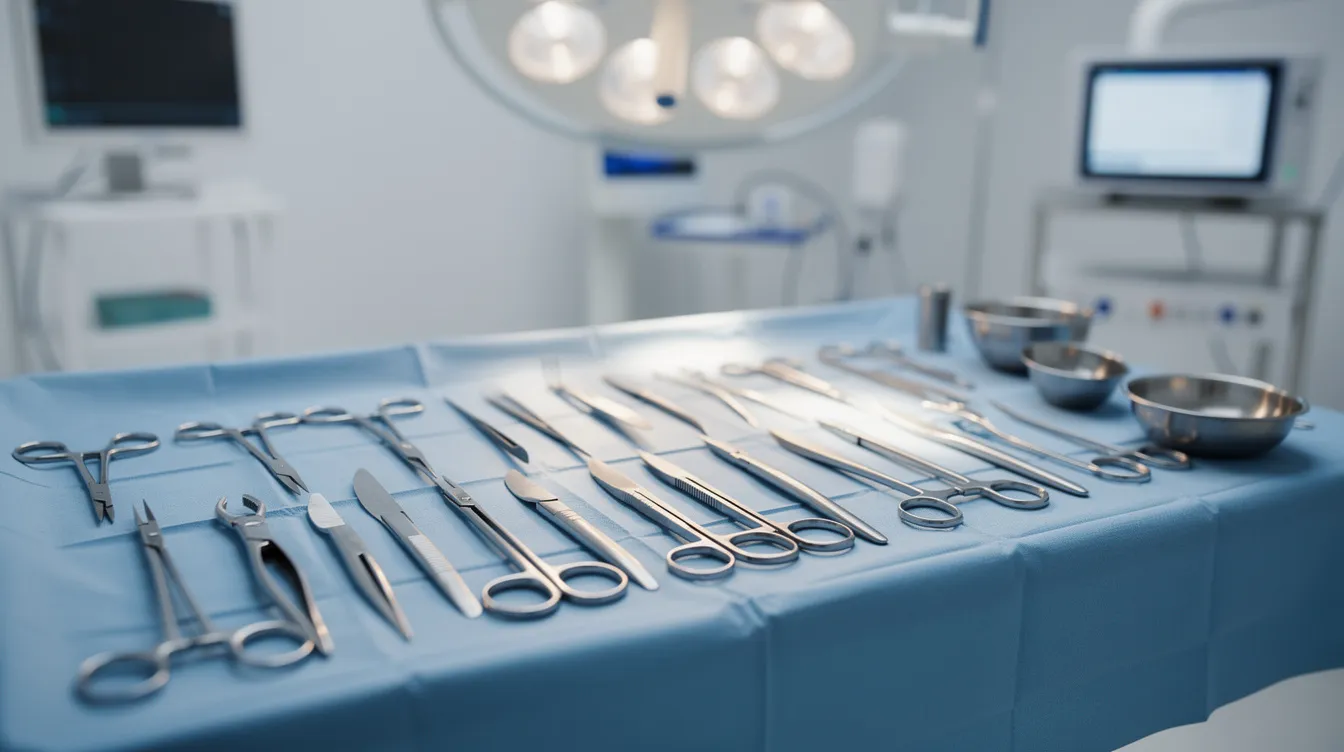
Surgical approaches for tuberous breast correction include glandular reshaping and areolar reduction, frequently performed together through these access points.
Combining A Breast Lift With Augmentation
When the nipple sits well below the ideal position, a breast lift is necessary alongside augmentation. Determining the need comes down to the nipple-to-fold distance and overall ptosis.
Lift technique selection depends on how much repositioning is needed:
Periareolar mastopexy: Minimizes visible scarring, well-suited for mild-to-moderate cases.
Vertical or wise-pattern lift: More scarring but required for significant repositioning.
Coordinating implant choice with lift extent is critical. Higher-projection breast implants can help fill the lower pole, while the lift controls skin tension. Most patients benefit from a conservative approach that balances correction with minimal scarring.
Structural Fat Grafting And Structural Fat Grafting Options
Fat grafting can improve breast contour in tuberous breast correction and appeals to patients seeking a natural look without relying solely on an implant. Structural fat grafting uses the patient's own excess fat, harvested via liposuction from the abdomen, flanks, or thighs.
Harvest and Processing
Fat is collected through small cannulas (2–3 mm), then processed via centrifuge to remove blood and oil. The purified fat is injected in multiple layers using a fan-shaped technique across all tissue planes.
Staging and Volume
Staged grafting improves volume predictability because fat resorption is expected. In one large study, patients required two sessions averaging approximately 380 cc per breast total to achieve satisfactory results. Overcorrection is intentional to account for resorption.
Hybrid Augmentation
A combination of breast implants with fat grafting, known as hybrid augmentation, is gaining popularity. The implant provides structural volume, while fat refines contour, softens transitions, and builds coverage over the implant. This approach is especially helpful for patients with thin tissue who want both shape and a natural breast appearance.
Reconstructive Surgery Techniques And Areolar Management
Reconstructive surgery techniques specifically target the structural abnormalities of the tubular breast:
Periareolar reduction: Excess areolar skin is excised to correct herniation and reduce diameter, restoring a proportional nipple and areola.
Lower-pole release: The constricting fibrous ring is divided, expanding the breast base horizontally and vertically. Glandular flaps may be redistributed from upper to lower quadrants.
Internal sutures: Reinforcing sutures anchor the new inframammary fold position and support soft tissue, helping prevent recurrence of constriction.
These steps are essential to correct tuberous breasts beyond simple volume addition.
Complications And Implant Management For Breast Implant Patients
A high complication rate in tuberous breast surgery has been reported. Pooled data from over 760 patients show an overall complication rate of approximately 20%, with 9.7% experiencing major complications.
Key risks to discuss during consultation include:
Capsular contracture: Scar tissue tightening around the implant. Pooled short-term rates are around 2%, though 10-year rates for silicone implants in augmentation can reach 18–19%.
Implant malposition: Particularly if the constricting ring is not fully released or soft tissue support is insufficient. Double-bubble deformity is a specific concern.
Other factors: Hematoma, infection, sensory changes, visible rippling, and hypertrophic scarring.
Implant removal or exchange may be necessary if severe contracture, rupture, or exposure occurs. Patients should understand that breast implants have finite lifespans, and revision surgery may be needed after 10–15 years.
A successful correction aims for improved symmetry and a less constricted breast base, which is achievable for most patients even when managing these risks.
Recovery Timeline And Results For Cosmetic Surgery
Understanding the recovery process helps set expectations. After surgery, recovery typically takes 1-2 hours in a private room before discharge.
Timeframe | What to Expect |
|---|---|
Days 1–3 | Rest, wear surgical bra, manage swelling and discomfort |
Days 4–5 | Drain tubes are usually removed after 4-5 days |
Days 4–7 | Patients can return to work after 4-7 days post-surgery |
Days 5–7 | Light exercise may resume after 5-7 days |
Two weeks | Swelling may last for 10-14 days post-surgery; avoid heavy lifting (>10–15 lbs) |
6 weeks | Follow-up with your breast surgeon to assess implant settling and scar maturation |
12 weeks | Final breast shape may take up to 12 weeks to appear |
6–12 months | Full scar maturation, fat graft stabilization, long-term shape evaluation |
Routine follow-ups at one week and six weeks are standard. Data show high satisfaction rates following tuberous breast corrective surgery, with studies reporting approximately 99% subjective satisfaction and mean BREAST-Q scores around 86.7 out of 100.

Patient Experience, Before & After, And Natural Look Expectations
Standardized preoperative and postoperative photos, taken at frontal, oblique, and lateral angles, are essential for tracking results. Most surgeons capture comparison images at 3, 6, and 12 months.
Tuberous breast correction improves breast shape and symmetry, though perfect bilateral symmetry is uncommon. Small asymmetries may require touch-up procedures such as additional fat grafting or asymmetric implant sizing.
Post-surgery, many women report increased self-esteem and confidence. Women often find better clothing fit after tuberous breast correction, and the procedure can alleviate feelings of self-consciousness about breast appearance. Tuberous breast correction can enhance overall body image satisfaction, which is often the most meaningful outcome for young women who have been affected since puberty. Setting realistic expectations during consultation about what a natural breast appearance looks like for your body is an important part of the process.
Choosing A Surgeon: Plastic Surgery In Beverly Hills And Beyond
Finding the right surgeon is arguably the most important decision in this process. Here is what to look for:
Board certification: Always verify that your surgeon is a board certified plastic surgeon with specific experience in tuberous breast correction.
Published expertise: Plastic surgeons who have published research on tuberous correction techniques demonstrate deep familiarity with the condition.
In-person consultation: A detailed, in-person assessment where the surgeon presents a tailored plan, discusses trade-offs between scarring and correction, and reviews before-and-after photos of prior patients is essential.
Whether you are in Beverly Hills or elsewhere, prioritize credentials and specialization over geography. Ask about the surgeon's surgical volume, classification approach, and patient-reported outcomes. The entire staff should make you feel comfortable and informed from the moment you walk in.
Costs, Insurance, And Financing For Breast Correction
Tuberous breast correction costs vary significantly by procedure type. Combining augmentation with a breast lift, fat grafting, and areolar reduction increases total cost compared to a single-technique procedure.
Typical US cost ranges:
Areola reduction: $1,871 to $4,677
Breast augmentation: $4,667 to $11,186
Complex combination procedures: $15,000–$20,000+ in high-cost areas
Costs depend on location and complexity of the procedure, including anesthesia time, facility fees, and implant type. Insurance typically does not cover tuberous breast correction procedures, though severe cases with documented functional impact may qualify for partial coverage depending on jurisdiction.
Many practices offer financing plans, medical loans, or payment structures. Your consultation should include a full cost estimate covering the primary corrective surgery and any anticipated revisions.
Key Takeaways
Tubular breast correction surgery addresses a congenital deformity that affects breast shape, symmetry, and breast volume through a combination of techniques tailored to each patient.
Surgical options include breast augmentation, structural fat grafting, tissue rearrangement, and breast lift procedures, often used together to achieve desired results.
Recovery is manageable, with most patients returning to daily activities within one to two weeks and seeing final results by 12 weeks.
Choosing an experienced, board certified plastic surgeon with documented tuberous breast expertise is the single most impactful decision you can make.
If you are considering tuberous breast surgery, schedule a consultation with a specialist who can evaluate your anatomy, walk you through your options, and build a plan around your specific self confidence and aesthetic goals. The right surgeon and the right plan can make a meaningful difference in how you feel about your body.
Frequently Asked Questions
What is a tuberous breast deformity?
Tuberous breast deformity, also called tubular or constricted breasts, is a developmental condition appearing during puberty. It involves a constricted breast base, high fold position, and glandular tissue herniation into the areola, creating a conical shape. The condition affects 1-5% of women and can occur on one or both breasts.
How is tuberous breast deformity diagnosed?
Diagnosis is based on measurable features including breast base constriction, areolar herniation degree, breast asymmetry, and inframammary fold position. Surgeons classify deformities using established systems like Grolleau or von Heimburg classification. Preoperative imaging, including 3D photogrammetry, may assist evaluation alongside medical history review.
What surgical techniques are used for correction?
Tuberous breast correction combines multiple techniques: breast augmentation with implants, glandular reshaping, areolar reduction, and sometimes breast lift. Periareolar or inframammary fold incisions provide access. Severe cases may require tissue expansion in a staged approach. Radial scoring releases constricting tissue to allow expansion.
How long does the surgery take and what anesthesia is used?
Tuberous breast correction typically lasts 2 to 3 hours and is performed under general anesthesia. Duration may vary depending on technique complexity, whether staged procedures are needed, and individual anatomical factors requiring additional surgical steps.
What is tissue expansion and when is it needed?
Tissue expansion involves placing an expander to gradually stretch deficient skin, followed by implant placement in a second stage. It is necessary for severe cases with significant skin tightness. This staged approach carries approximately 23% complication rate compared to single-stage techniques.
Learn more: Body Contouring at Leva Medical


-2.jpg?width=2000&height=2000&name=Copy%20of%20YouTube%20Thumbnail%20-%20Life-Changing%20Cosmetic%20Surgery!%20(Document)-2.jpg)


