Radiesse and Sculptra are the two most widely used biostimulatory fillers in aesthetic medicine, yet they work through different mechanisms, produce results on different timelines, and suit different patient profiles. This guide breaks down each product's active ingredient, expected longevity, treatment areas, safety data, and how to combine them for balanced facial rejuvenation.
Learn more: Botox & Fillers at Leva Medical
Quick Summary - Radiesse vs Sculptra
Radiesse delivers immediate structural volume through its gel carrier and then stimulates collagen production over months; Sculptra builds collagen gradually across several weeks and multiple sessions, with minimal visible result at first.
Patients who want instant lift, jawline definition, or hand volume restoration with fewer sessions tend to benefit most from Radiesse. Patients dealing with global volume loss, overall facial thinning, or those who prefer natural looking results that develop gradually over the following months tend to get more from Sculptra.
What Are Biostimulatory Fillers
Biostimulatory fillers are absorbable injectable materials that provoke fibroblasts to produce new collagen, elastin, and proteoglycans rather than simply filling space with gel. This separates them from traditional hyaluronic acid fillers, which create immediate volume by depositing crosslinked gel that holds water. HA fillers generally last 6 to 12 months per FDA labeling and can be dissolved with hyaluronidase if needed.
Clinical advantages of biostimulators include:
Longer durability (18+ months in most patients)
Measurable improvements in skin thickness and skin texture
Ability to treat larger surface areas, including body zones
Improvement in skin quality markers like elasticity and hydration
What Is A Dermal Filler
A dermal filler is a substance injected under the skin to restore lost volume, smooth wrinkles, or reshape facial contours. Fillers are a practical alternative to surgery when the patient has mild to moderate volume loss, wants minimal downtime, prefers collagen stimulation over excisional scars, or is not a candidate for general anesthesia.

Radiesse: Immediate Structure And Radiesse Results
Radiesse's active ingredient is calcium hydroxylapatite (CaHA); calcium hydroxylapatite CaHA microspheres suspended in a carboxymethylcellulose gel carrier provide immediate volume upon injection, then the CaHA microspheres stimulate fibroblasts to produce collagen types I and III plus elastin over the following weeks and months. Radiesse stimulates collagen and elastin production over months as the gel carrier resorbs and the microspheres act as scaffolding for new tissue.
Common treatment areas for immediate structure include:
Nasolabial folds and marionette lines
Cheeks and midface
Jawline and chin
Dorsum of the hands (FDA-approved)
Radiesse provides immediate volume and lift after injection. Radiesse results typically last 12 to 15 months, with some studies showing 40% of treated nasolabial folds still rated "improved or better" at 30+ months. Radiesse effects can last 12 to 18 months depending on the treatment area and patient metabolism.
Patients best suited to Radiesse are those who need immediate results, want structural support or facial structure enhancement with fewer sessions, or require hand volume restoration. Radiesse requires fewer sessions compared to Sculptra's multiple session plan.
Sculptra As A Collagen Stimulator That Builds Collagen
Sculptra is made from poly-L-lactic acid (PLLA), also written as L lactic acid PLLA. After injection, the PLLA microparticles trigger a controlled inflammatory response that recruits fibroblasts to produce collagen over weeks to months. This gradual collagen stimulation is why Sculptra is classified as a collagen stimulator rather than a volumizing filler.
The FDA label indicates up to four injections spaced approximately 3 to 4 weeks apart. Many providers space sessions 4 to 6 weeks and complete a full series over 3 to 4 months.
Sculptra results develop gradually over several weeks. The product is FDA-approved for shallow to deep nasolabial fold deficits and fine lines and wrinkles in the cheek region. Sculptra is often used for volume restoration in cheeks, temples, and lower face. Sculptra is best for restoring facial volume lost due to aging.
Patients suited to Sculptra prefer natural looking results that develop gradually, are willing to attend multiple sessions, and want long term collagen stimulation across broader areas rather than localized correction. Sculptra can last up to 2 years or more after a full treatment series.

Radiesse And Sculptra: Key Differences
Factor | Radiesse | Sculptra |
|---|---|---|
Onset | Instant volume from gel carrier | Visible result emerges at 4 to 12 weeks |
Longevity | 12 to 18 months | Up to two years or more |
Sessions needed | 1 to 2 | 2 to 4, spaced 3 to 6 weeks apart |
Reversibility | Not dissolvable | Not dissolvable |
Best areas | Nasolabial folds, jawline, hands, chin | Cheeks, temples, broad midface, lower face |
Body use | Hyperdilute protocol for décolleté, neck, arms | Limited published evidence for body areas |
Neither Sculptra nor Radiesse can be dissolved if results are unsatisfactory, unlike hyaluronic acid fillers. Both products can last between 12 to 24 months depending on use, area, and patient metabolism.
Retreatment for Radiesse typically involves touch-ups around the 12-month mark. Sculptra maintenance means additional vials or booster sessions annually.
Injector experience significantly impacts the safety of both treatments. Technique variables like injection depth, dilution ratio, cannula vs. needle choice, and placement density all affect results and risk. Practitioners who treat the décolleté with hyperdilute Radiesse or use Sculptra's grid-pattern deep dermal injections need specialized training.
Clinical Evidence And Timelines For Collagen Stimulation
Multiple studies and systematic reviews confirm that both Radiesse and Sculptra produce sustained collagen stimulation and measurable improvements in skin thickness and elasticity. A 2024 systematic review found measurable skin tightening across multiple body zones with hyperdilute Radiesse. FDA post-approval safety data for Sculptra tracked outcomes for up to 5 years.
The core timeline difference: Radiesse gives an instant lift on injection day and builds collagen over subsequent months. Sculptra shows minimal change on day one but accumulates a collagen response over 3 to 6 months.
Radiesse Results Timeline
Day of injection: gel carrier creates visible volume, contour, and wrinkle fill
Weeks 1 through 12: CaHA microspheres activate fibroblasts; new collagen type III production begins, later replaced by collagen type I
Months 3 through 6: measurable gains in skin thickness, firmness, and hydration
Months 12 through 18: volume effect well maintained; gradual decline thereafter unless retreated
Radiesse results typically last around 12 to 15 months for most patients, with some retaining partial improvement past 24 months in low-motion areas.
Sculptra Results Timeline
Day of injection: temporary swelling from water carrier; no lasting immediate volume
Weeks 4 through 6: gradual collagen deposition begins; early subtle changes
Months 3 through 6 after final session: peak visible result; the body's natural collagen production has rebuilt volume from within
Years 1 through 2+: results persist; Sculptra's collagen stimulation can last 2 to 3 years in many patients after a completed series
Treating Crepey Skin And Body Areas With Radiesse vs Sculptra
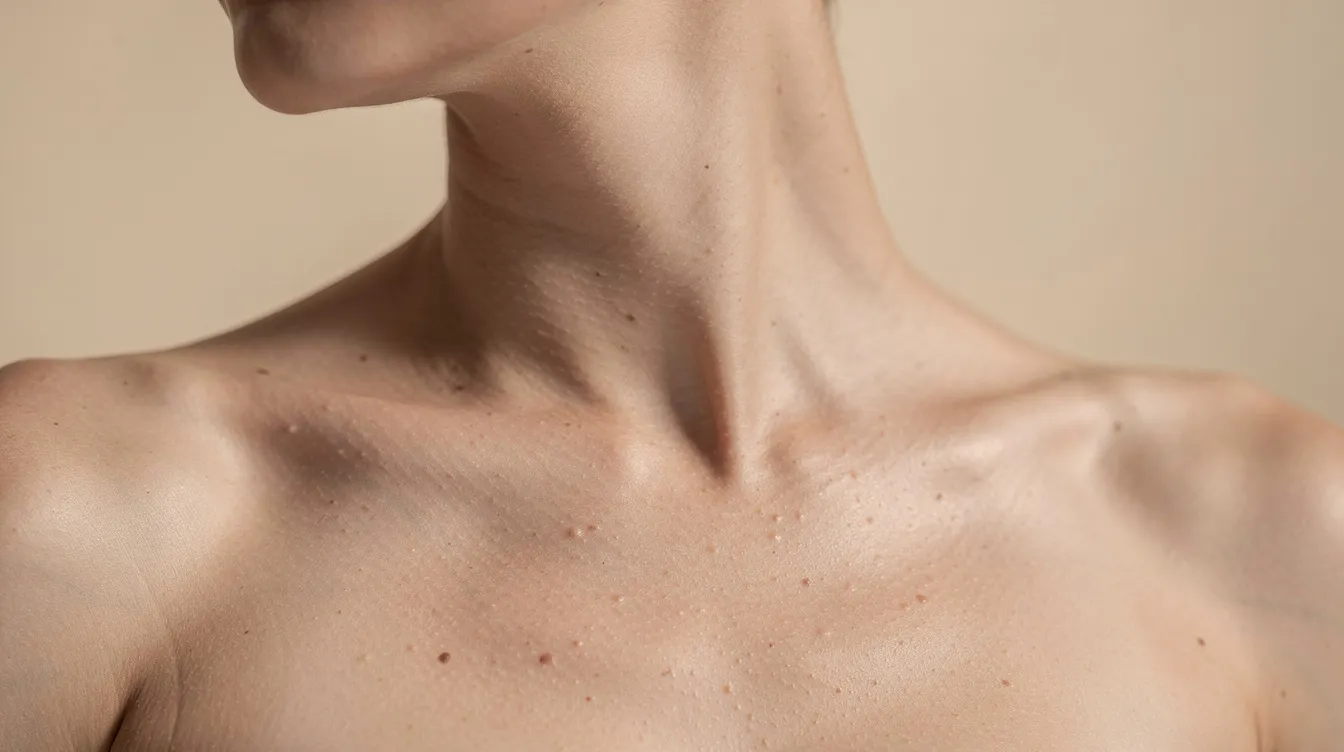
Hyperdilute Radiesse (diluted 1:2 with sterile saline) spreads across larger surface areas to target crepey skin, fine lines, and laxity rather than deep volume. Over 80% of patients in a décolleté trial reported satisfaction with skin tightness, with results lasting 1.5+ years. Clinical data show approximately a 48% increase in skin thickness versus baseline in certain body zones.
Body areas suited to hyperdilute Radiesse include upper arms, abdomen, thighs, knees, elbows, neck, and décolleté. Sculptra's FDA labeling covers facial wrinkles and folds only; body applications (buttocks, cellulite) exist off-label but lack randomized controlled trial support.
Choosing For Facial Volume
Start by identifying whether the goal is structural support (bone-level or deep fat loss), contour sharpening, or broad restoring volume and skin quality improvement.
Sculptra is ideal for restoring overall facial volume and improving skin quality. Use it when the patient has diffuse facial thinning, temple hollowing, or cheek deflation and wants gradual correction over several weeks. Sculptra can address overall facial volume loss across multiple zones in a single treatment plan.
Radiesse is effective for treating deep facial wrinkles and enhancing contours. Use it when the patient needs jawline definition, nasolabial fold correction, or chin projection and wants a visible result on injection day. Radiesse provides immediate structural volume where facial structure has weakened.
For patients with both localized contour loss and global volume loss, combining the two produces the most balanced desired outcomes.
Combine Sculptra: How To Combine Sculptra With Radiesse
Radiesse and Sculptra can be effectively combined in treatments. Combination treatments can target different facial areas effectively by using each product where it performs best.
One common sequencing approach:
Inject Radiesse first for jawline definition, chin projection, or nasolabial fold correction (Radiesse can enhance jawline structure in combination treatments)
Follow with Sculptra in cheeks, temples, or midface 4 to 6 weeks later for broad volume restoration
Use conservative dosing at each session; stagger injections to monitor the collagen response before adding more product
Providers often keep HA fillers in reserve for lips or tear troughs, where reversibility matters. Spacing sessions several weeks apart prevents tissue overload and allows the provider to evaluate how each product is integrating.
Side Effects, Safety, And Injection Considerations
Common side effects include swelling, bruising, and redness at injection sites. These are transient and resolve within days for most patients. Both Radiesse and Sculptra are considered safe when administered correctly.
Both fillers may carry risks of nodule or lump formation at injection sites. Sculptra post-approval data show a 28.5% nodule/papule incidence across facial areas over 5 years. Sculptra requires post-treatment massage to reduce nodule formation risk. Radiesse can produce palpable lumps if placed too superficially.
A skilled provider is critical for minimizing complications with both treatments. Key technique factors:
Injection depth (supraperiosteal for Radiesse in structural areas; deep dermal for Sculptra)
Dilution ratio for hyperdilute protocols
Cannula vs. needle selection based on anatomy
Avoiding vascular zones
Contraindications include active infection in the treatment area, immune deficiency (for Sculptra), severe allergies, and history of keloid scarring. Neither product is FDA-approved for lip injection.
Practical Patient Guidance And Consultation Steps
Before booking a session, a provider should cover these intake questions:
Medical history (autoimmune conditions, allergies, active infections, blood thinners)
Previous filler treatments and any complications
Desired timeline (event deadlines, willingness for multiple visits)
Budget and session commitment
A decision checklist for Sculptra vs Radiesse should weigh:
Goal: contour vs. broad volume vs. skin quality
Onset preference: instant lift vs. gradual build
Treatment area: localized (Radiesse) vs. diffuse (Sculptra)
Durability target: 12 to 18 months vs. up to two years
Follow-up visits at 1 month, 3 months, and 6 months allow tracking of how the stimulate collagen process is progressing and whether touch-ups are needed.
FAQ And Content Extras
How long do results last? Radiesse results typically last 12 to 15 months. Sculptra results can last up to 2 years or more after a completed series. Both products can last between 12 to 24 months depending on the treatment area and individual metabolism.
Is the injection painful? Radiesse (+) includes lidocaine in its formulation. Sculptra is reconstituted with sterile water, and lidocaine can be added. Topical anesthetics or nerve blocks reduce discomfort for either product.
Can I combine these with HA fillers? Yes. Many patients use Sculptra for broad facial volume, Radiesse for structural lift, and hyaluronic acid fillers for fine-tuning areas like lips or tear troughs. Sequence treatments with several weeks between sessions.
Who should not receive these fillers? Patients with active skin infections, immune deficiency, known allergy to product components, or a history of keloid scarring should not proceed. Severe facial sagging with tissue ptosis may require surgical intervention rather than injectable correction alone. Neither Sculptra nor Radiesse can be dissolved if results are unsatisfactory.
This article does not constitute medical advice. Consult a board-certified provider experienced in both Radiesse and Sculptra to build a treatment plan tailored to your anatomy, goals, and timeline.
Frequently Asked Questions
What is the main difference between how Radiesse and Sculptra work?
Radiesse provides immediate volume through a gel carrier while stimulating collagen production over months. Sculptra gradually builds collagen through multiple sessions over weeks, with minimal visible results at first.
How long do results last with each filler?
Radiesse results typically last 12 to 18 months. Sculptra can last up to 2 years or more after a complete treatment series. Longevity varies based on treatment area and individual metabolism.
How many treatment sessions are required for each product?
Radiesse typically requires 1 to 2 sessions. Sculptra requires 2 to 4 sessions spaced 3 to 6 weeks apart, with full results developing over 3 to 4 months.
Which filler is better for immediate results?
Radiesse provides instant volume and lift upon injection. Sculptra shows visible results gradually over 4 to 12 weeks, making it better suited for patients preferring natural-looking results that develop slowly.
Can Radiesse or Sculptra be reversed if I'm unhappy with results?
Neither Radiesse nor Sculptra can be dissolved if results are unsatisfactory, unlike hyaluronic acid fillers which can be reversed with hyaluronidase.


-2.jpg?width=2000&height=2000&name=Copy%20of%20YouTube%20Thumbnail%20-%20Life-Changing%20Cosmetic%20Surgery!%20(Document)-2.jpg)


