Noticing facial hollowness or loose skin after Semaglutide weight loss? This guide explains why these changes happen and how fat grafting, fillers, skin tightening and lifting treatments can help restore natural volume and contours.
Key Takeaways
The Cause: Rapid GLP-1 weight loss often leads to volume loss, such as facial hollowness and breast deflation.
The Reality: These changes are normal structural shifts, not signs of premature aging.
The Solution: Fat grafting, fillers and surgery can help restore a balanced, youthful look.
The Plan: A customized restoration plan is built around your face, your body and your goals.
Introduction: The Unspoken Side of Weight Loss
GLP-1 medications like Semaglutide have changed the lives of many people in Queens, Elmhurst and Jackson Heights. The weight loss is often dramatic, but the physical changes that follow can feel unexpected.
You might notice your face looks sharper, your cheeks appear deflated or your skin feels loose. These shifts can affect how you feel when you look in the mirror, but they are not your fault. They are simply the result of losing fat faster than your skin can adapt.
The good news? These concerns can often be improved with modern aesthetic treatments, chosen to match your anatomy and goals.
Why GLP-1 Weight Loss Affects the Face & Body
When weight loss occurs slowly, the skin gradually adjusts. GLP-1 medications, however, often create rapid fat loss. The deeper fat pads, which provide structural support to your face and body, shrink before the skin has time to tighten.
Common Facial Changes
Sunken Cheeks: Often referred to as "Ozempic Face."
Under-Eye Hollowness: Making you look tired despite feeling healthy.
Deepened Smile Lines: Caused by the descent of cheek volume.
Jowls: Sagging around the jawline.
Common Body Changes
Loose Abdominal Skin: A lack of elasticity after fat reduction.
Deflated Breasts: Upper-body volume loss is common.
Flattened Buttocks: Loss of projection.
Drooping Arms: Skin laxity in the triceps area.
Note: This is not aging. It is a structural change caused by rapid fat loss. Because the support system (fat) is reduced, the overlying tissues shift downward.
Treatment Options to Restore Your Look
A range of non-surgical and surgical options can restore volume, tighten skin and reshape the body. The right mix depends on how much volume was lost, how much the skin has stretched and what you want to change.
1. Fat Grafting (Restoring Natural Volume)
Good For: Cheeks, under-eyes, temples and jawline.
Fat grafting uses your own fat to refill hollow areas and rebuild natural contours. For many Semaglutide patients, it is an appealing option because it replaces lost fat with your own tissue.
Benefits: Restores fullness and can improve the look of the skin.
Results: Soft, natural-looking and long-lasting, although not all transferred fat survives and some areas may need a touch-up.
2. Dermal Fillers & Biostimulators
Good For: Fine lines, chin and jawline sculpting.
Fillers help restore volume and structure in areas where fat pads have thinned. They are a non-surgical way to soften hollows and lines.
Sculptra®: Supports gradual collagen production for a natural-looking improvement in the face.
Radiesse: Delivers sculpted lift and definition.
Hyaluronic Acid: Immediate volume for smile lines and under-eyes.
3. Skin Tightening & Lifting
Good For: Mild to moderate laxity on the face, neck and arms.
Loose skin is one of the most common concerns after GLP-1 weight loss. Tightening treatments can help improve firmness on the face, neck, arms and abdomen with a less extensive approach than major surgery.
4. Surgical Body Contouring
Good For: Significant loose skin.
When the skin has stretched beyond what non-surgical methods can correct, surgery may be the most effective way to restore shape. A consultation evaluates your unique anatomy to guide you toward realistic options, such as:
Liposuction: For remaining stubborn fat pockets.
Tummy Tuck: To remove excess abdominal skin.
Breast Lift/Fat Transfer: To restore upper pole fullness.
Your Customized Restoration Plan
A personalized post-GLP-1 plan is usually built on three pillars:
Restore Volume: Using fat grafting, fillers or breast/body fat transfer.
Tighten Skin: Using face and body tightening treatments to improve firmness.
Sculpt Shape: Using liposuction or surgical contouring where needed.
Timing matters too. Treatment generally works best once your weight has stabilized, so the results reflect your new baseline rather than a moving target. Your weight-loss success deserves a result that feels balanced, confident and authentically you.
Planning and Payment
The exact price is set at the consultation.
Cosmetic procedures are self-pay. Payment options can be reviewed in office after the exact plan and total are known.
We offer financing through Cherry and Alphaeon, subject to credit approval.
We also offer an in-house save-up plan with no credit check.
Related pages: Tummy Tuck, Body Contouring, Fat Grafting, Hormone Therapy and Botox & Fillers.
Frequently Asked Questions
Will my facial hollowing get worse over time?
Once your weight stabilizes, the changes typically stabilize as well. They usually won't improve on their own.
Is fat grafting long-lasting?
It offers long-lasting improvement, but not all transferred fat survives. Individual results vary.
Can fillers improve "Ozempic Face"?
Yes, especially for the cheeks, under-eyes, smile lines and jawline.
Do I need surgery for loose skin?
If the skin is significantly stretched, surgical options like a tummy tuck or arm lift may provide a more complete result than non-surgical treatments.
How soon after weight loss can I start treatment?
Many patients begin once their weight has been stable for a period of time. A consultation helps decide the right timing for you.
Is it normal to feel older after GLP-1 weight loss?
Yes, but the "aging" look comes from lost structure, not age. It is often very treatable.
Can I restore breast volume without implants?
Often, yes. Fat transfer to the breasts is a natural approach for post-weight-loss breast deflation.
Can I combine procedures for face and body?
Yes. Many patients choose combination treatment for a more complete restoration.
Do you offer financing?
We offer financing through Cherry and Alphaeon, subject to credit approval.
About Leva Medical
Leva Medical has offices in Queens (94-06 59th Ave, Suite E9, Elmhurst, NY 11373) and in Northport, Long Island (320 Laurel Rd, Northport, NY 11768).
Call (718) 699-9737 to book a consultation with our board-certified doctors.
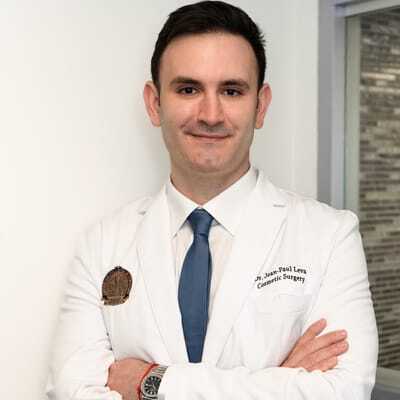
Dr. Jean-Paul Leva
Dr. Jean-Paul Leva, FACS is board certified in cosmetic and general surgery. Dr. Jean-Paul Leva, FACS obtained his Doctor of Osteopathic Medicine degree from ...