The era of extreme, exaggerated results is fading. In 2026, more patients are choosing natural BBLs that deliver improved curves without looking artificial or overdone. This guide breaks down everything you need to know about achieving a sculpted figure that actually looks like you—just enhanced.
What Is a Natural BBL (Brazilian Butt Lift)?
A natural BBL is a cosmetic procedure that uses your own body fat to enhance your buttocks and hips while maintaining proportions that match your frame. Unlike approaches that prioritize maximum volume, this technique focuses on subtle enhancement that could pass as genetics.
The brazilian butt lift bbl process involves fat transfer from donor areas like the abdomen, flanks, and lower back. The harvested fat is purified, then strategically injected into the buttocks to create smooth curves without sharp transitions or shelf-like projection.
Results emphasize seamless waist-to-hip flow, avoiding the overly projected or “plugged-in” look common on social media. Most patients seeking natural bbl surgery in 2026 want to look like a refined version of themselves—not like they had plastic surgery.
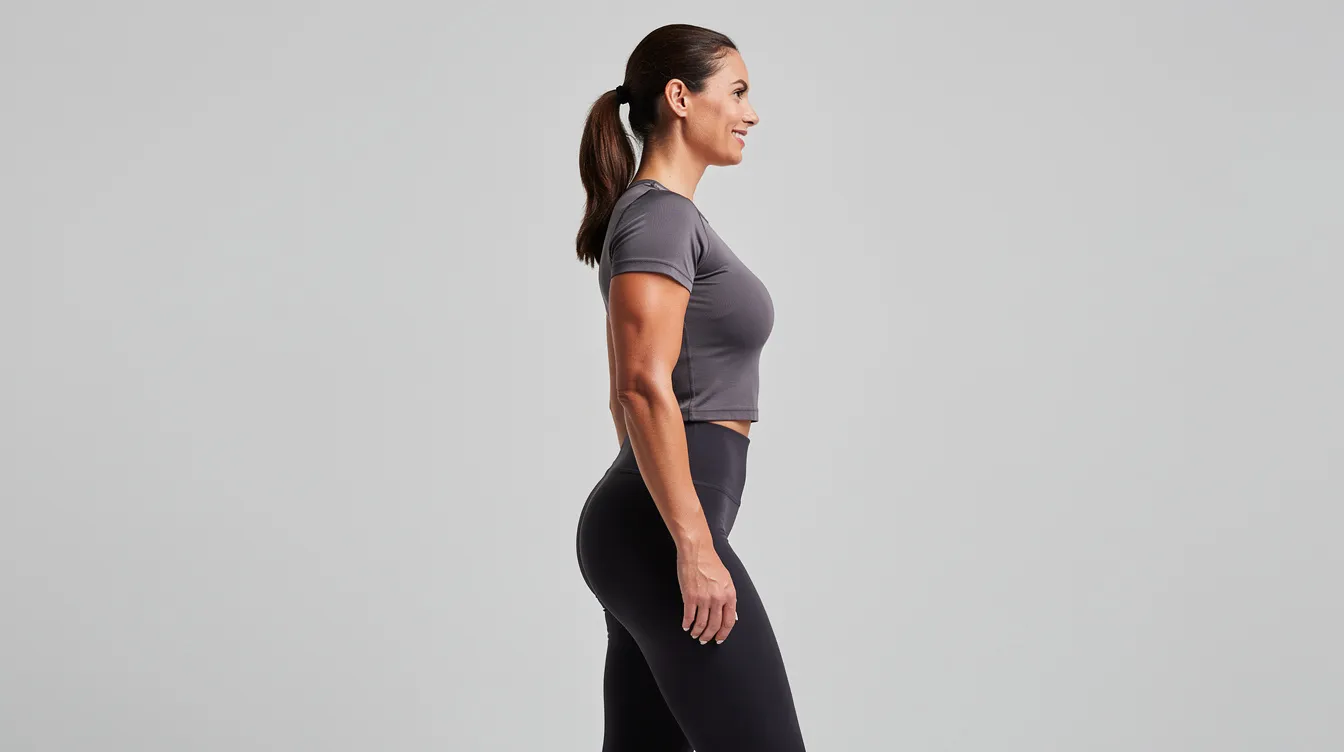
What Does a Natural‑Looking BBL Really Mean?
When surgeons describe natural looking results, they’re talking about specific visual markers: balanced proportions, gentle side-profile projection, rounded upper buttock fullness, and no abrupt step-offs where the butt meets the hip or thigh.
Natural looking bbl results don’t mean “no change.” You’ll notice a rounder, perkier shape—but it reads as believable enhancement that could plausibly be genetic. The goal is a natural shape that moves and sits like normal tissue.
Contrast this with exaggerated results: extremely tiny waists, disproportionately wide hips, and projection that strains clothing seams. These approaches often photograph well initially but look off in motion and can age poorly as tissues stretch over years.
Patient lifestyle matters too. Your fitness level, posture, and clothing style affect how “natural” your result reads daily. Athletic builds and well-fitted garments tend to amplify even modest changes.
Natural Proportions vs. Exaggerated “Instagram” Results
Surgeons evaluate natural proportions using concrete ratios. A waist-to-hip ratio around 0.65–0.75 looks believable for most women, while thigh circumference and torso length help determine how much enhancement fits your frame.
Moderate projection and width that align with your shoulder dimensions create harmony. When hips drastically outgrow the upper body, results appear artificial regardless of how much fat was transferred.
Consider this example: a patient increasing from US size 4 to size 6 through controlled fat addition maintains proportion. Jumping several sizes via extreme volume creates strain on natural thigh circumferences and torso balance.
Exaggerated outcomes may generate social media engagement, but they often look awkward in motion, cause clothing fit issues, and tend to age poorly as skin stretches over 2–5 years.
Common Misconceptions About “Natural” BBLs
Many assume a natural bbl means tiny, imperceptible changes. In reality, you can achieve noticeably rounder, perkier contours that still look authentic—visible in fitted jeans, dresses, and swimsuits.
Another myth: skinny patients can’t see dramatic curves. Even with limited donor fat, contouring the waist plus modest buttock augmentation creates significant visual impact through proportion change, not just volume.
The belief that “more fat = better” undermines many bbl journey outcomes. Beyond a certain threshold, excess volume harms fat survival, causes lumpiness or firmness, and creates disproportionate projection. Quality and placement matter more than raw milliliters.
Who Is a Good Candidate for a Natural BBL?
The good candidate profile starts with general health: adults typically aged 21–55 who want proportionate enhancement rather than extreme transformation.
Basic criteria include being a non-smoker (or able to quit several weeks before and after surgery), maintaining stable weight for at least 6 months, and having no uncontrolled conditions like diabetes or clotting disorders. Your plastic surgeon will evaluate these during consultation.
Psychological readiness matters equally. You need realistic expectations about downtime, scars from liposuction ports, and sitting restrictions requiring special pillows. Understanding that final results take months to stabilize prevents disappointment.
Both low-BMI patients pursuing a skinny bbl and mid-range BMI patients qualify, though achievable volume and approach differ significantly based on body fat availability.
Body Type, Fat Availability, and Skin Quality
Surgeons typically need enough donor fat to safely harvest 1.5–3 liters via liposuction, which yields a moderate transfer volume after purification. This fat harvesting process varies by body type.
Pear-shaped patients often provide ample abdominal and flank fat. Athletic or straight builds may require harvesting from multiple sites: inner thighs, back, and arms combined. Very lean patients need creative donor site planning.
Good skin elasticity—common in younger patients and non-smokers with minimal weight cycling—helps both the buttock and waist contour smoothly after the bbl procedure. Mild stretch marks tolerate surgery well.
Severe skin laxity may require adjunct procedures. Some patients combine their brazilian butt lift with a tummy tuck or skin-tightening treatments to achieve optimal results.
How Surgeons Create Natural‑Looking BBL Results
The surgical process begins with detailed consultation, often using 3D imaging to align goals with anatomy. In the operating room, the surgeon marks donor and recipient zones before beginning gentle liposuction.
The “natural” outcome depends less on how much fat is injected and more on placement angles, tissue layers, and distribution patterns. Artistry distinguishes exceptional results from average ones.
Safety protocols in 2026 mandate fat placement strictly above the gluteal muscle. Many centers use ultrasound technology to guide cannula positioning, reducing fat embolism risk to under 0.1% at high-volume facilities.
Fat Harvesting and Purification
Gentle liposuction methods—power-assisted or vibration-assisted—preserve 80–90% of healthy fat cells while creating smooth donor areas. Lower suction pressure protects cell viability.
After extraction, fat undergoes purification through centrifugation or filtration. This removes oils, blood, and tumescent fluid, leaving only viable adipocytes. The goal is retaining only healthy fat cells for reinjection.
Surgeons remove fat from the waistline, lower back, and flanks strategically. Eliminating unwanted fat from these areas accentuates the butt visually, making enhancement appear more dramatic even with conservative volume.
Strategic Fat Placement for Smooth, Subtle Contours
Fat injection follows a multi-layer approach: small threads (1–2 mL aliquots) spread through upper, mid, and lateral buttock planes. This mimics native tissue distribution for natural movement and feel.
Filling hip dips creates seamless lateral transitions without a spherical “ball” appearance. The upper buttock receives attention for lift and youthful silhouette, while the lower pole rounds gently without overhang.
A typical distribution: 40% upper buttock, 30% mid-buttock, 20% lateral hips, 10% lower pole. This creates three-quarter view harmony—the angle most people actually see in mirrors and photos.
Avoiding Overfilling and Unnatural Projection
Each buttock safely accepts only limited volume before tissue pressure compromises fat survival. Overfilling reduces viability from typical 60–70% survival down to under 40%.
Beyond survival concerns, overfilling creates firmness, lumpiness, and disproportionate projection visible in side view and tight clothing. These issues often require revision surgery later.
Some patients achieve desired results through staged procedures—a second natural BBL 9–12 months later—rather than risking complications from one massive session.
How Much Fat Is Typically Used in a Natural BBL?
Realistic transfer ranges: many natural BBLs involve 250–500 mL per buttock, sometimes reaching 700 mL total for buttocks and hips combined. How much fat works depends on your starting anatomy and goals.
Surgeons harvest more volume than they ultimately inject. Purification discards 30–50% of extracted material, so 1.5–3 liters harvested might yield 600–1000 mL of usable fat.
Very petite patients may receive smaller but still effective volumes. Focusing on shaping rather than size—defining the waist, filling hip dips, lifting the upper pole—maximizes visual impact per milliliter. “How it looks” matters more than operative numbers.
Balancing Enhancement with Your Natural Frame
During consultation, surgeons visually simulate outcomes, explaining why specific volumes fit your torso, thighs, and shoulders. A personalized approach respects tissue capacity and skeletal proportions.
Ignoring frame limits causes problems: worsened cellulite, skin stretch, unnatural waddle, or transferred fat that settles irregularly. These issues become more pronounced over years.
Think long-term. How will your butt look not just at 6 months, but 5–10 years later as weight and skin naturally change? Conservative enhancement ages better than extreme volume.
Can a “Skinny” Patient Get a Natural BBL?
A skinny bbl targets patients with BMI around 18–23 who have limited body fat but still want improved curves. Results emphasize sculpted waist definition plus modest augmentation rather than dramatic size increase.
Common donor areas in lean patients include flanks, lower back, inner thighs, and arms—often combined to gather enough volume. With meticulous technique, even smaller fat quantities produce visible natural bbl outcomes.
Special Techniques for Low‑BMI Patients
Surgeons adapt using advanced techniques: ultra-fine cannulas (2–3mm), lower suction pressure, and hyper-meticulous fat processing to preserve every viable cell.
Emphasis shifts to defining the sacral “V” zone, waist hollows, and upper buttock fullness. These details maximize visual impact with limited resources, creating hourglass silhouettes even without major size change.
Some very lean patients benefit from gaining 5–10 lbs under medical supervision pre-operatively. This provides additional donor fat without compromising health.
Realistic Expectations If You Are Naturally Thin
Clothing size may not change dramatically, but curves and silhouette in fitted clothes and swimsuits will noticeably improve. Many patients describe looking “perkier” and “rounder” without appearing altered.
Extremely dramatic curves seen online typically require more fat than low-BMI patients safely provide. Accepting this reality prevents disappointment.
If volume goals are unrealistic, consider complementary approaches: focusing on waist contouring alone, or discussing other procedures with your board certified plastic surgeon.
Recovery After a Natural BBL and How to Preserve Results
Week one demands 24/7 side-lying or prone positioning with no direct butt pressure. Pain management and short walks (for DVT prevention) fill this phase.
Weeks 2–3 introduce light activities and continued compression on liposuctioned donor sites. By 6–8 weeks, most restrictions ease, and 80% of swelling resolves.
Early asymmetry, bruising, and swelling are normal—not reflective of final results. Patience is essential as your body heals.
Key Aftercare Habits for Natural‑Looking Results
Wear compression garments on liposuctioned areas as directed. These smooth contours and reduce swelling, supporting natural looking bbl results.
Avoid smoking, vaping, and significant alcohol during the first 4–6 weeks. These impair vascularity and can reduce fat survival by 20%.
Walk gently early on, but postpone intense exercise until cleared (typically week 6–8). Lymphatic massage starting around day 3 helps with fluid drainage and healing.
When Will Your Natural BBL Results Look “Settled”?
Shape changes rapidly during month one as swelling drops and some transferred fat is naturally absorbed—typically 30–40% resorption occurs.
By 6 weeks, you’ll preview your outcome. Final results usually stabilize between 3–6 months post-procedure.
After stabilization, your butt responds to weight fluctuations like any other fat. Maintaining ideal weight within 5–10 lbs preserves long-term shape.

Safety, Surgeon Selection, and Avoiding an “Overdone” BBL
Modern safety protocols mandate fat placement only above the gluteal muscle, with ultrasound guidance increasingly standard. These measures reduce serious risks dramatically.
Choose a board certified plastic surgeon with a proven track record specifically in natural BBLs—not just high-volume procedures prioritizing size. Review unedited galleries showing 6–12 month follow-ups.
Be cautious about high-volume, low-cost clinics emphasizing more dramatic curves over safety and artistry. Patient satisfaction correlates with surgeon experience and conservative technique, not bargain pricing.
Red Flags During Consultations
Warning signs include providers pushing maximum size, dismissing your preference for subtle enhancement, or guaranteeing exact dimensions or celebrity “copy-paste” outcomes.
Demand unedited before-and-after photos, including side views. Results should look consistent across multiple patients with similar body types.
A quality consultation feels like collaborative discussion about your anatomy and lifestyle—not a sales pitch for more volume or bbl implants.
Planning Goals Based on Your Anatomy, Not Trends
Bring reference photos, but remain open to surgeon feedback. What works for one height, bone structure, and skin quality may not translate to yours.
Trends like ultra-tiny waists or extreme hip widths (popular in early 2020s) often age poorly. Natural proportions tend to remain attractive across decades and fashion cycles.
Focus on how you want to appear in daily outfits over 5–10 years—not just one vacation or photo shoot. This mindset supports lasting patient satisfaction.
How Long Do Natural BBL Results Last and Will It Feel Natural?
Once healed, surviving fat (typically 60–70%) integrates as native tissue. It shrinks with weight loss and grows with weight gain, behaving like normal body fat.
Many patients enjoy stable results for 5–10+ years when maintaining a healthy lifestyle and steady weight. Unlike butt implant surgery with silicone implants, fat transfer creates tissue that’s genuinely yours.
By 3 months post-op, your buttock typically feels natural—soft and integrated, not like foreign material. This differs significantly from the firmness associated with any implant type.
Can You Touch, Sit, and Exercise Normally Long‑Term?
After full healing (3–6 months), you can return to normal activities: sitting, sleeping any position, and exercising without damaging results. Natural compared to implants, transferred fat feels authentic to both you and partners.
Long-term maintenance means lifestyle—maintaining weight, staying active—not ongoing medical treatments. Glute exercises after surgical clearance can enhance perkiness as skin and muscle adapt.
The natural bbl delivers fewer risks than butt implants and exceptional results that integrate seamlessly with your body. Whether you’re in Beverly Hills or elsewhere, seek a thorough consultation with a qualified surgeon to start your bbl journey with confidence.
Learn more: Botox & Fillers at Leva Medical
-2.jpg?width=2000&height=2000&name=Copy%20of%20YouTube%20Thumbnail%20-%20Life-Changing%20Cosmetic%20Surgery!%20(Document)-2.jpg)


