If you're weighing morpheus8 vs microneedling for your next skin treatment, you're asking the right question. Both procedures stimulate collagen production and address a range of skin concerns, but they work at different depths, require different investments, and deliver different levels of results. This guide breaks down what matters so you can make a confident choice.
Learn more: Body Contouring at Leva Medical
Overview: Morpheus8 and Traditional Microneedling
Traditional microneedling, also known as collagen induction therapy, uses fine needles to create controlled micro injuries in the skin's surface, triggering the body's natural healing response to rebuild collagen and elastin. Morpheus8 combines microneedling with radiofrequency energy, delivering rf energy through insulated needles to heat the deeper layers of skin for more intensive tissue remodeling. Both treatments can be used for skin rejuvenation, but the intensity, cost, and outcomes differ significantly.
Feature | Traditional Microneedling | Morpheus8 |
|---|---|---|
Depth | 0.5–2.5 mm | Up to 4 mm (body up to 7 mm) |
Energy | Mechanical only | Mechanical + RF |
Sessions needed | 3–6 | 1–3 |
Downtime | 1–2 days | 1–5 days |
Cost per session | $200–$700 | $700–$2,000 |
Best for | Surface-level texture, mild concerns | Laxity, contouring, deeper scarring |
Microneedling Basics: Collagen Production and Elastin Stimulation
Standard microneedling works by puncturing the top layers of skin with tiny needles. These controlled micro injuries activate fibroblasts in the dermis, which then produce new collagen fibers - primarily types I and III - along with other structural proteins. The process improves skin texture and skin tone over several weeks as the skin heals and rebuilds.
Elastin stimulation also occurs, though more slowly. Elastin fibers have a low natural turnover rate, so improvements in skin elasticity tend to appear gradually over weeks to months rather than immediately.
Typical needle depths for standard devices range from 0.5 to 2.5 mm. Delicate areas like the perioral region use shallower settings around 0.5 mm, while thicker skin or scar tissue may need 1.5–2.5 mm for meaningful collagen stimulation.
Microneedling treats fine lines, wrinkles, and scarring. It also improves overall skin texture and tone, making it a solid starting point for anyone dealing with uneven skin texture or early signs of aging.
Morpheus8 Explained: Collagen Remodeling for Facial Rejuvenation
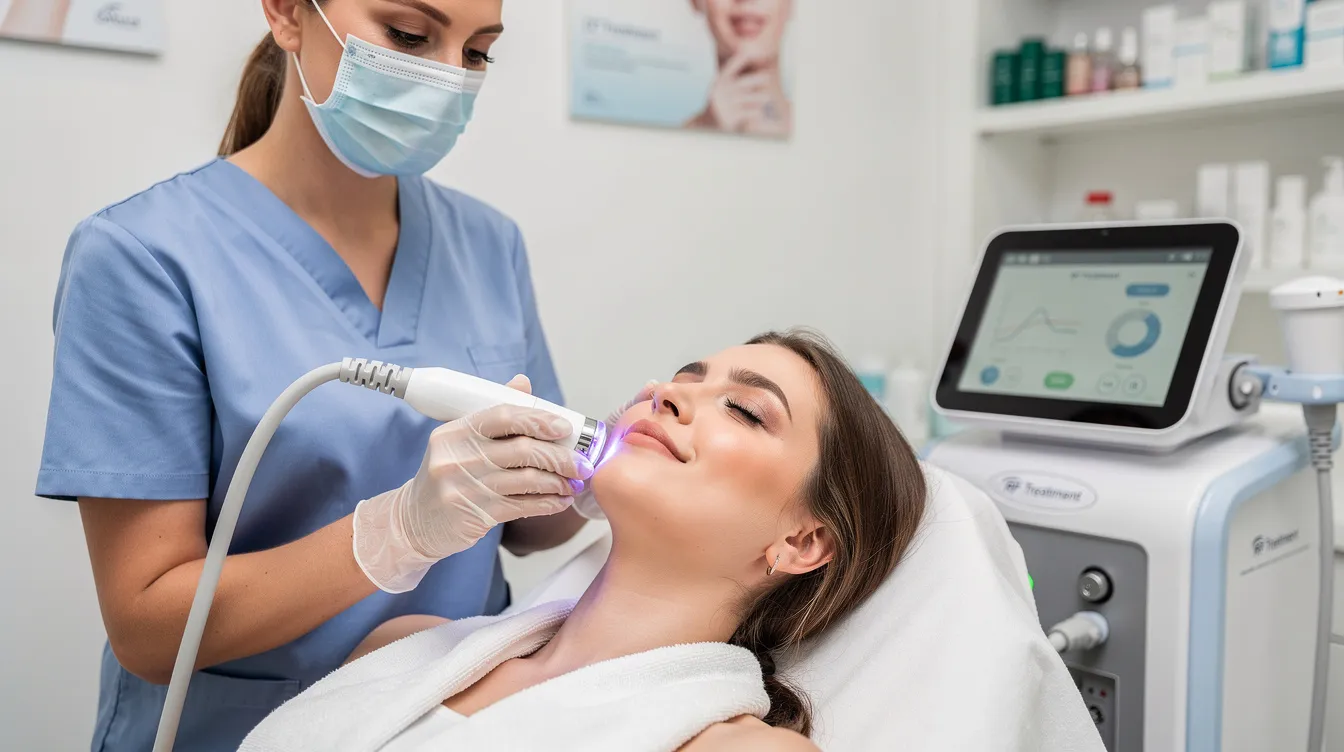
Morpheus8 is a more advanced treatment that takes the microneedling concept further. Its insulated needle arrays - typically 24 needles - penetrate the skin and deliver bipolar radiofrequency energy directly into the dermis and subdermis. This thermal energy creates gentle heat that causes existing collagen to contract immediately while stimulating robust new collagen and elastin production over subsequent weeks.
Morpheus8 penetrates up to 4 mm deep into skin for facial treatments, reaching deeper layers that standard microneedling simply cannot access. That deeper penetration drives collagen remodeling at a level that addresses not just texture but also skin laxity and volume loss. Histologic studies show measurable increases in elastin content, hyaluronic acid, and reticular dermal volume by approximately 10 weeks post-procedure.
Common facial rejuvenation target areas include the lower face, jawline, neck, cheeks, nasolabial folds, and periorbital regions. Morpheus8 is recommended for those concerned with aging skin, and patients seeking moderate to severe skin laxity treatment may particularly benefit. The device provides both resurfacing and deep-tissue tightening in a single treatment session.
Morpheus8 enhances firmness and reduces deep wrinkles, making it a strong option for anyone noticing sagging skin or loss of definition along the jawline.
Microneedling What's The Difference - Key Differences Compared
When comparing morpheus8 and traditional microneedling, the key differences come down to depth, sessions, speed of results, and versatility.
Treatment depth: Traditional microneedling typically penetrates 0.5 to 2.5 mm deep. Morpheus8 penetrates deeper into the skin than traditional microneedling, reaching up to 4 millimeters into the skin for facial work and up to 7 mm for body treatments. Microneedling is ideal for surface-level skin issues, while Morpheus8 can treat deeper skin concerns than traditional microneedling.
Session counts: Morpheus8 typically requires 1 to 3 sessions for results, spaced 4–6 weeks apart. Traditional microneedling often requires 3 to 6 sessions for optimal results, spaced about 4 weeks apart. That means fewer sessions overall with rf microneedling.
Visible results: Morpheus8 typically shows faster visible results than microneedling. Some patients notice initial tightness within 1–2 weeks, with full collagen remodeling visible at 3–6 months. Microneedling delivers noticeable improvements in skin tone and smoother texture within 2–4 weeks, but deeper corrections accumulate more slowly over 3–6 months across multiple sessions.
Versatility: Microneedling works best on facial areas, neck, and stretch marks. Morpheus8 extends to larger body areas - abdomen, thighs, submental fat - with its deeper treatment capacity, making it effective for skin tightening and contouring beyond the face.
Collagen and Elastin: Production, Remodeling, Timelines
With standard microneedling, the natural healing response kicks in within days. Type III collagen appears first, followed by type I collagen and full matrix remodeling over 8–12 weeks. RF microneedling accelerates this timeline because the rf heat adds a second stimulus on top of the mechanical injury, driving more dramatic improvements in the dermal structure.
Elastin stimulation is more pronounced with Morpheus8. Traditional microneedling triggers modest elastin production, while radiofrequency microneedling generates measurable elastin fiber increases. Both approaches ultimately work toward firmer skin, but the magnitude differs.
For microneedling, expect texture improvements at 4–8 weeks and scar correction over 3–6 months. For Morpheus8, skin begins showing tightening effects at 1–2 weeks, with peak collagen remodeling around 3–6 months. Morpheus8 results last longer than traditional microneedling - often 1–2 years with proper maintenance.
Acne Scars and Fine Lines: Expected Outcomes
Traditional microneedling is effective for acne scars at shallow-to-moderate depths, particularly with needle settings of 1.5–2 mm. It's also effective for enlarged pores and mild sagging. Morpheus8 can treat deeper acne scars compared to traditional microneedling because the combination of mechanical and thermal injury reaches further into scar tissue, boosting collagen at depths that standard needles miss.
For improving fine lines, both treatments deliver. Microneedling handles superficial wrinkles well across multiple sessions. Morpheus8 performs better for deeper wrinkles or when mild skin laxity accompanies the lines, as the rf energy causes collagen contraction and more robust dermal tightening.
Combining either treatment with adjuncts like PRP can enhance outcomes. Microneedling paired with PRP is well documented to improve scar and wrinkle therapy. For Morpheus8, pairing with low-fluence laser treatments or topical agents can address different skin concerns like pigmentation alongside texture.

Minimal Downtime: Recovery, Pain, and Side Effects
One of the strongest selling points for both procedures is minimal downtime, though they differ in degree.
Microneedling: Mild redness lasting 24–72 hours, mild swelling that resolves quickly. Microneedling has minimal downtime of 1–2 days for most patients.
Morpheus8: Morpheus8 may lead to more downtime compared to traditional microneedling. Expect redness, moderate swelling, and possible pinpoint scabbing lasting 2–5 days. Morpheus8 may cause redness for 1–5 days post-treatment depending on depth and treatment area.
Both treatments involve temporary redness and swelling. Additional short-term side effects for either can include tenderness, mild bruising, and pinpoint bleeding. RF microneedling adds the possibility of thermal injury if settings are too aggressive.
Aftercare essentials:
Gentle cleansing and consistent moisturizing
Broad-spectrum sunscreen daily
Avoid retinoids, acids, and harsh topicals until skin heals
Skip alcohol and NSAIDs before RF treatments to reduce bruising
Apply numbing cream before treatment to manage discomfort
Suitability and Safety: Skin Types and Contraindications
Who should avoid RF treatments:
Patients with pacemakers or implanted electrical devices
Those with uncontrolled diabetes or bleeding disorders
Anyone with active acne or skin infections
Patients on recent isotretinoin
Pregnant or breastfeeding individuals
Safe across skin types: Morpheus8 is suitable for all skin tones, including Fitzpatrick types III–VI, when using epidermal-sparing, conservative settings. Standard microneedling is also generally safe across all skin types when performed correctly. Transient post-inflammatory hyperpigmentation is more common in darker skin but long-term pigment changes remain rare with proper technique.
Ideal candidates for traditional microneedling are generally younger individuals with mild signs of aging or surface-level specific skin concerns like uneven texture or enlarged pores. Morpheus8 addresses deeper skin concerns like laxity and contouring, making it better suited for patients with more advanced aging or specific concerns about sagging skin.
Always schedule a pre-treatment consultation to assess skin type, medical history, anatomy, and expectations.
Practical Considerations: Cost, Sessions, and Maintenance
Traditional microneedling costs less per session than Morpheus8. A standard session runs $200–$700, while Morpheus8 facial sessions range from $700–$2,000. Body treatments can reach $1,500–$3,000 or more. Morpheus8 is considered a higher investment than microneedling upfront.
However, Morpheus8 requires fewer sessions - often 1–3 compared to 3–6 for microneedling - which narrows the total cost gap. Microneedling often requires 3–6 sessions for best outcomes, with maintenance every 3–4 months. Morpheus8 maintenance is typically once per year after the initial series.
Microneedling | Morpheus8 | |
|---|---|---|
Cost per session | $200–$700 | $700–$2,000 |
Sessions for optimal results | 3–6 | 1–3 |
Maintenance | Every 3–4 months | Annually |
Morpheus8 and Microneedling: Combination Strategies and Add-Ons
You don't always have to pick one. Combining morpheus8 and microneedling in a treatment plan can help you address different layers of common skin concerns over time.
When to combine: Start with microneedling for lighter texture or tone concerns, then add Morpheus8 for deeper issues like laxity, fat remodeling, or stubborn scarring. Alternatively, use Morpheus8 as your foundation series and maintain with microneedling sessions afterward.
Pairing options: Microneedling paired with PRP remains one of the most validated combinations for stimulate collagen production and enhance scar correction. Morpheus8 can be paired with topical lighteners or vitamin C serums to address pigmentation alongside collagen remodeling.
Sequencing for minimal disruption: Schedule microneedling first when you need to stay close to normal activities. Save Morpheus8 for periods when you can accommodate slightly longer recovery. Avoid stacking aggressive modalities or chemical peels during healing windows.
FAQs: Microneedling What's The Difference And Common Questions
Is Morpheus8 more painful? Yes. The combination of needle penetration and rf heat makes Morpheus8 more intense. With numbing cream, patients typically rate it 5–7 out of 10, compared to 3–5 for standard microneedling. Pain also varies by depth, energy level, and treatment area.
Which treatment works faster? Morpheus8 often achieves results in just 1–3 sessions, with some tightening visible within weeks. Microneedling shows surface improvements in 2–4 weeks but requires more sessions for dramatic improvements. For desired outcomes involving deeper remodeling or skin tightening, Morpheus8 delivers faster.
Can Morpheus8 replace microneedling? In some cases, yes - especially if your skin goals involve deeper scarring, laxity, or contouring. But microneedling remains valuable for mild concerns, maintenance, patients with budget constraints, or those who prefer shorter recovery. It's not a full replacement for every scenario. Both are legitimate non surgical procedures with distinct strengths.
Conclusion: Choosing Between Treatments for Facial Rejuvenation
Quick decision checklist:
Surface-level texture, enlarged pores, mild concerns → standard microneedling
Deeper wrinkles, skin laxity, contouring, deeper acne scars → Morpheus8 (an advanced treatment)
Budget-conscious with more time for sessions → microneedling
Willing to invest more for fewer sessions and longer-lasting results → Morpheus8
Want radiant skin with boosting collagen at every level → consider combining both
The morpheus8 vs microneedling decision ultimately depends on your specific concerns, timeline, and budget. Neither treatment is universally "better" - they serve different purposes along the same spectrum. Consult with a board-certified dermatologist or experienced aesthetic provider who can evaluate your skin, discuss realistic outcomes, and build a personalized plan that gets you to your desired outcomes efficiently.

Frequently Asked Questions
What is the main difference between Morpheus8 and traditional microneedling?
Traditional microneedling uses fine needles to create micro injuries at depths of 0.5-2.5mm, while Morpheus8 combines microneedling with radiofrequency energy, penetrating up to 4mm on the face and 7mm on the body for more intensive tissue remodeling.
How many treatment sessions are typically needed for each procedure?
Morpheus8 typically requires 1-3 sessions spaced 4-6 weeks apart, while traditional microneedling usually requires 3-6 sessions spaced about 4 weeks apart for optimal results.
What is the cost difference between these two treatments?
Traditional microneedling costs $200-$700 per session, while Morpheus8 ranges from $700-$2,000 per session. Morpheus8 is generally the more expensive option due to its advanced technology and intensity.
Which treatment is better for deeper skin concerns like laxity and scarring?
Morpheus8 is better suited for deeper concerns including skin laxity, contouring, and deeper scarring due to its ability to penetrate further into the skin. Traditional microneedling works better for surface-level texture and mild concerns.
When can patients expect to see results from each treatment?
Morpheus8 shows faster results, with some patients noticing initial tightness within 1-2 weeks and full remodeling visible at 3-6 months. Microneedling shows improvements in skin tone and texture within 2-4 weeks, with deeper corrections accumulating over 3-6 months.


-2.jpg?width=2000&height=2000&name=Copy%20of%20YouTube%20Thumbnail%20-%20Life-Changing%20Cosmetic%20Surgery!%20(Document)-2.jpg)


