A mini facelift procedure targets the lower face to reduce early signs of aging without the extended recovery of a traditional facelift. If you have noticed mild jowling or a softening jawline and want a less invasive alternative to full facelift surgery, this guide covers what the procedure involves, who qualifies, what it costs, and how it compares to other facelift options.
What Is a Mini Facelift?
A mini facelift is a cosmetic surgery that focuses on the lower half of the face. It uses shorter incisions and less tissue dissection than a standard facelift to address sagging skin along the jawline and early jowls.
The term "mini facelift" is not standardized in medical literature. Surgeons use names like short-scar facelift, MACS lift, limited-incision facelift, and minimal-incision facelift to describe similar surgical procedures. What they share is a common goal: facial rejuvenation of the lower face with smaller scars, less dissection, and reduced surgery time compared to a full facelift.
Underlying anatomy plays a role in the technique. Most mini facelift surgery involves the SMAS (Superficial Musculo-Aponeurotic System), a layer of tissue beneath the skin. Surgeons plicate or lift this layer to reposition sagging tissue. The platysma, the neck muscle, is typically less involved or not addressed at all.
What Does a Mini Face Lift Address?
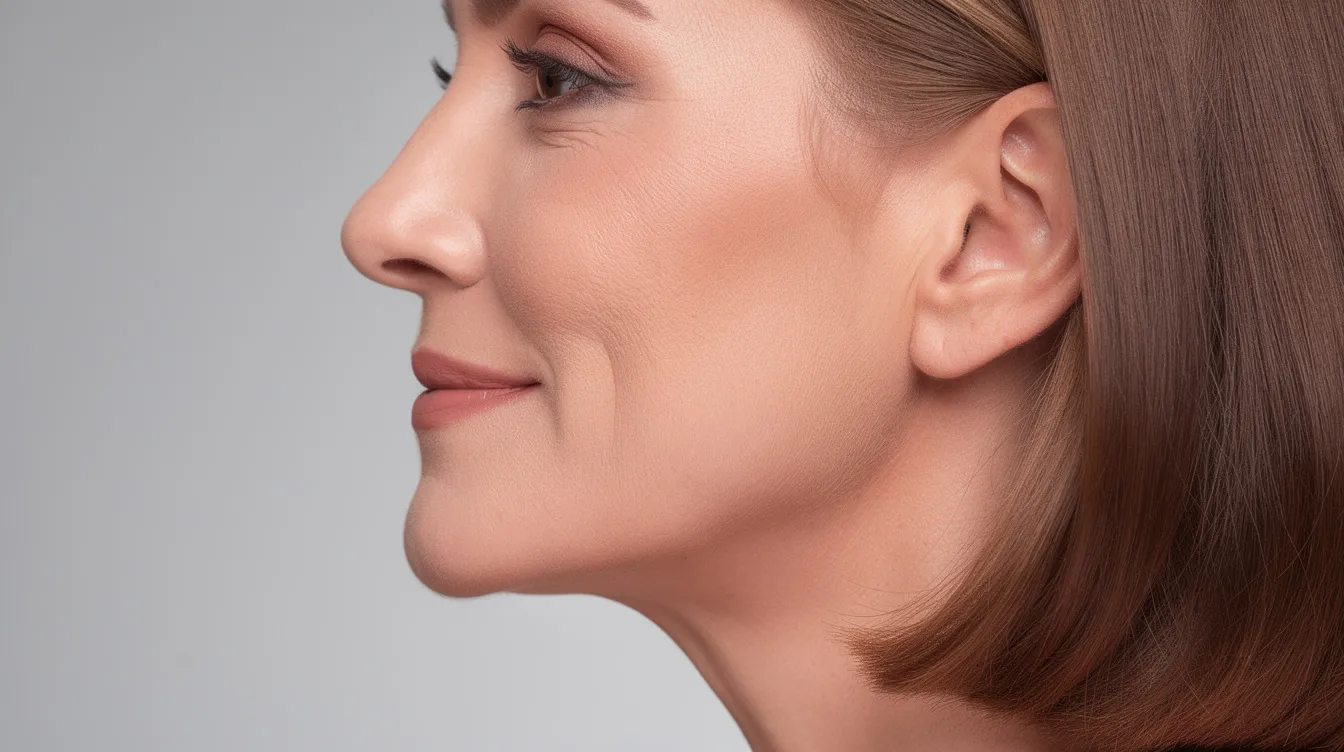
The procedure improves jawline definition by repositioning soft tissue that has descended along the mandibular border. It lifts early jowling and restores a cleaner transition from chin to neck.
Upper neck appearance may improve mildly depending on the technique, but a mini facelift is not a neck lift. Platysmal bands and loose neck skin fall outside its scope.
There are clear limitations. The midface (cheeks, under-eye area, upper face) is not corrected. Deep nasolabial folds and deep lines around the mouth often remain unless treated separately with fillers or other procedures. Facial skin texture, sun damage, and volume loss are also not directly improved by lifting alone.
Mini Facelift Versus a Full Facelift
A traditional facelift targets the entire lower face and neck, while a mini facelift focuses on the lower face and jawline. The table below breaks down the concrete differences.
Aspect | Mini Facelift | Traditional Facelift |
|---|---|---|
Treatment area | Lower face, jawline, mild upper neck | Lower face, midface, neck |
Incisions | Shorter; in front of ear, around earlobe, sometimes small behind-ear component | Longer; from temples, around ear, behind ear into hairline, possibly under chin |
Surgery time | About two hours | Two to four hours |
Anesthesia | Depends on the scope; discussed at the consultation | General anesthesia |
Recovery | Often shorter than a full facelift | About 1 to 2 weeks before returning to work and social activities |
Degree of correction | Mild to moderate | Moderate to advanced |
Incision scars from a mini facelift are shorter than those from traditional facelifts. Traditional facelifts involve longer incisions and general anesthesia, which allows surgeons to address more extensive facial aging including the neck and midface. Mini facelift patients generally experience quicker recovery than traditional facelift patients.
When a patient has moderate to advanced laxity, heavy jowls, or neck banding, a full facelift offers better correction because it allows more tissue redraping and direct work on the platysma.
The core difference is the plane of dissection. In a deep plane facelift, the surgeon lifts skin and SMAS together as a composite flap, releasing retaining ligaments to reposition midface fat pads and cheek tissue. A mini facelift typically plicates or performs a limited lift of the SMAS without entering the deep plane.
This distinction matters for suitability. A deep plane facelift addresses advanced facial aging, midface descent, and heavier facial fat. It is often a better fit for older patients or those with more tissue laxity. Younger patients with mild laxity are often better served by a mini lift.
Longevity and risk profiles also differ between techniques. More extensive dissection can allow more correction but may carry a different set of risks, while more limited techniques focus on the lower face and may not hold back midface and neck changes as long. Your surgeon can explain how each approach applies to your anatomy.
Who Is a Good Candidate?
The right candidate for a mini facelift has these characteristics:
Age range: Ideal candidates are typically aged 30 to 50 years, though genetics and skin condition matter more than a number on a calendar.
Skin quality: Mini facelifts are well suited for individuals with good skin elasticity and good skin quality. Skin that has lost elasticity from sun damage or smoking does not redrape well after lifting.
Degree of laxity: Candidates should have mild to moderate facial laxity, particularly early jowling along the jawline.
Health status: Candidates should be in good overall health, non-smokers, and free from conditions that impair healing (uncontrolled diabetes, vascular disease).
Realistic expectations matter. A mini facelift will not erase all signs of aging. Patients who expect correction of midface descent, deep nasolabial folds, or neck bands will need additional procedures or a different approach. Non surgical options like fillers or laser treatments can complement results but do not replace surgical lifting.
Factors that push toward a full or deep plane facelift include heavy jowls, loose skin throughout the neck, midface sag, or prior facial surgery.
When Loose Skin Requires Another Procedure
Mini facelifts do not address significant neck laxity. When excess skin hangs below the jawline or platysmal bands are visible, a neck lift is the appropriate cosmetic procedure.
Extensive loose skin on the face itself may also exceed what a mini facelift can correct. Full facelifts allow more skin redraping and removal of excess skin. Midface descent, under-eye hollows, and upper eyelids concerns (such as hooding) fall outside the mini facelift's scope; eyelid surgery or a midface lift addresses those areas separately.
The Mini Facelift Consultation
During a mini facelift consultation, the surgeon assesses your facial anatomy: the degree and location of skin laxity, jawline contour, neck appearance, skin quality, facial fat distribution, and bone structure.
Expect a discussion of your aesthetic goals. What do you want corrected: jawline, jowls, neck, midface? How natural versus how dramatic? The surgeon will explain which procedure matches your anatomy and desired outcomes.
Medical history review covers smoking status, comorbidities, medications that affect healing (blood thinners), and any prior plastic surgery. The surgeon will determine candidacy based on your health, skin elasticity, and risk tolerance.
Your initial consultation is also the time to ask about the surgery setting (office, ambulatory surgery center, hospital), anesthesia type, and what the quoted price includes.

What Happens During the Facelift Procedure?
A mini facelift typically takes around two hours to perform. Here is what occurs during that time:
Anesthesia: The type of anesthesia depends on the scope of the procedure and your health, and it is discussed at the consultation.
Incisions: Small incisions are placed in front of the ear, along the earlobe, and sometimes a short distance behind the ear. These are shorter than the incisions used in traditional or deep plane facelifts.
Tissue repositioning: The surgeon plicates (folds and stitches) or performs a limited lift of the SMAS layer to tighten skin and reposition deeper facial muscles and tissue.
Skin removal: Excess skin is trimmed and redraped over the lifted tissue, then sutured with care to minimize visible scarring.
The result is a refreshed appearance with smaller scars and less downtime than a full facelift procedure.
Recovery after a mini facelift is generally shorter than after a full facelift. After a facelift under general anesthesia, patients typically return to work and social activities in about 1 to 2 weeks, and they go home the same day.
Swelling and bruising are most noticeable in the first 7 to 10 days. Residual swelling may continue for a few weeks but diminishes over time.
Incision care involves dressing changes in the first few days and suture removal as directed. Recovery considerations include managing discomfort and avoiding strenuous activities for at least two to three weeks.
Risks to be aware of:
Hematoma (blood collection under the skin)
Infection after surgery, including suture infections
Nerve damage, a potential complication that can cause temporary or, rarely, lasting weakness
Poor healing, particularly in smokers
Numbness or decreased sensation in front of the ear, which is common and usually resolves over the following weeks
Temporary hair loss near the incision
Visible scarring along the incision lines
Mini Facelift Results and Longevity
Early noticeable improvements appear as swelling resolves in the first few weeks. Full effects of a mini facelift can take a few months to appear as tissues settle and scars soften; final results typically develop over 3 to 6 months.
The results of a mini facelift are long-lasting for good candidates, although how long they last varies from person to person.
Factors that affect longevity:
Age at surgery (younger patients tend to maintain results longer)
Skin quality and thickness
Lifestyle: sun exposure, smoking, weight fluctuations
Degree of SMAS support in the procedure
Genetics
Facial aging continues naturally after any lift. Gravity, collagen loss, and sun damage will cause gradual changes over time. Maintenance through skincare and non surgical options like fillers or laser treatments can extend the life of your results.

The cost of a mini facelift depends on several factors:
The extent of the procedure
The type of anesthesia and surgery setting
Whether other procedures are combined with it
Follow-up care included in the plan
The exact price is set at the consultation.
Combining a mini facelift with other procedures increases overall costs. Common additional procedures include a neck lift, fat grafting, or eyelid surgery (upper eyelids or lower lids).
Cosmetic procedures are self-pay. Payment options can be reviewed in office after the exact plan and total are known.
We offer financing through Cherry and Alphaeon, subject to credit approval.
We also offer an in-house save-up plan with no credit check.
A mini facelift can be a good option for patients who want to sharpen their jawline, reduce early jowls, and achieve a refreshed appearance without the longer recovery of a full or deep plane facelift. It works well for the right candidate: someone with mild laxity, good skin quality, and realistic goals.
A consultation is the place to have your anatomy evaluated and to learn whether a mini facelift, full facelift, or another cosmetic procedure matches your goals. Ask to see before-and-after cases for patients with similar anatomy.
Call (718) 699-9737 to book a consultation with a board-certified surgeon.
Frequently Asked Questions
What is a mini facelift?
A mini facelift is a cosmetic surgery that targets the lower face and jawline using shorter incisions and less tissue dissection than a traditional facelift. It is intended to address mild to moderate sagging and early jowling. The term is not standardized, and surgeons may call similar procedures short-scar or limited-incision facelifts.
What does a mini facelift address and what does it not address?
It may improve jawline definition and early jowling, and can mildly affect upper neck appearance. It does not correct the midface, deep nasolabial folds, deep mouth lines, skin texture, sun damage, or volume loss. Significant neck laxity and platysmal bands are generally outside its scope.
How does a mini facelift differ from a traditional facelift?
A mini facelift uses shorter incisions, typically takes about two hours, and is usually done under local anesthesia with sedation. A traditional facelift uses longer incisions, takes two to four hours, usually requires general anesthesia, and can address the neck and midface for more extensive correction.
Who is a good candidate for a mini facelift?
Good candidates generally have mild to moderate lower facial laxity, good skin elasticity, and realistic expectations. They should be in good overall health and be non-smokers without conditions that impair healing. Age alone does not determine suitability, as genetics and skin condition are also important.
Results are long-lasting for good candidates, though facial aging continues after any lift. Midface and neck changes may recur sooner than lower face changes. Longevity depends on individual factors such as age, skin quality, lifestyle, and genetics, and no specific outcome can be promised.
About Leva Medical
Leva Medical has offices in Queens (94-06 59th Ave, Suite E9, Elmhurst, NY 11373) and in Northport, Long Island (320 Laurel Rd, Northport, NY 11768).
Call (718) 699-9737 to book a consultation with a board-certified surgeon.
Learn more: Facelift and Neck Lift at Leva Medical

Dr. Jean-Paul Leva
Dr. Jean-Paul Leva, FACS is board certified in cosmetic and general surgery. Dr. Jean-Paul Leva, FACS obtained his Doctor of Osteopathic Medicine degree from ...