This page focuses on real male liposuction before and after transformations and what changes men can realistically expect. Male liposuction is a body-contouring procedure—not a weight-loss surgery—designed to sculpt and define areas like the abdomen, flanks, chest, and back where stubborn fat deposits resist diet and exercise.
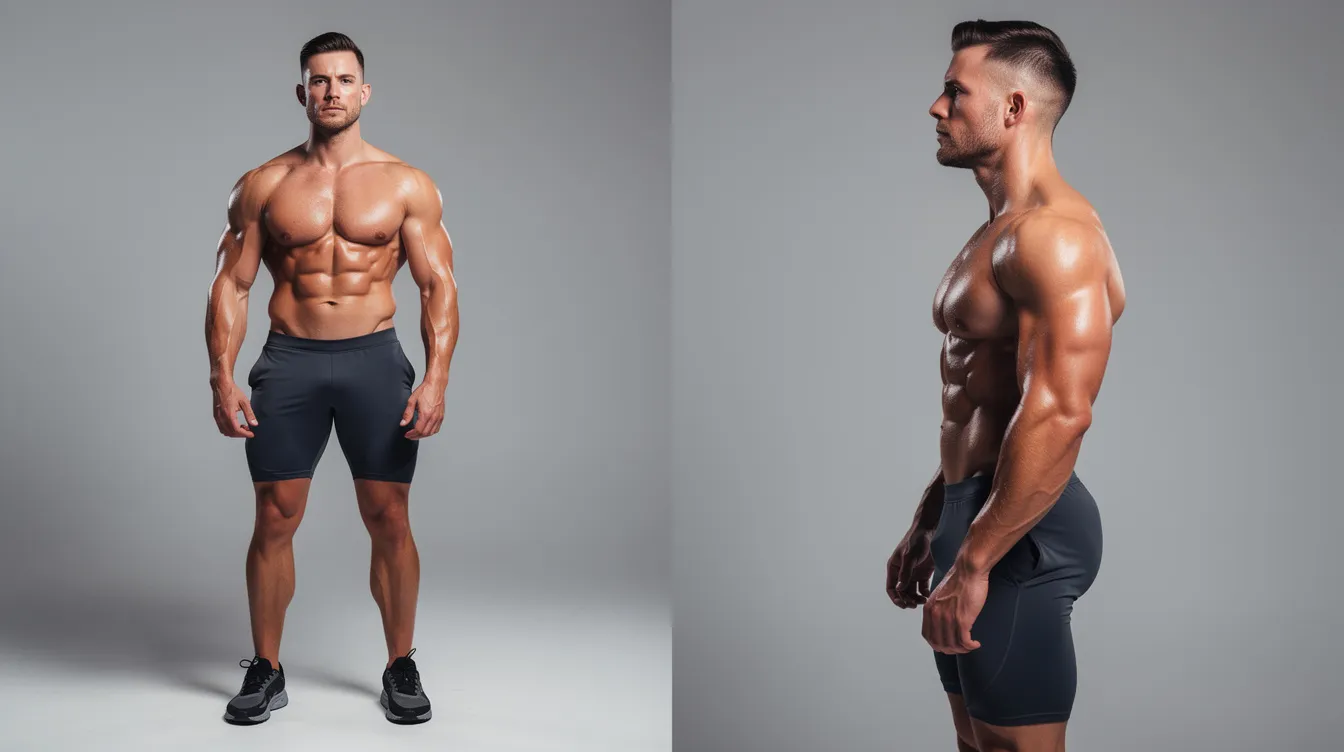
Photos and case examples throughout illustrate typical improvements in muscle definition, torso shape, and clothing size. Results depend on factors such as men age, skin quality, starting weight, and healthy lifestyle habits before and after surgery.
What Changes to Expect: Male Liposuction Before and After Results
Most men present before surgery with localized fat accumulating in the abdomen, love handles, and chest fullness—often including gynecomastia—despite consistent exercise. Many men find their midsection maintains a rounded profile regardless of gym routines.
After the procedure, expect a flatter abdomen, slimmer waist, reduced flanks, and a more angular chest creating the V-taper from shoulders to waist. Typical non-exaggerated changes include:
Area | Before | After |
|---|---|---|
Waist | Curved, flared | Straighter, slimmer |
Pants Size | Larger, snug at the waist | Often a size or so down |
Chest | Fuller, rounded | Sculpted, toned contours |
Confidence | Self-conscious | Comfortable in fitted shirts |
Swelling resolves largely by 6-8 weeks, with final contours visible around 3-6 months post-op. Patients often report feeling more comfortable and gaining self esteem within weeks of recovery.
Popular Treatment Areas in Male Liposuction
Male liposuction targets zones where men naturally store fat. A surgeon typically addresses multiple areas in one session to maintain balanced body proportions.
Abdomen: Primary focus for flattening the sloping belly to reveal underlying muscle definition.
Flanks/Love Handles: Eliminating waist curves fosters the athletic V-taper physique most men desire.
Chest: Addresses fullness or pseudogynecomastia, creating a flatter, more sculpted pectoral area. True gynecomastia may require glandular excision alongside fat removal.
Back: Mid-back and lower back rolls are removed via 360-degree approaches for uniform torso tightening.
Chin/Jawline: Secondary zones that define the upper frame when treated.
Combining abdomen + flanks + chest in one session ensures proportional results and reduces overall recovery time.
Techniques That Shape Male Before and After Outcomes
The technique your surgical team selects directly affects visible results.
Standard Tumescent Liposuction: Uses local anesthesia with a tumescent fluid infusion; a cannula removes fat through small incisions. Suits basic contouring of love handles and midsection.
VASER Ultrasonic Liposuction: Emulsifies fat selectively around muscle fibers, enabling high definition liposuction or “etching” that accentuates abs and obliques. Ideal for men seeking visible muscularity.
Radiofrequency-Assisted (BodyTite/InMode): Adds skin tightening via collagen stimulation—particularly valuable for patients over 40 concerned about laxity.
Technique choice influences photo sharpness, skin retraction, and how much fat can be precisely removed. Hi-Def yields etched lines while standard approaches produce smoother flattening.
Real Male Liposuction Before and After Case Examples
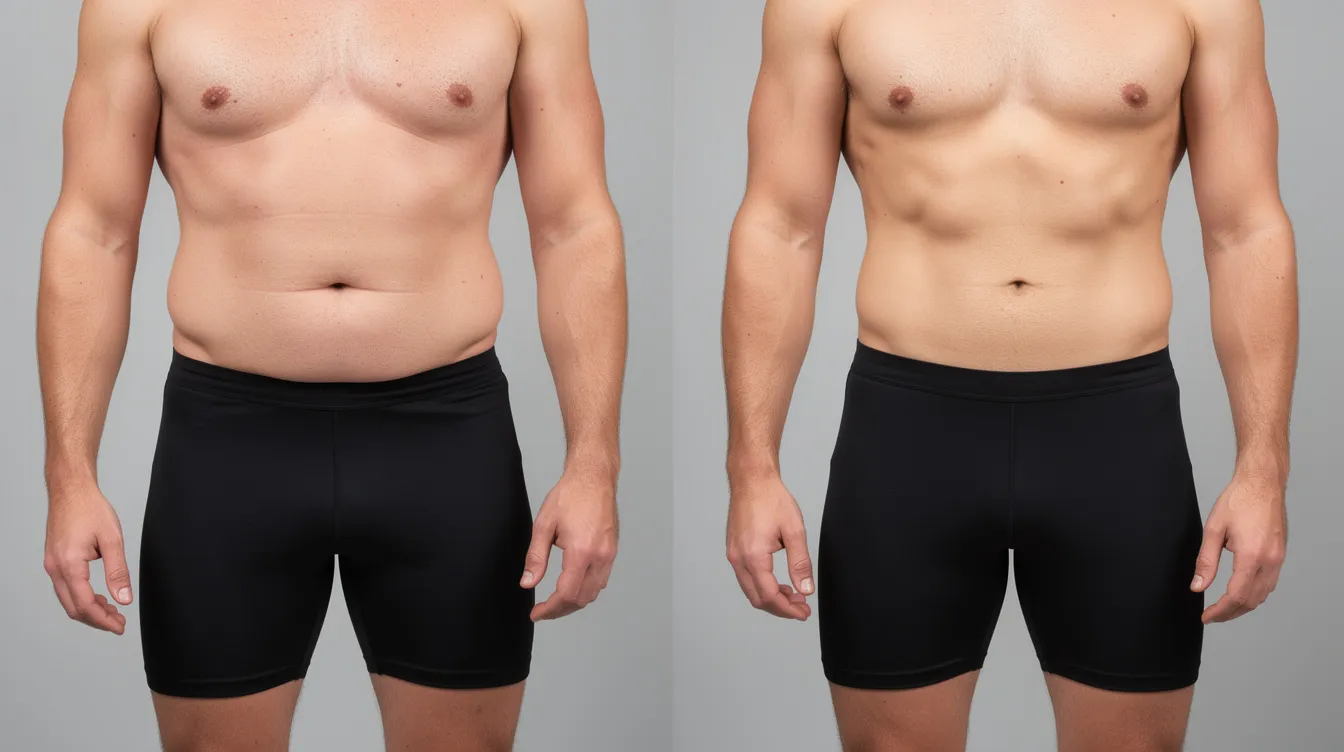
Case 1: 41-year-old, 5’11”, 219 pounds. Treated areas: abdomen, flanks, chest. After photos at 6 months show weight dropped to 200-205 pounds, pants size from 38-40 to 34-36. Combined liposuction with tummy tuck for optimal results.
Case 2: 39-year-old, 5’8”, 132 pounds. Challenges: chest fullness visible in fitted shirts despite fit body. Underwent gynecomastia surgery plus flank liposuction. Pants dropped from size 34 to 32; final photos at 4 months.
Case 3: 35-year-old, 6’3”, 215 pounds. Hi-Def abdominal etching plus flanks. Results at 5 months revealed defined lower abs and athletic torso contours.
Each case demonstrates how fat removed from specific areas transforms the overall physique depending on individual starting points.
Male Liposuction Timeline: Before and After the Procedure
Consultation: Physical exam, photos, BMI assessment. Ideal candidates maintain stable weight within 10-15 pounds for 3 months prior.
Preparation: Quit smoking, review medications, arrange recovery support.
Surgery Day: 1-4 hours outpatient. Walking encouraged same day.
Week 1-2: Compression garments worn. Swelling and bruising managed with oral medications. Many men return to desk work in about 3 days.
Weeks 3-6: Much of the swelling resolves. Light cardio at week 2-3 if cleared. Firmness evolves to smoothness.
3-6 Months: Final contours emerge. Full workouts resume around week 4-6. Skin tightening completes.
Men with physical jobs should expect 10-14 days before returning to heavy work.
Maintaining Your Male Liposuction Results Long Term
Fat cells removed by liposuction do not grow back, so results are long-lasting. However, remaining cells can still enlarge with weight gain exceeding 10-15 pounds, potentially distorting results.
To maintain your new physique:
Keep weight stable within 5-10 pounds
Strength train 3-4x weekly to accentuate contours
Follow a balanced diet with adequate protein
Attend follow-up appointments at 1 week, 1 month, and 3-6 months
Men who maintain a healthy lifestyle tend to keep their results. Consistency matters more than perfection.
Who Is (and Isn’t) a Good Candidate for Impressive Before and After Changes?
A good candidate typically includes men aged 30-55 with:
BMI between 24-30
Localized fat deposits resistant to diet and exercise
Good skin elasticity
Non-smoker status (smoking can delay healing)
Realistic expectations
Men with very loose skin after major weight loss may need combined procedures like tummy tucks. Uncontrolled diabetes or heavy smoking can affect recovery. An in-person evaluation helps set realistic expectations for achievable improvement.
Male Liposuction Before and After Photos: How to View and Interpret Them
When reviewing galleries, look for:
Consistent lighting and camera angles
Clear time stamps (3-6 months post-op ideal)
Unedited, realistic images
Patients with similar age and body type to yours
Results vary between individuals. Photos serve as educational guides, not a prediction of your own outcome. Bring example images to your consultation to align expectations with your surgeon.
Frequently Asked Questions
How much fat can safely be removed?
The safe amount depends on your health, body size and the areas treated. Your surgeon sets a limit for each session to minimize risks.
How long do results last?
Results are long-lasting, provided your weight remains stable and you keep healthy habits.
When does swelling resolve?
Much of the swelling fades over the first several weeks, and final contours are usually visible at around 3-6 months.
Are scars visible?
Liposuction uses small incisions, usually placed in natural creases. Some scarring is possible, and the marks typically fade over time.
Will my abs show?
Standard liposuction smooths; high definition liposuction defines muscle lines—but only with underlying muscle development.
Does chest liposuction last?
Removed fat cells do not return, so fat reduction is long-lasting; glandular gynecomastia requires excision.
Ready to explore your options? Schedule a consultation to evaluate your candidacy and discuss realistic before and after expectations for your body.
About Leva Medical
Leva Medical has offices in Queens (94-06 59th Ave, Suite E9, Elmhurst, NY 11373) and in Northport, Long Island (320 Laurel Rd, Northport, NY 11768).
Call (718) 699-9737 to book a consultation with a board-certified surgeon.
Learn more: Body Contouring at Leva Medical

Dr. Jean-Paul Leva
Dr. Jean-Paul Leva, FACS is board certified in cosmetic and general surgery. Dr. Jean-Paul Leva, FACS obtained his Doctor of Osteopathic Medicine degree from ...