If you're considering lower eyelid surgery to address under-eye bags, sagging skin, or excess skin, one of the most important decisions you'll face is choosing the right anesthesia. At Leva Medical, lower eyelid surgery is done in the office under local anesthesia plus a relaxing medication taken beforehand, and you go home the same day.
This guide walks you through each anesthesia option, what the procedure involves, how to prepare, and what to expect during recovery.
Learn more: Lower Eyelid Surgery (Eye Bags) at Leva Medical
Overview of Lower Blepharoplasty
Lower blepharoplasty aims to rejuvenate the area beneath the lower eyelids by addressing prolapsed orbital fat (bags), extra skin, lax muscle, or hollowness along the orbital rim.
Leva Medical uses the transconjunctival approach:
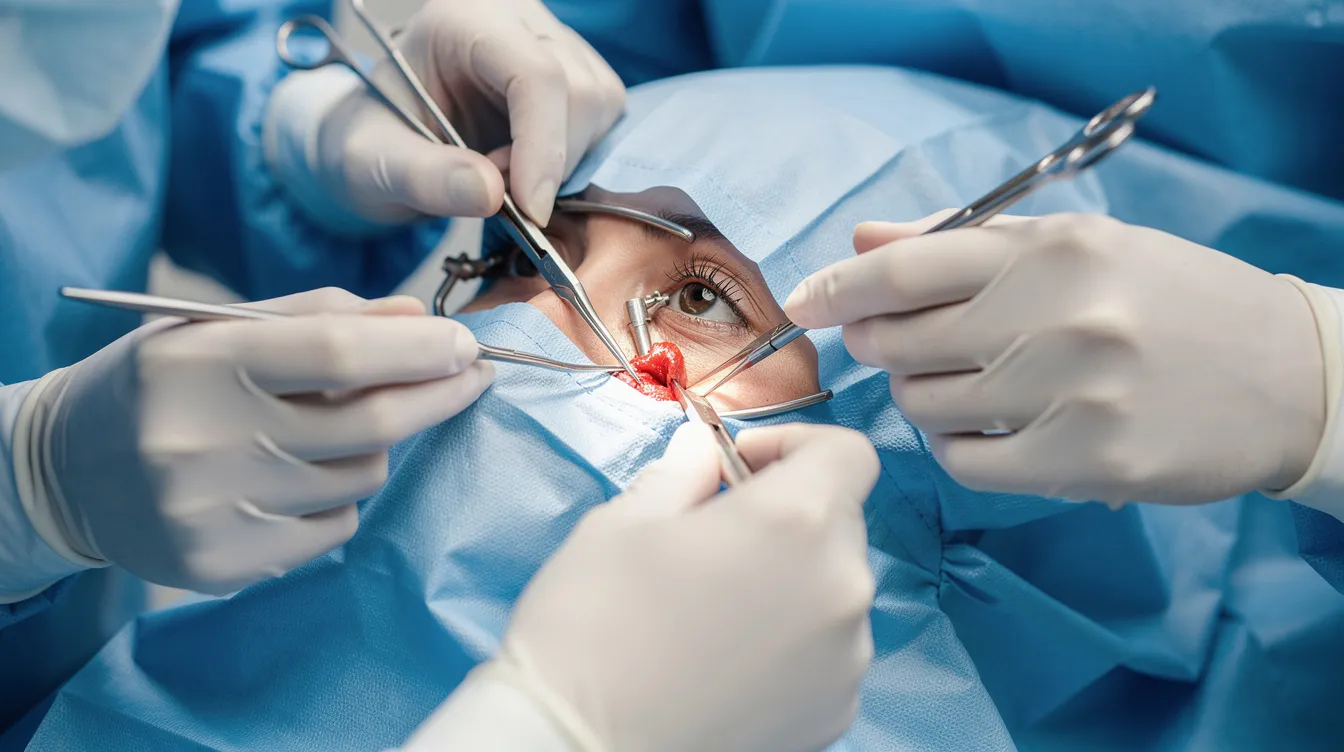
Transconjunctival approach: The surgeon works from inside the lower lid with a fine-tip instrument, so there is no visible scar.
The fat pads are removed or trimmed, and usually a small amount of your own fat, taken from the belly through a tiny opening, is placed along the under-eye line so the area looks smooth, not hollow. Both eyes are treated.

Anesthesia Options for Lower Eyelid Surgery
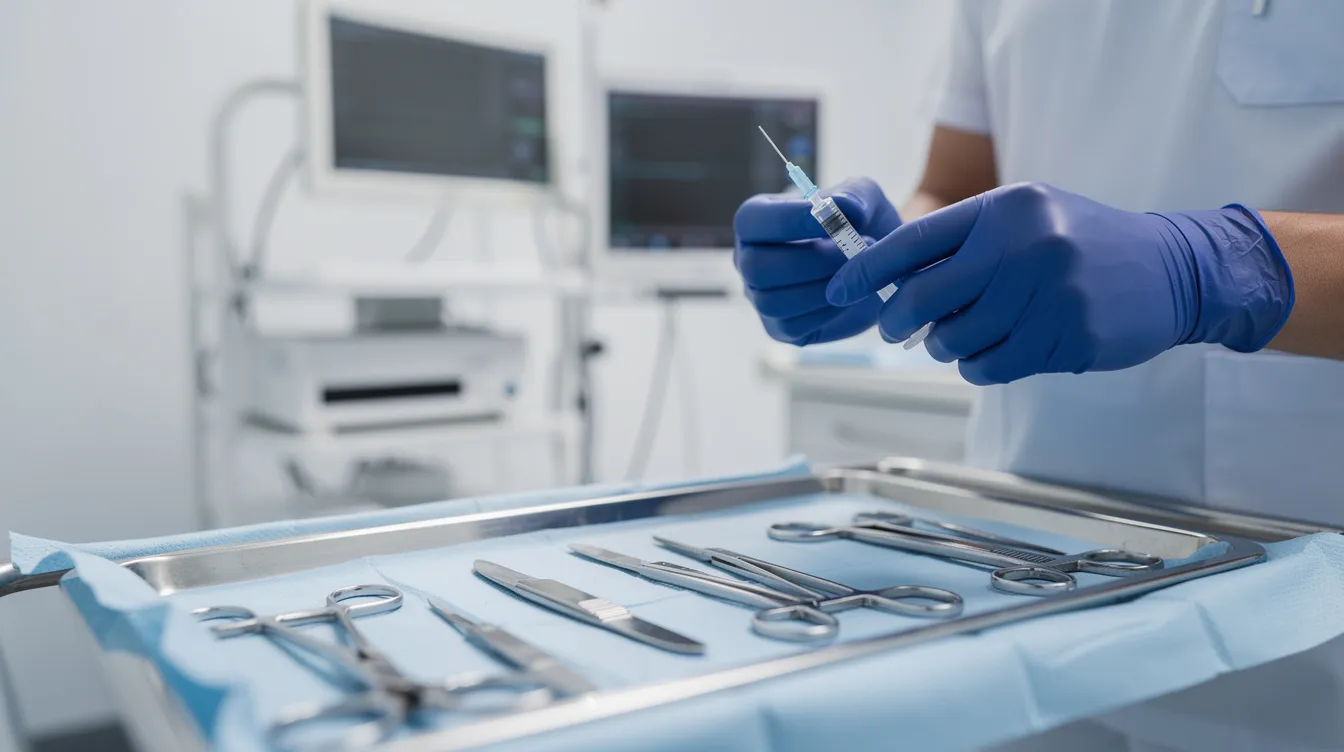
Local Anesthesia
At Leva Medical, the surgery is done under local anesthesia plus a relaxing medication taken beforehand. Patients are comfortable and drowsy, not intubated, and many remember little.
What does this actually feel like? Most patients report mild pressure, tugging, and warmth from surgical lights, but pain should be minimal once the area is numb. The relaxing medication taken beforehand helps you stay calm and comfortable.
General Anesthesia
Patients who prefer to be fully asleep can choose general anesthesia at an accredited facility for an added fee.
Procedure Steps Specific to Lower Eyelid Surgery
The procedure takes about 1.5 to 2 hours, in the office. You go home the same day, and someone must take you home.
Transconjunctival approach: Leva Medical works from inside the lower lid with a fine-tip instrument, so there is no visible scar.
Fat repositioning: Usually a small amount of your own fat, taken from the belly through a tiny opening, is placed along the under-eye line so the area looks smooth, not hollow.
Laser skin treatments: These improve skin texture and pigment only; they do not remove fat pads.
Combination Procedures and Plastic Surgery Considerations
Lower blepharoplasty is frequently combined with a brow lift, upper eyelid surgery, or midface lift to achieve harmonized facial contour. When combining procedures, your consultation should address the complete treatment plan.
The doctor will counsel you on realistic aesthetic expectations, including what degree of correction is achievable given your anatomy. Canthopexy or canthoplasty may be recommended to prevent eyelid malposition in patients with significant laxity.
Anesthesia Care and Safety Preparations
Proper preparation reduces risks across all anesthesia types. Here's what your surgeon will need from you:
Medications and supplements to disclose:
Anticoagulants (aspirin, warfarin)
Antiplatelet agents
Herbal supplements (ginkgo, garlic)
NSAIDs
Avoiding blood-thinning medications is recommended prior to the surgery. Your doctor will advise which to pause and when.
Blood work and medical clearance come first; diabetes must be controlled, and smokers must stop.
Patients with sleep apnea should bring their CPAP machine and share previous anesthesia records with the anesthesia care team.
Risks, Complications, and Management
Common complications include bruising, swelling, chemosis, and superficial hematoma. Swelling peaks around day 3, and bruising usually fades in 1 to 2 weeks.
Eyelid surgery can have complications such as dry eye or lid malposition (ectropion, retraction, scleral show). Other risks include infection, bleeding, asymmetry, occasionally a touch-up, temporary or rarely lasting double vision, and small lumps or unevenness from the grafted fat. Very rarely, bleeding behind the eye can threaten vision; this is an emergency that needs care right away.
Immediate steps if excessive swelling or bleeding occurs:
Apply firm, gentle pressure
Contact your surgeon immediately
Return to the facility for hematoma evaluation if tension is present
Criteria for considering revision lower eyelid surgery include persistent lid malposition, significant asymmetry, or functional problems like chronic dryness.
Postoperative Care and Recovery
Swelling is the main issue and peaks around day 3. Discomfort is usually mild, and the belly donor site is often more sore than the eyes.
Key recovery instructions:
Use antibiotic and eye drops as prescribed
Use a cold (not frozen) mask for 15 minutes every hour for the first 2 days, then a warm (not hot) mask from day 3
Small dressings come off at the 1-week visit
Walk from the first day, but avoid anything that raises your heart rate or blood pressure, and no lifting over 20 pounds (9 kg) for 1 week

Billing, Logistics, and Patient Support
Lower eyelid surgery at Leva Medical starts at $6,500, fat grafting included, under local anesthesia. General anesthesia at an accredited facility is an added fee. Financing is available.
You go home the same day, and someone must take you home; you cannot drive.
Understanding your anesthesia options puts you in control of one of the most important decisions surrounding lower eyelid surgery. Most patients have local anesthesia plus a relaxing medication, and those who prefer to be fully asleep can choose general anesthesia for an added fee. Schedule a consultation at Leva Medical in Queens or Northport to discuss which anesthesia path fits your needs - and bring your list of questions.
Frequently Asked Questions
What type of anesthesia is typically used for lower eyelid surgery?
At Leva Medical, lower eyelid surgery is done under local anesthesia plus a relaxing medication taken beforehand. Patients who prefer to be fully asleep can choose general anesthesia at an accredited facility for an added fee.
Will I feel pain during lower eyelid surgery under local anesthesia?
Most patients report feeling mild pressure, tugging, and warmth from surgical lights, but pain should be minimal once the area is numb. The relaxing medication taken beforehand keeps you comfortable and drowsy, and many patients remember little.
How long does lower eyelid surgery typically take?
It takes about 1.5 to 2 hours, in the office, and you go home the same day with someone to take you home.
Is general anesthesia used for lower eyelid surgery?
Patients who prefer to be fully asleep can choose general anesthesia at an accredited facility for an added fee. Most patients have local anesthesia plus a relaxing medication.
How quickly can I return to normal activities?
Most people return to desk work in about a week; some go back after 2 to 3 days if they do not mind looking swollen. Most swelling settles over 2 to 6 weeks, and the final result keeps refining for months.

-2.jpg?width=2000&height=2000&name=Copy%20of%20YouTube%20Thumbnail%20-%20Life-Changing%20Cosmetic%20Surgery!%20(Document)-2.jpg)


