Knowing exactly what to expect after lower eyelid surgery takes most of the anxiety out of the healing process. This guide walks you through lower blepharoplasty recovery day by day, from the moment you leave the operating room through your final results months later. Use it alongside your surgeon's post operative care instructions to stay on track.
Learn more: Lower Eyelid Surgery (Eye Bags) at Leva Medical
What Is Lower Blepharoplasty And Eyelid Surgery
Lower blepharoplasty is a surgical procedure that reshapes the lower eyelid by removing or trimming the under-eye fat pads from inside the lower lid, usually with a small amount of your own fat placed along the under-eye line so the area looks smooth, not hollow. The goals of eyelid surgery vary: reducing under-eye bags, smoothing tear trough hollows, and restoring a more rested appearance to the facial structure.
Blepharoplasty Recovery Timeline Overview
Here is a quick snapshot of the standard blepharoplasty recovery timeline:
Milestone | Typical Timing |
|---|---|
Peak swelling | Around day 3 |
Dressings removed | 1-week visit |
Return to desk work | About 1 week |
Most bruising faded | 1–2 weeks |
Most swelling resolved | Weeks 2–6 |
Final result | Keeps refining for months |
Recovery after lower blepharoplasty typically involves mild discomfort and swelling that improves over 2 to 6 weeks. However, individual variability is significant. Your age, skin elasticity, smoking status, and how much fat was removed or grafted all influence how fast you heal. Always use your surgeon's guidance to adjust these milestones to your own recovery plan rather than treating any timeline as absolute.
Clinical Team And Preop Planning
Your clinical team typically includes your surgeon, nursing staff for pre- and post operative support, and a coordinator for scheduling follow-ups.
Before surgery, ask your surgical team these questions:
How much fat will be removed or grafted?
What is my personalized surgical plan and expected downtime?
Which medications and supplements should I stop before surgery?
What is the pain management plan?
Schedule a preoperative medical clearance appointment to evaluate cardiovascular health, dry eye status, and any medications (especially blood thinners) that could complicate the healing process.
First Week: Immediate Recovery, Bruising And Swelling
Day 0 (Procedure Day)
Immediately after cosmetic eyelid surgery, expect numbness, puffiness, and mild soreness around the lower eyelid area. Some fluid or blood-tinged drainage is normal. Your vision may be temporarily blurry from anesthetic ointment.
You must arrange transport home. Do not plan to drive yourself. Discharge instructions typically include:
Keep your head elevated at 30–40 degrees
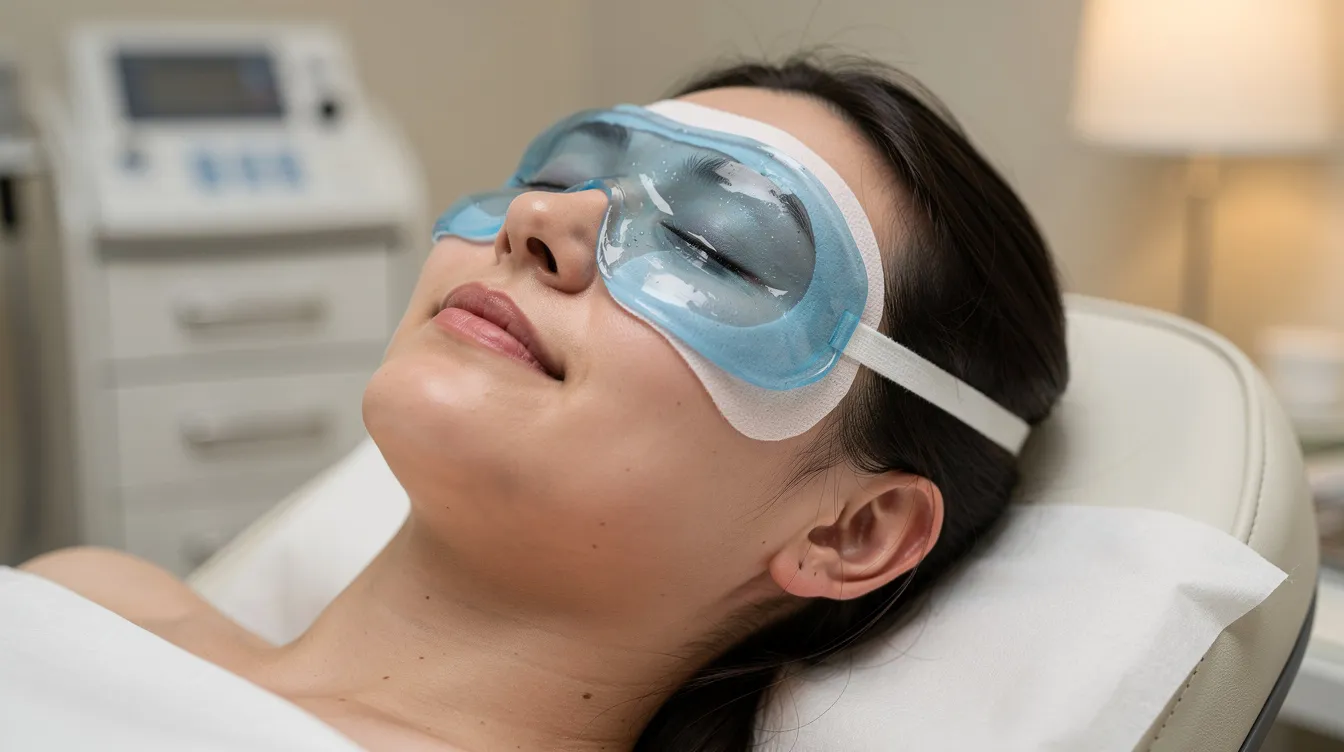
Apply a cold (not frozen) mask for 15 minutes every hour
Begin prescribed medication (pain relief, antibiotic drops or prescribed ointments)
Avoid rubbing your eyes or applying pressure to incision sites
Days 1–3 (Peak Bruising And Swelling)
Swelling peaks around day 3. Expect tightness and mild aching around Day 1. Your eyelids may look dramatically swollen, and one side may appear worse than the other. Visible bruising often progresses from dark purple to bluish tones across the lower eyelid and upper cheek.
Cold compress schedule:
Days 1–2: Apply a cold (not frozen) mask for 15 minutes every hour
From day 3: Switch to a warm (not hot) mask
Sleep and positioning:
Sleep on your back with your head raised, never face down
Patients should avoid bending over and lifting over 20 pounds (9 kg) for 1 week
Avoid straining, which increases blood flow to the face and worsens initial swelling

Days 4–7 (Dressings, First Week Follow-Up)
Small dressings come off at your 1-week follow-up visit, where your surgeon checks healing and looks for any complications.
As it fades, bruising shifts to yellowish-green tones. The area may still feel tight and numb. Walking is encouraged from the first day, though anything that raises your heart rate or blood pressure should wait.
Precautions during this phase:
Do not wear eye makeup until your surgeon clears you at your follow-up visit
Do not wear contact lenses until your surgeon clears you at your follow-up visit
Contact your clinical team immediately if you notice sudden vision changes, uncontrolled bleeding, or signs of infection
Weeks 2–4: Blepharoplasty Recovery Progress
This phase marks a turning point. Most visible bruising fades within 1 to 2 weeks. Most swelling settles over 2 to 6 weeks, though some residual swelling-especially noticeable in the morning-may linger.
Most people return to desk work in about a week; some go back after 2 to 3 days if they do not mind looking swollen.
Makeup and contact lens guidance:
Wear eye makeup and contact lenses only when your surgeon clears you at your follow-up visit
Avoid anything that raises your heart rate or blood pressure until your surgeon clears you. Sun protection is essential-wear sunglasses and broad-spectrum SPF to protect healing skin and prevent hyperpigmentation.

Later Weeks: Refinement And Activity Return
Over these weeks, tissues settle into their new position, and deep swelling that isn't visible on the surface continues resolving. The lower eyelid contour smooths out, and any residual puffiness in the medial or lateral areas tends to flatten.
Strenuous workouts can resume only after surgeon clearance. Walking is encouraged from the first day; build up gradually before progressing to anything more intense. Avoid saunas and activities that spike blood pressure.
Final Blepharoplasty Results
The final result keeps refining for months, with the lower eyelid contour and overall appearance gradually reflecting the intended outcome. Removed fat pads do not grow back; some grafted fat is absorbed in the first months, and what remains behaves like normal fat.
Because the incision is made inside the lower lid, there is no visible scar. Natural aging continues, and results look rested, not done.
Common Concerns: Bruising And Swelling Management Tips
Cold vs. warm compresses:
First 2 days: a cold (not frozen) mask for 15 minutes every hour to limit swelling and bruising
From day 3: a warm (not hot) mask to encourage circulation and lymphatic drainage
Topical care and lubrication:
Use antibiotic and eye drops as prescribed
Artificial tears help with temporary dryness or gritty sensations caused by swelling affecting lid closure
Keep the eye area clean; avoid irritating products
Red-flag symptoms requiring urgent care:
Sudden vision loss or significant sudden vision changes
Intense, worsening pain not controlled by prescribed medication
Large hematoma or continuous bleeding
Fever, purulent discharge, or spreading redness (signs of infection)
Separation of incision edges
If any of these occur, contact your surgical team immediately. Do not wait for a scheduled follow-up.
Practical Recovery Checklist For Patients
Use this day-by-day checklist alongside your surgeon's specific instructions. Adjust based on your surgical plan and realistic expectations.
Day/Week | Actions |
|---|---|
Day 0 | Arrange ride home; start cold compresses; head elevated; begin prescribed medication |
Days 1–3 | Cold mask 15 min every hour (days 1–2); sleep elevated; no bending/heavy lifting; monitor for red flags |
Days 4–7 | Attend 1-week visit for dressing removal; continue elevation; avoid eye makeup and contact lenses until cleared |
Weeks 2–6 | Swelling continues to settle; eye makeup and contact lenses only when your surgeon clears you at your follow-up visit; continue sun protection |
Months after | Final result keeps refining |
Keep your clinical team contact details and emergency after-hours number somewhere visible. Record your medication schedule (drug name, dose, frequency) and follow-up appointment dates in one place. A smooth recovery depends on staying organized and reaching out when something feels off.

Frequently Asked Questions
What happens immediately after lower blepharoplasty surgery?
Immediately after surgery, expect numbness, puffiness, and mild soreness around the lower eyelid. Some fluid or blood-tinged drainage is normal. Vision may be temporarily blurry from anesthetic ointment. You must arrange transportation home and cannot drive yourself.
When is peak swelling and bruising after lower blepharoplasty?
Swelling peaks around day 3. Bruising is possible and usually fades in 1 to 2 weeks, shifting from dark purple or bluish tones to yellowish-green as it fades.
When do dressings come off after lower blepharoplasty?
Small dressings come off at your 1-week follow-up visit, where your surgeon checks healing and looks for any complications.
When can I return to work and normal activities?
Most people return to desk work in about a week; some go back after 2 to 3 days if they do not mind looking swollen. Walking is encouraged from the first day, but avoid anything that raises your heart rate or blood pressure, and do not lift over 20 pounds (9 kg) for 1 week.
When can I wear makeup and contact lenses again?
Wear eye makeup and contact lenses only when your surgeon clears you at your follow-up visit.
Is it normal for one eye to look more swollen than the other?
Yes. Some asymmetry in swelling early on is common and usually evens out as the swelling settles.
When will I see results?
Some change is visible early, but swelling hides the outcome at first. Most swelling settles over 2 to 6 weeks, and the final result keeps refining for months.


-2.jpg?width=2000&height=2000&name=Copy%20of%20YouTube%20Thumbnail%20-%20Life-Changing%20Cosmetic%20Surgery!%20(Document)-2.jpg)


