If you've lost weight on Ozempic or another GLP-1 medication, you may be noticing something the scale doesn't show: sagging skin around your face, arms, abdomen, or thighs. Loose skin after Ozempic is one of the most discussed side effects of medically-assisted weight loss, and for good reason. This guide covers why it happens, what you can do about it, and when to consider professional intervention, spanning lifestyle adjustments, non-surgical body contouring, and surgical body contouring surgery.
Learn more: Hormone Therapy at Leva Medical
GLP 1, Fat Loss, and Excess Skin
GLP-1 receptor agonists like semaglutide work by suppressing appetite, slowing stomach emptying, and increasing insulin release. The result is reduced caloric intake and significant weight loss, often in the range of 15–20% of total body weight. That kind of rapid fat loss creates a problem beneath the surface.
When you carry excess weight for years, your skin stretches to accommodate the underlying subcutaneous fat. During that prolonged stretching, skin loses elastin and collagen, the connective tissue fibers responsible for snap-back. Once fat cells shrink or disappear, there isn't enough underlying volume to fill the space. The skin, having lost elasticity over time, simply can't fully contract to match your new frame.
This is compounded by body composition shifts. Research suggests that up to 40% of weight lost on semaglutide may be lean mass rather than fat alone. Rapid weight loss can lead to loss of muscle mass, which further reduces the support structure under your skin. Surveys of GLP-1 users show that among those with more than 20% body weight reduction, roughly 72% report skin sagging and 50% report facial volume loss, the phenomenon widely called Ozempic face.
Common areas that show skin laxity include:
Abdomen and lower belly (sometimes called a pannus)
Upper arms (the "bat wing" effect)
Inner thighs
Neck and jawline
Breasts and buttocks (Ozempic butt)
Aging and genetics also impact skin's natural ability to retract. Skin stretching is influenced by the duration of excess weight, meaning someone who carried extra weight for a decade will typically have more loose sagging skin than someone who gained weight recently. Loss of collagen and elastin fibers reduces skin elasticity over time, regardless of how you lose the weight.
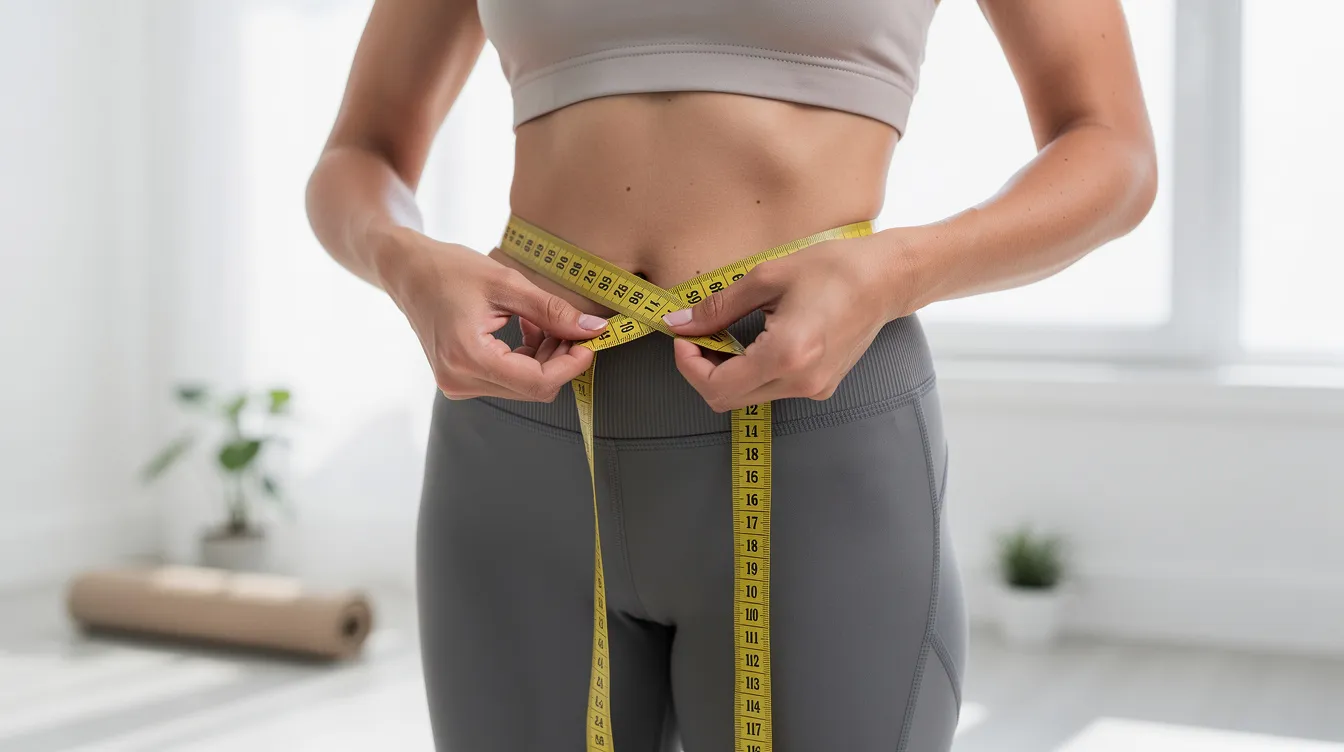
Body Composition Strategies to Minimize Loose Skin
Before reaching for any device or scalpel, your first line of defense is what happens in the gym and the kitchen.
Resistance training is the single most impactful thing you can do. Strength training helps maintain muscle during weight loss, and that preserved muscle mass fills out areas where fat has disappeared. Aim for 3–5 sessions per week targeting major muscle groups. Strength training helps fill out areas of loose skin by adding volume where fat used to be, improving the appearance of saggy skin across the arms, legs, and core.
Protein targets matter enormously. A protein-rich diet supports muscle retention during weight loss. Aim for 1.2–1.6 grams of protein per kilogram of body weight per day. Sources like lean meats, eggs, dairy, and legumes support this goal. Without adequate protein, muscle loss accelerates and the visible effects of loose skin worsen.
Pace your weight loss. Slower weight loss allows skin more time to remodel. While GLP-1 medications can produce rapid results, working with your prescriber to target 1–2 pounds per week rather than dramatic drops gives your dermal collagen network a chance to adapt. The average weight loss trajectory matters as much as the total weight lost.
Track body composition, not just weight. Consider DEXA scans or bioelectrical impedance to monitor fat mass versus lean mass separately. If lean mass is dropping disproportionately, that's a signal to adjust your diet or training.
A few additional essentials:
Drinking plenty of water keeps skin elastic and firm. Proper skin hydration supports overall skin health.
Avoiding smoking protects existing collagen and elastin fibers in skin, preserving what you still have.
Sun exposure accelerates collagen breakdown, so daily SPF is non-negotiable.

Non-Surgical Body Contouring Procedures
For mild-to-moderate skin laxity, non-surgical body contouring procedures offer improvement without the recovery demands of cosmetic surgery. Non-invasive treatments can include radiofrequency and ultrasound therapies to tighten skin. Other options include RF microneedling, cryolipolysis, non-ablative lasers, and biostimulatory injectables.
Radiofrequency energy can tighten mild to moderate skin laxity by heating dermal tissue and triggering collagen production. Expect results to build gradually over 3–6 months, with multiple sessions required.
Non-surgical treatments deliver subtler results than surgery. They work best for patients with smaller amounts of loose skin, good baseline skin quality, and stable body weight.
Contraindications include implanted metal devices, active skin conditions, and uncontrolled chronic disease. These options are not ideal for large tissue redundancy.
Energy-Based Treatments: Morpheus8 and RF Microneedling
Morpheus8 uses radiofrequency microneedling for skin tightening. Microneedles deliver RF energy deep into the dermis and subdermal layers, stimulating collagen remodeling from the inside out. Morpheus8 treatments can tighten loose skin effectively across face, neck, abdomen, and arms.
Typical Morpheus8 protocol:
Parameter | Details |
|---|---|
Sessions | 3–4 for face/neck, more for body |
Spacing | 4–6 weeks apart |
Downtime | Mild redness, swelling (2–5 days) |
Full results | 3–6 months after final session |
Ultrasound energy promotes collagen production for skin firming through similar deep-tissue heating. The expected collagen remodeling timeline is slow: histologic studies show that elastic fiber content gradually increases with time elapsed since fat loss. Full results may not be visible for 6–8 months.
Muscle-Building Devices and Injectables
Emsculpt stimulates muscle contractions to improve body contouring. The device induces supramaximal contractions that build muscle definition, adding underlying support in areas like the abdomen and gluteal muscle groups. It works best for patients with mild laxity, not large folds of excess skin.
Sculptra (poly-L-lactic acid) can restore volume in the buttocks after weight loss, directly addressing what's been termed Ozempic butt. It's a biostimulatory injectable that builds collagen over months rather than providing immediate volumization. Multiple sessions are required, and risks include nodule formation.
PRF (platelet-rich fibrin) is a biological regenerative option containing growth factors that stimulate dermal fibroblasts. Evidence is emerging, and PRF works best in combination with other treatments like RF microneedling rather than as a standalone.
Topical Options: Firming Creams and Collagen Supplements
Firming creams containing peptides, retinoids, and botanical extracts can improve skin tone and skin strength. However, topical treatments can support skin health but cannot eliminate excess skin. They're an adjunct, not a solution for significant redundancy.
Skin health can be supported through adequate hydration and nutrition. Key nutrients include:
Vitamin C, which helps the body produce more collagen
Omega-3 fatty acids from sources like fatty fish, which help maintain skin moisture
Niacinamide and hyaluronic acid for surface-level human skin hydration
Oral collagen peptide supplementation has stronger evidence behind it. Systematic reviews covering 35 placebo controlled clinical trials and over 2,500 participants show that collagen supplements may improve skin hydration and elasticity, with effects typically visible after 12 weeks of consistent use.
Don't expect surgical-level tightening from creams or supplements. These tools improve healthy skin quality and support remodeling, but they won't remove excess skin or address large folds.
Surgical Body Contouring Surgery Options
Body contouring surgery refers to excisional procedures that remove excess skin and reshape body regions. Goals are both functional (eliminating skin folds that cause infections or mobility issues) and aesthetic (improving silhouette and proportion). Every procedure involves permanent scars and requires recovery time.
Criteria for surgical candidacy include:
Stable weight for at least 6–12 months
Adequate nutritional status (no protein or vitamin deficiencies)
Non-smoker status
Controlled comorbidities (diabetes, kidney disease, sleep apnea)
Realistic expectations about outcomes and wound healing
Typical recovery timelines for major surgeries: 1–2 weeks of limited activity, 4–6 weeks for functional recovery, and 12–18 months for final scar maturation. Compression garments and drainage management are standard.
Common Body Contouring Surgeries: Arm Lift, Breast Lift, Brazilian Butt Lift
An arm lift (brachioplasty) surgically removes loose skin from the upper arms. The procedure involves incisions along the inner arm, resulting in a linear scar. Best outcomes occur when weight is stable and nutritional status is optimized.
A breast lift (mastopexy) addresses sagging due to volume and fat loss. Scar patterns vary: periareolar, lollipop, or inverted-T depending on severity. Some patients combine a breast lift with augmentation to restore lost volume.
A Brazilian butt lift involves fat grafting to augment gluteal tissue. Candidates need adequate donor fat, which can be limited in GLP-1 users who've experienced rapid fat loss. The risk profile is significant, including fat embolism and infection. This procedure may not fully address skin redundancy and is not appropriate for all patients seeking to prevent Ozempic butt.
An abdominoplasty, or tummy tuck, removes loose skin and tightens abdominal muscles. A lower body lift addresses excess skin on the abdomen, waist, and thighs simultaneously, often in staged procedures.

Planning, Timing, and Insurance Considerations for Body Contouring
Surgical body contouring is considered after stable weight for 6–12 months. Operating too early increases complication rates. Research from Duke University found that patients who had both bariatric surgery and GLP-1 therapy experienced a return-to-OR rate of 29.6%, compared to 5.1% in those without a medical weight loss journey. Magnitude and rate of losing weight both affect surgical risk.
Consulting a board-certified plastic surgeon early, even before you've finished losing weight, allows for better planning. A good treatment plan accounts for staging surgeries, preoperative nutrition optimization, and realistic outcome discussions.
Insurance criteria for medically necessary resections vary widely. Coverage is more likely when excess skin causes recurrent infections, ulceration, or functional impairment. Documentation of medical necessity, weight stability, and sometimes imaging are required. Purely cosmetic plastic surgery is rarely covered. There is no nationally standardized policy.
Content Elements to Include: Before-and-After, Metrics, Consent
For any provider documenting outcomes, standardized before-and-after photography is essential: consistent lighting, angles (front, side, three-quarter), posture, and close-ups of treated areas.
Case studies should include body composition data: total weight lost, baseline and current BMI, lean mass percentage, time since major weight loss, and patient age. For facial volume cases, document filler volumes and regions treated.
Clear informed-consent language must cover risks (scarring, pigment changes, asymmetry, need for revision), realistic outcomes, and the impact of lifestyle factors like smoking and sun exposure on wound healing and results.
FAQs: Loose Skin After Ozempic
Will skin tighten naturally over time?
Partially. Skin remodels slowly, often taking months to years. Histologic studies show that elastic fiber content in skin gradually improves with time after weight loss, and measurable improvement can continue over one to two years. However, full retraction is often incomplete, especially after massive weight loss. Loose skin is a common occurrence after significant weight loss across various methods, not just GLP-1 medications. Age and genetics affect skin's ability to retract after weight loss, so outcomes vary significantly between individuals. Skin that has lost elasticity due to prolonged stretching and visceral fat accumulation may never fully recover without intervention.
Is it safe to start treatments while still on GLP-1?
Most non-surgical treatments (topicals, fillers, RF, microneedling) are safe while on GLP-1 medications. For major surgery, however, surgeons may ask patients to discontinue the medication several weeks prior to manage nutritional status and reduce anesthesia-related risks. Always seek professional medical advice before combining treatments.
Will insurance cover body contouring after weight gain and loss?
Coverage likelihood is generally low for cosmetic procedures. Insurance is more likely to cover panniculectomy or similar resections when skin folds cause documented medical issues. Policies vary by insurer, and there is no universal guideline. Expect to provide proof of weight stability, medical records, and possibly imaging. Improved health outcomes from removing problematic skin folds can strengthen your case.
The best time to start planning for tightening loose skin is before it becomes a serious concern. Begin with resistance training and nutrition strategies the moment you start losing weight, and consult a specialist when you're ready for the next step.
Frequently Asked Questions
Why does loose skin happen after losing weight on Ozempic?
Skin stretched over years of excess weight loses some collagen and elastin, the fibers that allow it to snap back. When GLP-1 medications cause rapid fat loss, the underlying volume shrinks, and aging, genetics, and muscle loss can leave the skin unable to fully contract to the new body shape.
Can strength training reduce the appearance of loose skin?
Resistance training can help preserve muscle during weight loss and add volume where fat has disappeared, which may improve the appearance of sagging skin on the arms, legs, and core. It does not change the skin's elasticity, and results vary depending on the amount of excess skin.
How much protein is recommended during GLP-1 weight loss?
The article cites a target of 1.2 to 1.6 grams of protein per kilogram of body weight per day to support muscle retention. Protein needs vary by individual, so people should confirm an appropriate intake with their healthcare provider.
Do non-surgical treatments work for large amounts of loose skin?
Non-surgical options such as radiofrequency and ultrasound therapies are generally best suited to mild-to-moderate laxity with good baseline skin quality and stable weight. They typically produce subtler results, take several months to develop, and are not ideal for large tissue redundancy.
When should someone consider professional evaluation for loose skin?
Professional evaluation is worth considering if loose skin is significant, causes discomfort or skin problems, or does not improve with lifestyle changes. A provider can assess whether non-surgical treatments or surgical body contouring are appropriate, and whether weight is stable before any procedure.

-2.jpg?width=2000&height=2000&name=Copy%20of%20YouTube%20Thumbnail%20-%20Life-Changing%20Cosmetic%20Surgery!%20(Document)-2.jpg)


