Lip filler is one of the most popular cosmetic treatments available today, but it doesn't always go according to plan. Sometimes the injected filler shifts away from where it was placed, creating results that look nothing like what you had in mind. This guide breaks down exactly what causes lip filler migration, how to spot it, and what you can do to fix or prevent it.
Quick Introduction to Filler Migration
Lip filler migration refers to the movement of dermal filler material away from its intended placement within the lips into surrounding tissues. Lip filler migration occurs when dermal filler shifts outside the lip border, settling into areas like the skin above the upper lip or around the Cupid's bow. This isn't the same as normal post-injection swelling-migration means the filler itself has physically relocated.
Why should you care? Because migrated filler can distort your natural lip shape, blur the definition between your lips and surrounding skin, and create an unnatural appearance that's difficult to ignore. Beyond aesthetics, migration can affect how your lips move during facial expressions and erode your confidence.
The good news: there are several ways to fix lip filler migration. Options range from waiting and monitoring mild cases, to dissolving migrated filler with hyaluronidase injections, to strategic re-injection techniques that restore facial balance. Prevention is equally achievable with the right approach.

What Lip Filler Migration Looks Like
Recognizing migration early gives you the best chance at a clean correction. Common signs of filler migration include blurred lip borders, puffiness above the upper lip, lumps or bumps under the skin's surface, and asymmetry in lip shape. Persistent puffiness above the lip line may signal migration, even when initial swelling should have resolved.
A blurred lip border is one of the earliest and most reliable indicators-the sharp line between your lip red and surrounding skin starts to look soft, smudged, or undefined. Many patients also notice uneven fullness that wasn't present before treatment.
Signs: Blurred Lip Border And Filler Mustache
The filler mustache effect shows filler above the lip line, creating a soft ridge or band of fullness in the area between the upper lip border and the nose. This is distinct from normal lip volume-it sits above where lip tissue should end, giving an overfilled, shelf-like look.
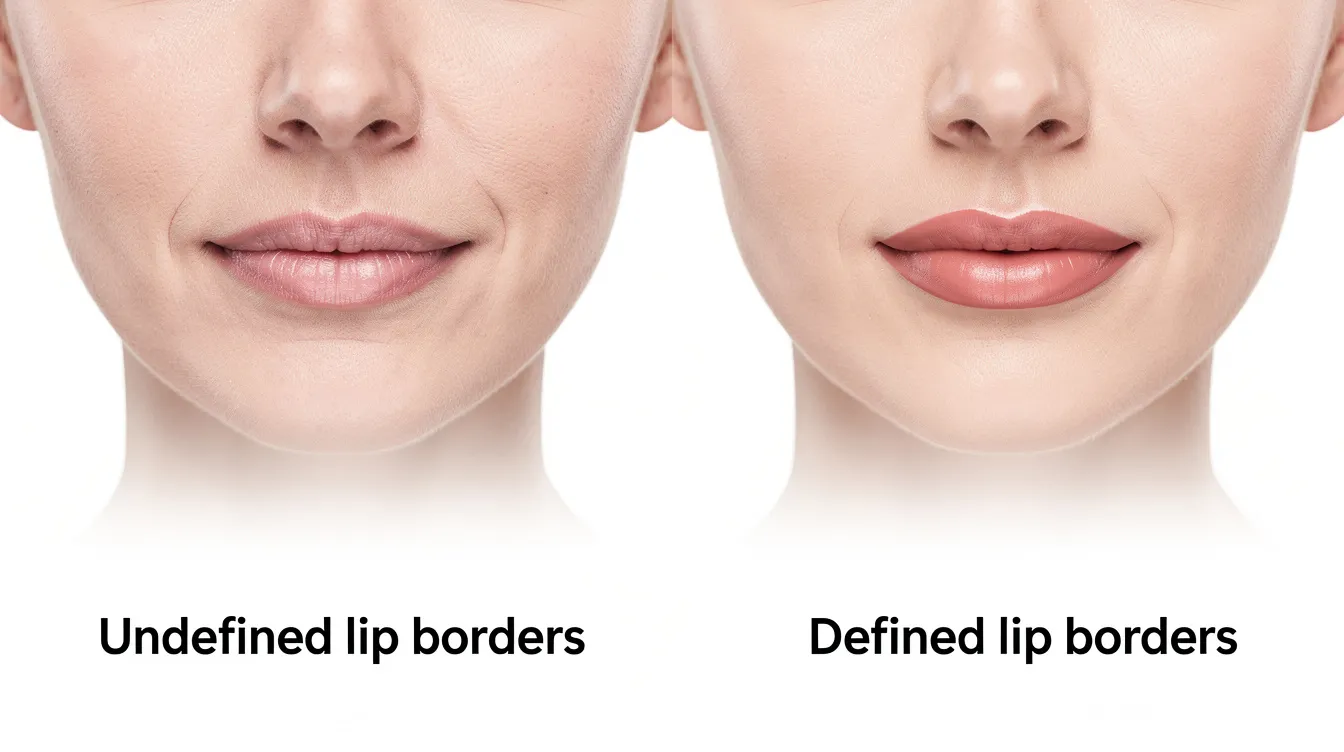
When comparing before and after photos, look for these differences:
Before migration: A crisp, defined natural lip line with volume contained within the vermilion border
After migration: A blurred lip border where fullness bleeds upward into the philtrum, with the upper lip border appearing puffy or shelf-like
Filler mustache: A visible ridge or band of volume sitting directly above the natural lip line, particularly noticeable from a profile view
Asymmetry in lip shape may suggest filler migration has occurred, especially if the shelf or ridge is more prominent on one side.
Why Dermal Fillers Migrate
Several factors contribute to filler displacement. The causes fall into three main categories: filler properties, injection technique, and post-treatment forces.
Poor injection technique can lead to filler migration. Overfilling lips increases the risk of filler migration. And repeated treatments without dissolving old filler can cause migration over time. Lip movement from talking and eating can push filler out of place through constant movement and natural muscle contractions.
Role Of Filler Type And Existing Filler
Not all dermal fillers behave the same way in soft tissue. Hyaluronic acid based fillers are the standard for lip enhancement because they integrate well with lip anatomy and can be dissolved if needed. Using the wrong type of filler increases migration risk-for example, higher-viscosity fillers designed for cheek augmentation are stiffer and more likely to shift when placed in the mobile lip environment.
Non-HA fillers (like calcium hydroxylapatite or silicone-based products) carry additional risk because they cannot be reversed with hyaluronidase. Different fillers have different cohesivity and water-absorption profiles, which directly affect how well filler stays in place.
Layering new filler over existing filler without first assessing what's already present is a common path to migration. When too much filler accumulates in the lips over repeated treatments, the material flows through the path of least resistance-often above the natural lip line. Always check filler history before treating, and consider dissolving old product before adding volume.
Use hyaluronic acid based fillers for better tissue integration and reversibility. A hyaluronic acid filler is always the safer choice for lip filler treatments.
Excessive Pressure And Manipulation Factors
Excessive pressure on freshly injected lips is a direct risk factor. Applying pressure through rubbing, massaging too aggressively, or even sleeping face-down can displace filler before it has had time to settle properly within the tissue.
Frequent puckering, kissing, and exaggerated lip movements in the days following lip filler injections create shear forces that push material laterally or upward. This natural movement of the lips is unavoidable, but minimizing it during the initial healing period is critical. Even environmental factors like saunas or intense heat can increase swelling and contribute to filler displacement.
How To Fix Lip Filler Migration
If your lip filler shifts away from where it should be, the first step is always a professional evaluation. A qualified provider will assess the location and extent of migrated lip filler, review your treatment history (filler type, volume, dates), and determine whether intervention is needed.
For mild cases of migration, monitoring may be sufficient rather than immediately treating. Some migration appears worse during early swelling phases and settles as the initial treatment heals. Conservative correction options include gentle massaging, which may help redistribute migrated filler in some cases, or small adjustments using micro-boluses of filler to blend edges.
Patient safety comes first in every correction plan.
Dissolving Migrated Filler With Hyaluronic Acid Enzyme
Dissolving migrated filler using hyaluronidase is the most reliable method for correcting HA filler migration. Hyaluronidase injections dissolve migrated hyaluronic acid fillers by breaking the chemical bonds in the gel. Dissolving filler can restore a natural lip shape within days.
Here's the expected timeline:
Timeframe | What to Expect |
|---|---|
0–24 hours | Softening begins; swelling may peak |
Days 2–4 | Tenderness and mild bruising; most dissolution visible |
Week 1–2 | Tissue settles; evaluate results |
Week 4–8 | Schedule follow-up; consider re-injection if desired |
Patients may need multiple sessions for complete filler dissolution, particularly with highly cross-linked products. Professional evaluation is recommended for persistent migration issues that don't respond to a single session. Wait at least four to eight weeks before scheduling future treatments with new filler.

Fix Lip Filler Migration Without Dissolving
In some situations, minor filler adjustments can improve the appearance without dissolving everything. A skilled injector can place small amounts of filler strategically to support filler definition and restore a more natural appearance. This works best when migration is subtle and the lip shape still has reasonable structure.
However, avoid adding large volumes to existing filler that has already migrated. Stacking more product over displaced material rarely produces natural looking results and often makes the problem worse. The safer path is to monitor visible changes over several weeks, confirm that the migrated filler has stabilized, and then decide whether dissolution or re-treatment is the right move.
Prevention: Filler Choice, Technique, And Aftercare
Migration is generally considered uncommon with proper technique and conservative amounts. The right filler choice, proper placement techniques, and good aftercare dramatically reduce migration risk.
Start with a conservative amount of filler during treatment. It's easier to add volume later than to correct too much filler placed in one session. Choose an experienced injector to reduce migration risk-patients are advised to research injectors' experience and techniques, looking specifically for advanced training in lip anatomy and injection protocols.
Injection technique plays a significant role: a comparative study of 216 patients found that needle vector direction significantly affected migration rates, with a top-to-bottom technique producing the least migration toward the upper lip region. Proper placement techniques and appropriate filler type selection support filler integration and help maintain the intended area of augmentation.
Aftercare Instructions: Follow Aftercare Instructions Carefully
Follow aftercare instructions for at least 48 hours post-treatment. Proper healing depends on what you do in the days immediately following your lip filler injections.
Post-treatment checklist:
Do not touch, rub, or press on your lips for the first 48 hours
Avoid saunas, steam rooms, and excessive heat for at least 48 hours
Skip heavy exercise for 24–48 hours to minimize swelling
Avoid smoking after treatment to promote healing and proper blood flow
Sleep with your head slightly elevated to reduce edema
Apply cold compresses gently if needed
Avoid kissing and exaggerated lip movements during the initial healing period
These steps help filler settle properly within the surrounding skin and soft tissue, reducing the chance that your lip fillers migrate.
Patient Evaluation And When To Act
Not every case of migration requires immediate intervention. Here's how to evaluate what you're seeing:
Act immediately if:
There's a sharp shelf or ridge creating obvious distortion
A blurred lip border persists beyond 3–4 weeks
You experience signs of vascular compromise (blanching, severe pain)
Monitor if:
Migration is mild and you're still within the first two weeks (swelling may be a factor)
The lip shape is slightly off but not dramatically distorted
Visible changes develop slowly over weeks rather than appearing suddenly
Document everything. Take high-quality photos from straight-on and profile angles, at rest and while making facial expressions, at one week, two weeks, and four weeks post-treatment. These records help your provider make accurate decisions about whether to intervene.
Practical Content To Include In Article
Frequently Asked Questions
How long does filler migration take to appear? Migration can develop slowly over weeks to months, or appear within days if caused by poor injection technique or excessive manipulation.
Can filler migration fix itself? Mild cases may improve as HA naturally degrades over 6–12 months, but significant migration rarely self-corrects without professional guidance.
Is hyaluronidase painful or risky? Most patients report mild discomfort similar to the original injection. Allergic reactions are rare but possible, particularly in those with bee venom sensitivities.
Does the filler type matter for migration? Yes. The right filler for lips should be soft, appropriately cohesive, and formulated for mobile tissue. Using the wrong product is one of the top reasons filler moves from its intended placement.
Case Study Highlights
A retrospective study of 920 patients found that with proper technique and pre-treatment planning, filler migration occurred in only 0.2% of primary cases. In the same study, patients with prior migration who received targeted hyaluronidase before re-injection showed high satisfaction scores on the Global Aesthetic Improvement Scale.
A separate study of 216 women comparing injection techniques confirmed that needle direction significantly impacts migration rates, reinforcing that an experienced injector using evidence-based methods produces the best outcomes for thin lips and fuller lip enhancement alike.
"Injection technique and clinical judgment play as big a role as the amount or brand of filler. Overfilling and placing product in the wrong plane are often the root causes." - Dr. Nancy Samolitis, MD, Dermatologist

Next Steps And Calls To Action
If you suspect lip migration or aren't happy with how your lip filler looks, don't wait. Early professional evaluation leads to better outcomes and more options for correction.
Schedule a consultation with a qualified provider who has advanced training in lip filler treatments. When booking, ask about their experience with migrated filler correction, the filler brands they use, and their approach to achieving natural looking results that complement your facial balance.
The best outcomes start with the right injector, conservative volumes, and realistic expectations about what lip enhancement can achieve.
Frequently Asked Questions
What is lip filler migration?
Lip filler migration refers to dermal filler material shifting away from its intended placement in the lips into surrounding tissues, such as above the upper lip or around the Cupid's bow. This differs from normal post-injection swelling because the filler physically relocates rather than simply causing temporary puffiness.
What are the signs of lip filler migration?
Common signs include blurred or smudged lip borders, puffiness above the upper lip line, visible lumps or bumps under the skin, asymmetrical lip shape, and a shelf-like ridge above the natural lip line called a filler mustache. These indicators appear when initial swelling should have resolved.
What causes lip filler to migrate?
Migration results from poor injection technique, overfilling lips, layering new filler over existing filler without assessment, using wrong filler types, and post-treatment forces like lip movement from talking and eating. Excessive pressure, aggressive massage, sleeping face-down, and heat exposure can also displace filler.
Which filler types are safest for preventing migration?
Hyaluronic acid-based fillers are the standard for lip enhancement because they integrate well with lip anatomy and can be dissolved if needed. Higher-viscosity fillers designed for other areas are stiffer and more likely to shift in the mobile lip environment. Non-HA fillers cannot be reversed if migration occurs.
How is lip filler migration treated?
Treatment begins with professional evaluation to assess migration extent and review treatment history. Mild cases may only require monitoring as they sometimes settle during healing. Options include dissolving migrated filler with hyaluronidase injections or strategic re-injection techniques to restore facial balance.
Learn more: Body Contouring at Leva Medical


-2.jpg?width=2000&height=2000&name=Copy%20of%20YouTube%20Thumbnail%20-%20Life-Changing%20Cosmetic%20Surgery!%20(Document)-2.jpg)


