Many people want firmer, smoother skin without the long scars of a traditional lift. J Plasma treatment is a skin tightening approach that uses cold helium plasma to help contract loose skin through very small openings. This guide explains how it works, where it is used, who may be a candidate, what recovery involves and which risks to know about.
Key Takeaways
- J Plasma skin tightening uses cold helium plasma from a specialized device to heat tissue beneath the skin, encourage collagen production and tighten skin through tiny incisions. It is a less invasive option than a traditional facelift for some patients.
- The treatment can be used on several body areas, including the abdomen, arms and neck. It is often considered after childbirth or alongside liposuction, when loose skin is a concern.
- The skin tightening effects of J Plasma are long-lasting, but continued aging and weight changes can affect the results, so keeping a stable weight after treatment helps preserve the outcome.
The Science Behind J Plasma Skin Tightening
J Plasma skin tightening combines helium gas and radiofrequency energy to create cold helium plasma. When this plasma energy is applied to the tissue under the skin, it produces controlled heat that causes the tissue to contract and encourages new collagen over time. The procedure is performed with a specialized J Plasma device and is a minimally invasive alternative to more extensive surgery for selected patients.
To address skin laxity, the J Plasma procedure works through tiny incisions rather than long surgical cuts. The treatment typically involves:
- Making small incisions in the targeted area
- Inserting the J Plasma device through the incisions
- Releasing helium plasma beneath the skin's surface
- Contracting the loose skin for a tighter, more toned appearance
The device is designed to deliver heat to the target tissue in a controlled way while limiting effects on surrounding tissue. For this reason, it appeals to people who want to avoid the larger scars associated with tummy tucks and other open surgeries. It does not remove excess skin the way an excisional surgery does, so it is not a replacement for surgery in every case.
J Plasma Treatment Areas: Versatility and Precision
J Plasma can be used in many parts of the body. The device can be directed at specific areas for focused skin tightening. Areas that may be treated include:
- Abdomen
- Arms
- Back
- Breasts
- Buttocks
- Chest and flanks
- Knees
- Face
- Jowls
- Neck
This minimally invasive technology is commonly considered for loose skin following pregnancy and childbirth, especially in the abdomen, and for other areas where skin has lost firmness.
The controlled cold helium plasma energy is what allows J Plasma to be used on both facial and non-facial areas. By prompting the tissue to contract and supporting collagen production, the treatment can improve skin firmness, texture and appearance in different parts of the body. Whether a specific area is a good fit depends on the amount of loose skin, the skin quality and the goals discussed at a consultation.
Ideal Candidates for J Plasma Therapy
J Plasma may be a good fit for people with mild to moderate loose skin, or for those having liposuction who are concerned that the skin may not retract well afterward. It offers a less invasive option than many traditional surgical procedures.
Potential candidates for J Plasma skin tightening are those with lax skin in areas such as:
- Abdomen
- Back
- Arms
- Thighs
- Neck and face
Good candidates are generally in stable health, close to a stable weight, and have realistic expectations about how much tightening is possible. People with a large amount of hanging skin may get more benefit from a surgical procedure that removes skin.
J Plasma can also be performed at the same time as liposuction to help with skin tightening. This combined approach treats the skin right after fat is removed and avoids the longer incisions of excisional surgery.
Comparing J Plasma to Traditional Facelifts and Tummy Tucks
Compared to traditional facelifts and tummy tucks, J Plasma treatment is a less invasive option. It uses small incisions, limits disruption of surrounding tissue and usually involves a shorter recovery.
J Plasma, also referred to as Renuvion, is a minimally invasive technique for skin tightening in several body areas. It can tighten sagging skin without the long scars of open surgery. However, a facelift or tummy tuck removes excess skin and can repair underlying structures, such as separated abdominal muscles, which J Plasma cannot do. The right choice depends on how much loose skin is present and what each patient hopes to achieve.
Recovery after J Plasma is usually quicker than after a traditional facelift or tummy tuck, which can take several weeks or longer. This makes it appealing for people who want to refresh loose skin with less downtime.
J Plasma for the Arms and Legs
J Plasma, or Renuvion, can be used to tighten skin on the arms and legs. The device delivers controlled plasma energy beneath the skin, helping the tissue contract without the long incisions of an arm lift or thigh lift.
For people with mild to moderate sagging on the upper arms or thighs, J Plasma can improve firmness and contour. Using J Plasma for the arms and legs may:
- Stimulate collagen production
- Tighten sagging skin
- Improve the overall look of these areas
It is important to be aware of potential risks and side effects, including swelling, bruising, pain, discomfort, scarring, infection, skin discoloration and nerve damage. These should be reviewed in detail before treatment.
Recovery and Post-Procedure Care
After a J Plasma treatment, patients receive detailed aftercare instructions. These usually include wearing compression garments or bandages to reduce swelling and support healing, along with guidance on activity, wound care and comfort during the recovery period.
Recovery time varies with the area treated and whether J Plasma is combined with liposuction. People with desk jobs often return to work sooner than those with physically demanding jobs, who may need more time off.
To support proper healing, patients are typically told to avoid swimming, hot tubs and intense physical activity in the early weeks after the procedure. Smoking should be avoided, since it can slow healing and increase the risk of complications.
Some tightening may be noticed early, but results develop gradually over the following months as collagen forms and swelling settles. Follow-up appointments are important to track progress and healing.
Longevity and Effectiveness of J Plasma Treatments
The skin-tightening results of J Plasma are long-lasting, but the natural aging process continues, starting from a firmer baseline. Some skin laxity can return over time, especially with weight changes.
How long results hold up varies from person to person and depends on several factors:
- Lifestyle choices
- Age and the natural aging process
- Skin condition and collagen formation
- Genetics
- Treatment technique
- Weight fluctuations
Maintaining a stable weight is important for preserving the results. Significant weight gain or loss can reduce the treatment's effect over time. Sun protection and a healthy routine also help the skin stay firmer.
Your J Plasma Consultation
A consultation is the place to find out whether J Plasma suits your goals. During a consultation, the medical team will typically:
- Assess whether the treatment aligns with your aesthetic goals
- Review your medical history
- Explain the procedure details
- Outline the recovery timeline
- Discuss post-treatment care
- Set realistic expectations for results
The exact price is set at the consultation.
Cosmetic procedures are self-pay. Payment options can be reviewed in office after the exact plan and total are known.
Summary
J Plasma treatment is a minimally invasive approach to skin tightening. It uses cold helium plasma energy to contract loose skin and encourage collagen production, offering an option with smaller incisions than traditional facelifts and tummy tucks. It can be used in many body areas, often has a shorter recovery than open surgery, and can be combined with liposuction.
If you have loose skin and want to explore a less invasive option, book a consultation to learn whether J Plasma or another approach fits your goals.
Related services
Frequently Asked Questions
What is J Plasma?
J Plasma is a skin tightening treatment that uses helium gas and radiofrequency energy to create cold helium plasma, which tightens skin by heating the tissue beneath it and stimulating collagen production.
Is J Plasma better than lipo?
They do different things. J Plasma focuses on skin tightening, while liposuction removes fat. The two can be combined, so the skin is treated right after fat is removed.
How long does J Plasma last?
Results are long-lasting, especially with a stable weight, sun protection and a healthy lifestyle, although natural aging continues over time.
Is J Plasma FDA cleared?
Renuvion, the device often called J Plasma, has received FDA clearance for certain uses, including some uses related to loose skin of the neck and under the chin and use after liposuction. Your consultation can explain how this applies to the area you want treated.
What are the risks of J Plasma?
Possible risks and side effects include swelling, bruising, pain, discomfort, scarring, infection, skin discoloration and nerve damage. These are reviewed before treatment.
How much does J Plasma cost?
Cost depends on the areas treated and whether J Plasma is combined with other procedures. The consultation section above explains how the price is set.
About Leva Medical
Leva Medical has offices in Queens (94-06 59th Ave, Suite E9, Elmhurst, NY 11373) and in Northport, Long Island (320 Laurel Rd, Northport, NY 11768).
Call (718) 699-9737 to book a consultation with our board-certified doctors.
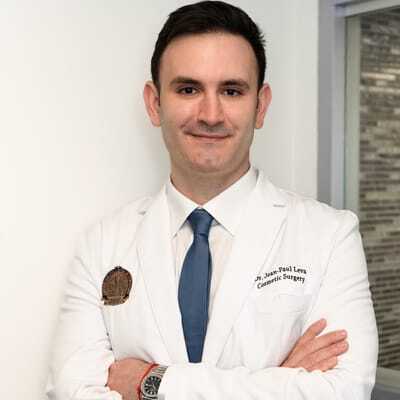
Dr. Jean-Paul Leva
Dr. Jean-Paul Leva, FACS is board certified in cosmetic and general surgery. Dr. Jean-Paul Leva, FACS obtained his Doctor of Osteopathic Medicine degree from ...