The honest answer to how long does lip filler last is that lip fillers typically last six to twelve months for most patients, though the full range spans from 6 to 18 months depending on individual factors. The best-looking period, where your lips appear full and settled without noticeable softening, generally runs from about one week through five to seven months post-treatment. After that, results fade slowly over time, not all at once, giving you a gradual transition rather than a sudden loss.
This guide covers everything from the basics of filler material to aftercare and maintenance treatments, so you can set realistic expectations before your first appointment.
Learn more: Body Contouring at Leva Medical
Lip Filler Basics: Hyaluronic Acid in Aesthetic Medicine
Most modern fillers are made of hyaluronic acid, a natural substance the body already produces. Hyaluronic acid binds to water molecules in surrounding tissue, which is what creates that plump appearance and adds volume to the lips. In aesthetic medicine, hyaluronic acid fillers are the standard for lip enhancement because they're biocompatible, adjustable in dose, and reversible if needed.
Hyaluronic acid fillers are designed to be temporary. This is actually a feature, not a limitation. Unlike permanent surgical options like lip implants or plastic surgery procedures such as fat grafting, temporary fillers allow you to refine your look over time with subtle enhancements. If you're unhappy with the result, the filler can be dissolved.
Different hyaluronic acid fillers exist across product families like Restylane, Juvederm, and Belotero. Each uses varying levels of chemical cross-linking to control firmness, flexibility, and how long fillers last. Dermal fillers in this category are FDA-designated as absorbable, meaning the body naturally metabolizes the material over months.
Typical Longevity: How Long Fillers Last
Lip fillers typically last 6-12 months on average. Most lip fillers average eight to ten months in duration, though most patients experience optimal results for 9–15 months when conditions are favorable. The specific product used affects longevity of the lip fillers significantly.
Filler longevity depends on metabolism, product type, and lifestyle. Here's a rough comparison by product:
Product | Approximate Duration |
|---|---|
Restylane Kysse | 6–12 months |
RHA 2 | 6–9 months |
Belotero Balance | 5–8 months |
Fat grafting (non-HA) | 2+ years |
Lip filler injections placed in high-movement areas tend to degrade faster because the constant motion from speaking, eating, and expressions accelerates filler breakdown. Filler material can remain in the lips for over two years in some individuals, particularly when layered over multiple sessions with residual scaffolding from prior treatments. Results fade slowly over time, so you won't wake up one morning with your lips back to baseline.
Factors That Affect How Long Fillers Last: Injection Sites and Lifestyle Factors
Several key factors determine how long fillers maintain their effect.
Injection sites and movement. The lips metabolize filler faster than areas like the cheeks due to their mobility. High activity in the lips can cause the body to metabolize the filler faster. Filler injected into the central lip body, where movement is greatest, degrades quicker than filler placed along the vermilion border or corners. Multiple injection sites across different lip zones can help distribute mechanical stress.
Cross-linking and product formulation. Products with higher cross-linking resist enzymatic breakdown longer. For example, Restylane Kysse uses approximately 7% cross-linking with XpresHAn technology, designed to flex with lip movement while maintaining structural support. Proper product selection and injection technique influence longevity and safety of results.
Patient's metabolism. Patients with faster metabolism see shorter filler longevity. Younger patients and those with higher basal metabolic rates tend to break filler down more rapidly. Hyaluronic acid fillers break down through normal metabolic processes, primarily via the body's own hyaluronidase enzymes.
Sun exposure and lifestyle factors. Sun exposure can accelerate the breakdown of lip fillers because UV radiation degrades both the HA gel and surrounding collagen. Excessive sun exposure is one of the most controllable risk factors. Smoking can degrade the longevity of lip fillers due to restricted blood flow. Filler longevity varies based on individual metabolism and lifestyle, and even frequent travel can cause minor fluid shifts affecting filler results.
How Much Lip Filler: Volume, Product, and Technique
The question of how much lip filler to use should always be part of your consultation. Most appointments use between 0.5 and 1.0 mL total. For first-timers, starting with half a syringe (0.5 mL) is a conservative approach that allows you to assess results before adding more. Your provider will discuss the desired volume based on your natural lip tissue and facial features.
Hyaluronic acid fillers are hydrophilic and require adequate hydration to maintain plumpness, so the filler's water-attracting properties are part of how it works over time.
Technique matters. Layering filler gradually across sessions often produces more natural-looking results than injecting a large amount at once. Whether your injector uses a thin needle or cannula also influences outcomes.
Product and Placement Details: Hyaluronic Acid and Injection Sites
High-crosslink fillers (like Restylane Defyne) resist breakdown longer but may feel firmer. Low-crosslink fillers (like Belotero Balance) integrate smoothly for lip lines and delicate borders but fade faster. The trade-off is durability versus softness.
Placement considerations:
Vermilion border: Less movement, better for maintaining shape definition over time
Lip body: More movement, higher volume impact but faster degradation
Upper lip: Often requires a different approach than the lower lip due to anatomy and movement patterns
When to use fine needles versus cannula: needles offer precision for defining Cupid's bow and borders, while cannulas create less tissue trauma, potentially reducing bruising and supporting cleaner integration. A lip flip using neuromodulators is a separate technique that relaxes the upper lip muscle for subtle enhancement without filler.
The Lip Filler Treatment and Healing Period
A typical lip filler treatment appointment follows these steps:
Consultation and lip anatomy assessment
Marking target areas for volume and definition
Numbing (topical anesthetic or nerve block; many HA formulations include lidocaine)
Injection using a thin needle or cannula
Optional gentle massage to smooth the filler
Cold compress application
The appointment typically takes 30–60 minutes with minimal downtime.
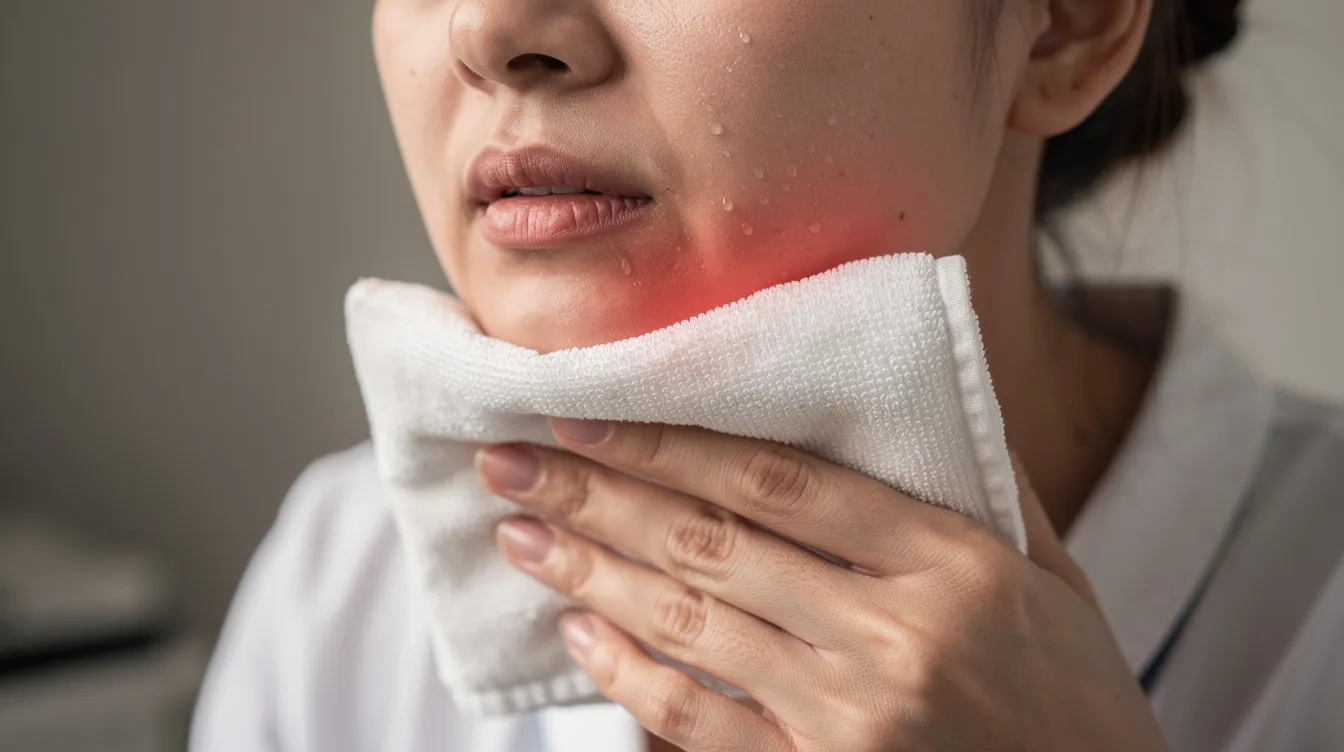
Swelling usually lasts 24 to 48 hours after treatment and is the most common immediate side effect. Bruising may occur and usually resolves within a few days. Most patients see visible improvement within a few days, though the lips begin looking noticeably fuller almost immediately. Patients may feel tenderness for up to a week post-treatment.
Immediate post-treatment care includes avoiding vigorous exercise and excessive heat. You should also avoid alcohol for 24-48 hours post-treatment, keep your head elevated while sleeping, avoid salty foods, and apply ice packs intermittently to minimize swelling. Do not gently massage the area unless your provider specifically instructs you to do so. Avoid blood thinning medications as directed.
Healing Stages and Final Results
The healing process follows a predictable pattern:
Phase | Timeline | What to Expect |
|---|---|---|
Immediate swelling | 0–24 hours | Lips feel firm, appear 20–60% larger than final shape |
Peak swelling | 24–72 hours | Maximum fullness, possible asymmetry, bruising visible |
Settling phase | Days 3–14 | Swelling subsides, shape becomes more natural |
Final results | 2–4 weeks | Lip fullness stabilizes into its final shape |
Full results typically stabilize over two to four weeks. During the healing period, some asymmetry is completely normal and resolves as swelling decreases. The immediate results you see right after injection are not your final results.
Aftercare and Lifestyle Tips to Make Fillers Last Longer
Proper aftercare directly influences how long fillers last. Here are the most impactful practices:
Stay hydrated. Stay hydrated to help maintain lip filler longevity. Well hydrated tissue supports the HA gel's ability to attract and retain water, keeping your lips looking full. A healthy diet rich in antioxidants also supports skin health. Health and lifestyle factors such as hydration and diet can support longevity of filler results.
Sun protection. Use lip balm with SPF to protect against sun exposure. UV radiation breaks down both the filler and surrounding collagen. Make sun protection a daily habit, not just a beach-day afterthought.
Avoid heat and exercise early on. Avoid extreme heat for the first week after treatment. Saunas, steam rooms, and intense workouts increase blood flow and can disrupt filler integration. Activities that increase blood flow should be reintroduced gradually.
Don't smoke. Smoking restricts blood flow, increases oxidative stress, and accelerates the body breaks down the filler material. If you're investing in lip fillers, smoking will actively work against your results.
Maintenance, Touch-Ups, and Long-Term Strategy
To maintain volume over time, schedule touch-up treatments every 6-9 months for best results. Many providers recommend a smaller touch-up about four weeks after initial treatment to address any asymmetry once swelling has resolved.
Instead of waiting for full volume loss and starting over, smaller maintenance treatments help you maintain volume with less product and less downtime.
Work with your provider to create a personalized maintenance plan. Factors like your patient's metabolism, product choice, and aesthetic goals should shape how often you return. Over time, repeated treatments can build a residual HA scaffolding that may help results from dermatologic surgery and filler sessions last progressively longer.
Risks, Reversal, and When to Contact Your Provider
Contact your provider immediately if you experience:
Severe pain that doesn't respond to ice packs or over-the-counter relief
White patches or blanching on the lip (potential vascular occlusion)
Unusual warmth, redness, or fever (signs of infection)
Changes in vision
Hyaluronidase is an enzyme that can reverse HA fillers by breaking down the gel. It's used both electively (if you're unhappy with results) and in emergencies (vascular compromise). Earlier administration yields better outcomes in adverse events.
Choosing a qualified injector trained in facial anatomy and emergency management is non-negotiable. Lip filler injections carry real risks, and the person holding the needle should know how to handle complications, not just how to inject.
FAQs: Common Questions About How Long Do Lip Fillers Last
Are lip fillers permanent? No. Lip fillers permanent options don't exist in the HA category. Hyaluronic acid fillers are temporary fillers that the body eventually break down through natural enzymatic processes. Permanent alternatives like lip implants exist but carry higher risks and less flexibility.
Can anything make fillers fade faster? Yes. Factors that accelerate filler breakdown include high metabolic rate, excessive lip movement, sun exposure, smoking, dehydration, and choosing a softer or lower cross-linked product. Even harsh mechanical stress on the lips can speed degradation.
How do prior treatments affect future filler longevity? Patients with previous filler treatments sometimes notice longer-lasting results in subsequent sessions. Repeated treatments may stimulate collagen production around the filler, creating a framework that helps preserve volume. However, overly frequent sessions carry the risk of lumps or over-accumulation.
Conclusion: Planning Your Lip Enhancement Timeline and Final Results
How long does lip filler last depends on a combination of product choice, injection technique, aftercare discipline, and your individual biology. The key actions for maximizing how long lip fillers last are straightforward: choose the right product and injector, follow proper aftercare, protect your lips from sun and heat, and plan maintenance treatments before you've lost all your volume.
Book a consultation with a qualified provider to build a personalized lip enhancement plan. Discuss your goals, your lifestyle factors, and your expectations so you walk in with a clear timeline and walk out with final results you'll enjoy for months to come.
Frequently Asked Questions
How long do lip fillers typically last?
Lip fillers typically last 6 to 12 months on average, with most patients experiencing optimal results for 9 to 15 months. The full range can extend from 6 to 18 months depending on individual factors like metabolism, product type, and lifestyle.
What happens to lip fillers after they start to fade?
Results fade slowly over time rather than disappearing suddenly. You experience a gradual transition back toward baseline, not an abrupt loss. Filler material can remain in lips for over two years in some individuals, particularly with residual scaffolding from multiple sessions.
Why do different lip filler products last different lengths of time?
Longevity depends on cross-linking levels and formulation. Products with higher cross-linking resist enzymatic breakdown longer. For example, Restylane Kysse uses 7% cross-linking, while Belotero Balance has lower cross-linking, offering faster fading but smoother integration.
What lifestyle factors affect how long lip fillers last?
Sun exposure accelerates filler breakdown through UV radiation damage. Smoking restricts blood flow and reduces longevity. Faster metabolism in younger patients causes quicker breakdown. High lip movement from speaking and eating also accelerates filler degradation.
Does injection placement affect how long lip fillers last?
Yes. Filler in high-movement areas like the central lip body degrades faster than filler placed along the vermilion border or corners. The lips metabolize filler faster than other facial areas due to constant movement from speaking, eating, and expressions.


-2.jpg?width=2000&height=2000&name=Copy%20of%20YouTube%20Thumbnail%20-%20Life-Changing%20Cosmetic%20Surgery!%20(Document)-2.jpg)


