Many men deal with an enlarged chest that no amount of diet or exercise seems to fix. Gynecomastia liposuction is one of the most common paths to a flatter, more masculine chest contour, but it isn't the right solution for every case. This guide breaks down who qualifies, what each surgical procedure involves, and what recovery actually looks like so you can walk into a consultation fully prepared.
Understanding Gynecomastia in the Male Breast
Gynecomastia refers to the enlargement of breast tissue in men due to hormonal imbalances or other factors. It involves the growth of glandular breast tissue beneath the nipple areola complex, sometimes alongside extra fat spread across the breast area. The glandular tissue feels firm and disc-like, while fat is softer and more diffusely distributed.
The condition is far more common than most men realize. Many adolescent boys experience gynecomastia during puberty, and it also affects many middle-aged men. Hormonal shifts can cause gynecomastia in men at nearly any age, and certain medications, anabolic steroids, alcohol, marijuana, and genetic conditions like Klinefelter syndrome can also trigger it.
The psychological toll is real. Gynecomastia can lead to embarrassment and social withdrawal, lower self esteem, avoidance of fitted shirts, and reluctance to be shirtless. These effects on confidence are often the primary reason men pursue surgical correction.
Pseudo-Gynecomastia Versus True Gynecomastia
Not all male breast enlargement is the same. Pseudogynecomastia is characterized by excess fat without significant glandular enlargement, while true gynecomastia involves dense glandular tissue beneath the nipple. Mixed cases contain both.
This distinction matters because weight loss can reduce excess fat but does nothing for firm glandular tissue. A man who loses a significant amount of weight may see his chest shrink if the enlargement was purely fatty, but if a hard disc of tissue sits under the areola, it will remain.
It is essential to distinguish between glandular tissue and fatty tissue for effective treatment. Physical examination, ultrasound imaging, and sometimes hormone panels help identify the underlying cause. Surgeons may classify the condition using grading systems like Simon's grades or newer imaging-based classifications that map how far excess glandular tissue extends from the nipple.
Are You a Good Candidate for Male Breast Reduction?
Ideal candidates for gynecomastia surgery are at a stable weight and in good overall health. Here are the key requirements:
No uncontrolled chronic conditions (diabetes, heart disease)
Stable body weight for at least several months
Non-smoker or willing to quit, since smoking can slow the healing process after surgery
Realistic expectations about the results of gynecomastia surgery
Patients should consult regarding potential underlying conditions before pursuing surgery. Endocrine disorders, liver disease, or tumor-related causes should be evaluated and addressed first. If a medication is driving the enlargement, your surgeon will want to discuss alternatives before scheduling a procedure.
Candidates should also understand that final results take time. Swelling persists for weeks, and full chest contour refinement may not appear for months.
Choosing Between Liposuction Alone and Gland Excision
When excess breast tissue is primarily fat, liposuction alone can produce excellent results. Liposuction is often used for Simon's grade 1 gynecomastia, where the enlargement is mild and predominantly fatty.
When the chest contains dense glandular tissue, gland excision becomes necessary. Conventional liposuction and even ultrasonic liposuction cannot break apart firm, fibrous gland. In these cases, surgical removal through an incision is required.
In many cases, a combination of liposuction and excision delivers a smoother chest contour. Liposuction combined with gland excision is common for grade 2 gynecomastia, where both fat and gland contribute to the enlarged chest.
Excess skin changes the surgical plan significantly. Patients who have lost large amounts of weight often have stretched skin that won't retract on its own, which may require skin excision and larger incisions.
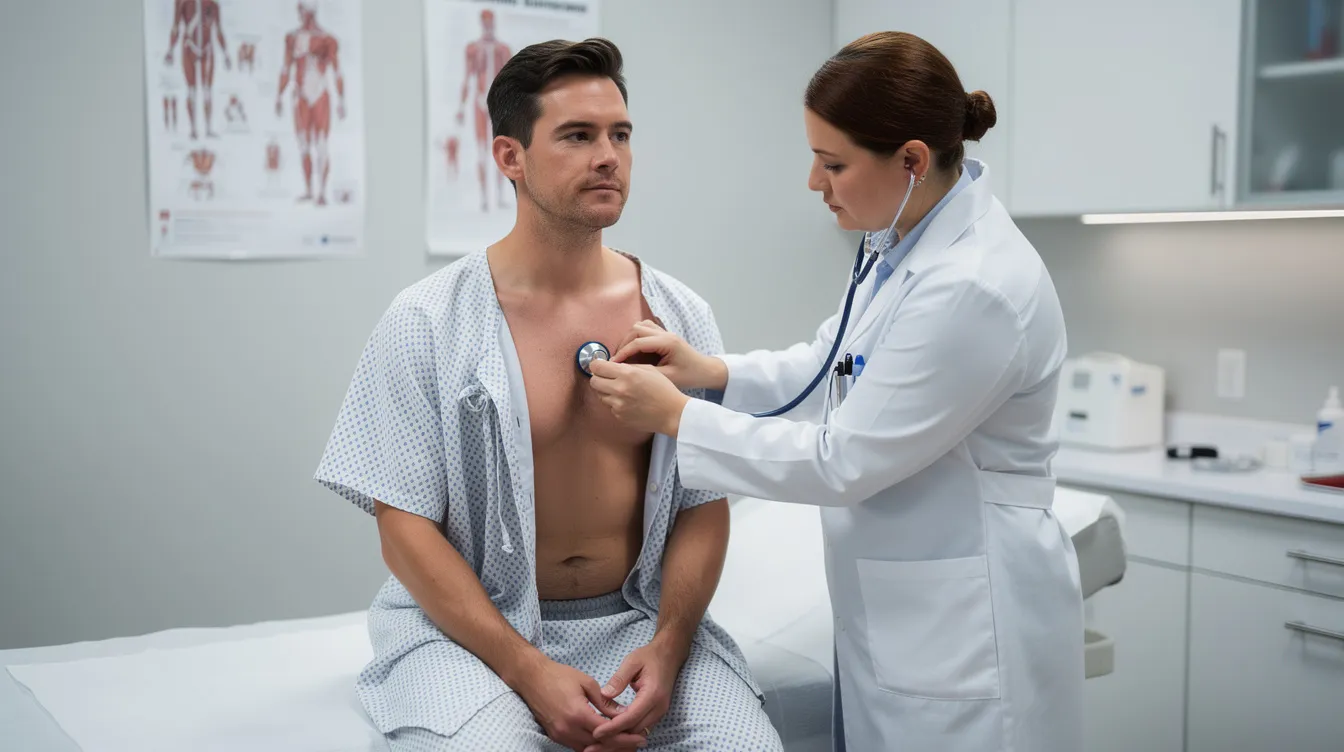
Male Chest Assessment
Surgeons may use pre-operative assessments to evaluate tissue composition and treatment required. A thorough evaluation includes:
Palpating the chest to map fat distribution versus glandular density
Assessing skin elasticity and checking for ptosis or stretch marks
Screening for underlying medical causes through medical history review, hormone panels, and imaging
This assessment drives every decision about technique, incision patterns, and whether the patient needs liposuction, excision, or both.
Male Breast Reduction Surgery Options
Male breast reduction surgery encompasses several treatment approaches tailored to tissue composition. The three core methods are chest liposuction for removing fat, gland excision for removing excess glandular tissue, and combination surgery for mixed cases.
Treatment plans reflect what's actually in the chest. Liposuction alone suits fat-predominant cases, while most patients with mixed tissue receive combination treatment. For unilateral enlargement, surgeons must also consider matching the contour of the opposite side. Revision planning is built into the process when there's a risk of persistent tissue or contour irregularity.
Chest Liposuction for Fat-Predominant Cases
Chest liposuction begins with several small incisions, typically hidden at the edge of the areola or in the inframammary fold. A cannula is inserted to suction out fat cells after tumescent fluid is injected to minimize bleeding and ease removing fat from surrounding tissues.
Traditional liposuction works well for softer fat, while VASER liposuction uses ultrasound to break up fat cells before suctioning, which can be particularly effective treatment for fibrous chest fat. Ultrasound assisted liposuction helps emulsify tissue, potentially improving skin contraction afterward.
After fat removal, the skin often retracts naturally in patients with good elasticity. Younger patients typically see better contraction. The result is a flatter new chest contour with improved muscle definition visible through the skin.
Gland Excision for Dense Tissue
When gland excision is necessary for glandular breast tissue removal, the surgeon typically works through a discreet areolar incision along the lower border of the areola. This approach preserves natural nipple contours and keeps the scar well hidden.
The excision must be precise. Leaving too much excess tissue results in residual puffiness; removing too much creates a crater deformity, a hollow beneath the nipple that looks unnatural. Most surgeons preserve a thin cushion of tissue beneath the nipple areola complex to maintain a smooth contour.
Cross-Chest Liposuction Technique
Cross chest liposuction allows the surgeon to access fat across a broader area of the chest through the same incisions used for gland excision. By threading the cannula across the sub-areolar region from an areolar entry point, the surgeon can treat the entire breast mound through one or two small openings.
Cross-chest liposuction minimizes post-operative scarring while achieving a more uniform result. The technique is especially useful for treating diffuse fat that extends laterally across the chest wall.
Combination Gynecomastia Surgery
A combination of liposuction and excision is often the preferred approach for most men with mixed gynecomastia. Liposuction first reduces bulk and defines the surrounding chest, then gland excision removes the firm core tissue through the same incisions.
This gynecomastia treatment balances flatness with smooth contour and avoids the abrupt transitions that can occur with excision alone. For severe cases with skin laxity, skin excision may be added to tighten the chest envelope.
When Excess Skin Requires Advanced Surgery
Patients who have undergone massive weight loss or lived with large gynecomastia for years often present with significant skin laxity. In these cases, the skin won't snap back after tissue removal.
Skin excision becomes necessary when the redundancy is moderate to severe. This surgical procedure involves removing excess skin and sometimes repositioning the nipple areola complex higher on the chest wall. In extreme cases, free nipple grafting may be used.
These advanced operations require larger incisions, which means longer scars. Patients must weigh the trade-off between a tighter chest and more visible scarring.

What to Expect During Male Breast Reduction Surgery
Before the procedure, your surgeon marks areas of fat, glandular tissue, and planned incision sites directly on your chest. These markings guide symmetry and precision during the operation.
Anesthesia options for gynecomastia surgery include local anesthesia with sedation or general anesthesia. General anesthesia is commonly used in gynecomastia surgery, particularly for excisional procedures or combination cases. Most male breast reduction surgery is performed on an outpatient basis, with patients going home the same day. Drains may be used to prevent fluid accumulation post-surgery.
Recovery After Gynecomastia Surgery
Recovery from gynecomastia surgery typically involves wearing a compression vest for several weeks. Patients typically wear a compression garment for six weeks to reduce swelling, support skin retraction, and minimize the risk of fluid collections.
Here's a general recovery timeline:
Milestone | Timeframe |
|---|---|
Walking encouraged | Immediately after surgery |
Most swelling subsides | First few weeks |
Return to light daily activities | About two weeks |
Strenuous activity and upper body exercise | 4–6 weeks minimum |
Final chest contours visible | 3 to 6 months |
Patients are encouraged to walk immediately after surgery. Recovery milestones include a gradual return to activities starting within a week after surgery. Drains may be placed to remove fluid during recovery. Pain management includes narcotic and non-narcotic medications as needed.
Recovery from gynecomastia surgery typically leads to a more defined chest contour over months. Recovery time varies by technique, but most patients find they can resume desk work within a week and return to the gym after about six weeks. The healing process continues for up to 12 months as scars mature and tissue settles.
Risks, Scars, and Long-Term Results
Common risks of gynecomastia surgery include infection, bleeding, and uneven chest contours. Other possible complications include seroma and hematoma.
Temporary sensation changes in the nipple area are common, particularly after combined procedures. Lasting numbness is rare.
Scar appearance depends on incision type. Periareolar scars typically fade well within a year. Scars from skin excision are longer and more visible but continue to improve over 12 months.
Recurrence is uncommon when the underlying cause is resolved and the gland is fully removed. However, weight gain, hormonal changes, or continued use of offending medications can alter results over time.
More on Liposuction, Longevity, and Exercise
Can Liposuction Alone Treat Gynecomastia?
Liposuction is commonly used for gynecomastia treatment when the enlargement is fat-predominant. It's an effective treatment for pseudogynecomastia and mild mixed cases. However, liposuction alone cannot adequately address firm glandular tissue beneath the nipple, which often leads to residual puffiness and higher rates of revision surgery.
Are Male Breast Reduction Results Long-Lasting?
Once fat cells and glandular tissue are removed, they don't regenerate. Results are generally long-lasting. However, hormonal changes from aging, new medications, or significant weight gain can cause new fat deposition or residual tissue changes. Maintaining a stable weight and healthy lifestyle helps preserve outcomes.
When Can Patients Resume Exercise?
Light walking is recommended immediately. Most surgeons restrict strenuous activity, heavy lifting, and chest-focused workouts for at least four to six weeks. A follow up appointment will confirm when it's safe to return to full training. Each case is different, so your surgeon's specific guidance takes priority.
Planning Your Male Breast Reduction Consultation
An in-person chest evaluation is the only reliable way to determine the right approach. During your consultation, the surgeon will palpate your chest, assess skin quality, and classify the type and grade of your gynecomastia.
Come prepared to discuss:
Your complete medical history, including current medications and supplements
Any history of steroid or substance use
Weight-loss history and current stability
Photographs of desired outcomes (before-and-after examples help set expectations)
At Leva Medical, gynecomastia surgery starts at $7,500.
The exact price is set at the consultation.
Your consultation should end with a personalized recommendation, whether that's liposuction alone, combination surgery, or a more advanced technique. The right plan depends entirely on what's happening beneath your skin, and an experienced surgeon can map that out with precision.

Frequently Asked Questions
Who is a good candidate for gynecomastia liposuction?
Good candidates are men at a stable body weight who are in good overall health, without uncontrolled conditions such as diabetes or heart disease. Non-smokers, or those willing to quit, are preferred because smoking can slow healing. Candidates should also have realistic expectations and have underlying causes, such as hormonal or medication-related issues, evaluated first.
What is the difference between fatty and glandular gynecomastia?
Fatty enlargement, sometimes called pseudogynecomastia, consists mainly of excess fat and can shrink with weight loss. True gynecomastia involves firm glandular tissue beneath the nipple, which weight loss does not remove. Many cases are mixed. Physical examination, ultrasound, and sometimes hormone testing help determine which type is present.
When is liposuction alone sufficient, and when is gland removal needed?
Liposuction alone may be appropriate when the enlargement is mainly fatty, such as mild Simon's grade 1 cases. Dense glandular tissue cannot be removed effectively by liposuction and usually requires surgical excision through an incision. Many cases with both fat and gland are treated with a combination of liposuction and excision.
How long does recovery from gynecomastia surgery take?
Swelling typically persists for several weeks after surgery, and final chest contour may take several months to become apparent. Recovery timelines vary with the procedure performed and individual healing. Patients should follow their surgeon's instructions on activity, compression garments, and follow-up visits.
Can gynecomastia return after surgery?
Gynecomastia can persist or recur in some cases, particularly if residual glandular tissue remains or if underlying hormonal or medication causes are not addressed. Surgeons may plan for revision when there is a risk of persistent tissue or contour irregularity. Discussing possible causes and follow-up expectations during consultation can help set realistic expectations.
About Leva Medical
Leva Medical has offices in Queens (94-06 59th Ave, Suite E9, Elmhurst, NY 11373) and in Northport, Long Island (320 Laurel Rd, Northport, NY 11768).
Call (718) 699-9737 to book a consultation with a board-certified surgeon.
Learn more: Gynecomastia Surgery at Leva Medical