Flat nipples are a common physical variation in breast anatomy, yet they often catch new parents off guard during those first attempts at breastfeeding. Estimates suggest that roughly 10% to 23% of individuals have flat nipples, and flat or inverted nipples affect 3 to 10% of women specifically. If you're navigating this, you're far from alone-and with the right support, feeding your baby successfully is entirely achievable.
This guide covers everything from identifying your nipple shape to breastfeeding strategies, pumping, devices, and surgical corrections.
Learn more: Inverted Nipple Repair at Leva Medical
Inverted Nipples Versus Flat Nipples
Flat nipples lie level with the surrounding areola rather than protruding outward. They sit flush against the breast tissue and may or may not respond to stimulation. Inverted nipples, by contrast, retract inward-pulling into the breast rather than sitting flat.
The distinction matters because treatment options and latch strategies differ. Most nipples vary in shape from person to person, and even from one breast to the other breast on the same body. When one nipple differs noticeably from the other-especially if that change is recent-it's worth investigating with a healthcare provider.
Around 10%-20% of women are born with at least one inverted nipple, and about 70% of those cases are bilateral.
What Is an Inverted Nipple?
An inverted nipple is one that retracts into the breast instead of pointing outward. It can be congenital or acquired. Clinically, nipple inversion is graded using the Han–Hong classification:
Grade 1 (mild): The nipple can be pulled out manually and stays protruded. Breastfeeding is usually possible.
Grade 2 (moderate): The nipple can be drawn out but retracts back. Feeding may require assistance.
Grade 3 (severely inverted): The nipple cannot be pulled out at all due to short milk ducts and fibrous connective tissue tethering it inward.
Understanding which grade applies helps determine the right approach-from simple stretching techniques to surgical intervention.
Causes Of Flat Or Inverted Nipples
Flat nipples can be present from birth or develop later in life. Here are the primary causes:
Congenital causes:
Most flat nipples are congenital variations due to natural differences in milk ducts and nipple tissue development during fetal growth
Flat nipples may result from underdeveloped milk ducts or insufficient supporting connective tissue
Up to 50% of congenital cases may be hereditary
Engorgement-related causes:
Engorgement can cause flat nipples during breastfeeding by swelling breast tissue so tightly that the nipple cannot protrude
This is typically temporary and resolves as swelling goes down
Trauma, surgery, and aging:
Prior breast surgery (reduction, augmentation, lumpectomy) can damage ducts or scar the nipple base
Ageing can lead to flat nipples as milk ducts shorten and tissue atrophies during perimenopause
Inflammation or infection, such as mastitis or mammary duct ectasia, can also cause acquired inversion
Flat nipples do not signify an underlying disease or hormone imbalance on their own. However, sudden changes-especially on one breast-warrant evaluation to rule out conditions including breast cancer.
Preparing For Breastfeeding With Flat Or Inverted Nipples
The first step is a prenatal discussion with your lactation consultant or OB/GYN. Mention your nipple shape during pregnancy so your care team can build a plan before birth.
Key preparation strategies:
Skin-to-skin after birth: Skin-to-skin contact helps babies latch better by triggering rooting reflexes and boosting oxytocin release. Skin-to-skin contact can encourage natural feeding behaviors even when nipple shape presents challenges.
Learn hand expression: Practicing hand expression before delivery helps you understand how to manipulate nipple tissue, soften the areola, and manage engorgement once your milk comes in.
Don't wait until you're struggling at 3 a.m. with a hungry baby to figure out your plan. Talk to your provider during pregnancy.
Helping Baby Attach To Flat Or Inverted Nipples
Babies may struggle to achieve a secure latch with flat nipples because there's less for the mouth to grip. Improper latching can lead to nipple damage and low milk transfer, creating a cycle of nipple soreness and frustration.
Positioning for deep latch:
Use holds that make the areola more accessible-football (clutch), side-lying, or cross-cradle
Align your baby's nose to the nipple, encourage a wide mouth, and draw the baby onto the breast so they take in plenty of areola, not just the nipple tip
Frequent practice in early days:
Feed often to stimulate milk supply, help the baby learn to latch, and encourage nipple stimulation that can gradually improve protrusion
In-person latch support:
Lactation consultants can provide personalized latching techniques by observing feeds in real time and making adjustments specific to your situation
Practical Do's When Your Milk Comes In
Once milk arrives, engorgement can make latching more difficult for babies. Here's what helps:
Massage breasts before a feed - work toward the areola to soften breast tissue and encourage flow
Hand express to soften the areola - expressing or pumping before a feed can draw a flat nipple outward temporarily, making it easier for baby to attach
Use reverse pressure softening - apply gentle pressure on either side of the nipple base to push tissue forward so the nipple protrudes. Using Reverse Pressure Softening is particularly effective during engorgement. Reverse pressure softening helps with flat nipples during engorgement by displacing swollen tissue.
Cold compress briefly - a cold compress can reduce swelling before a feed, but limit use to a few minutes so it doesn't inhibit milk flow
You can also try the Hoffman method: place your thumb on each side of the nipple base and gently stretch outward. This non-surgical technique can help with flat nipples over time.
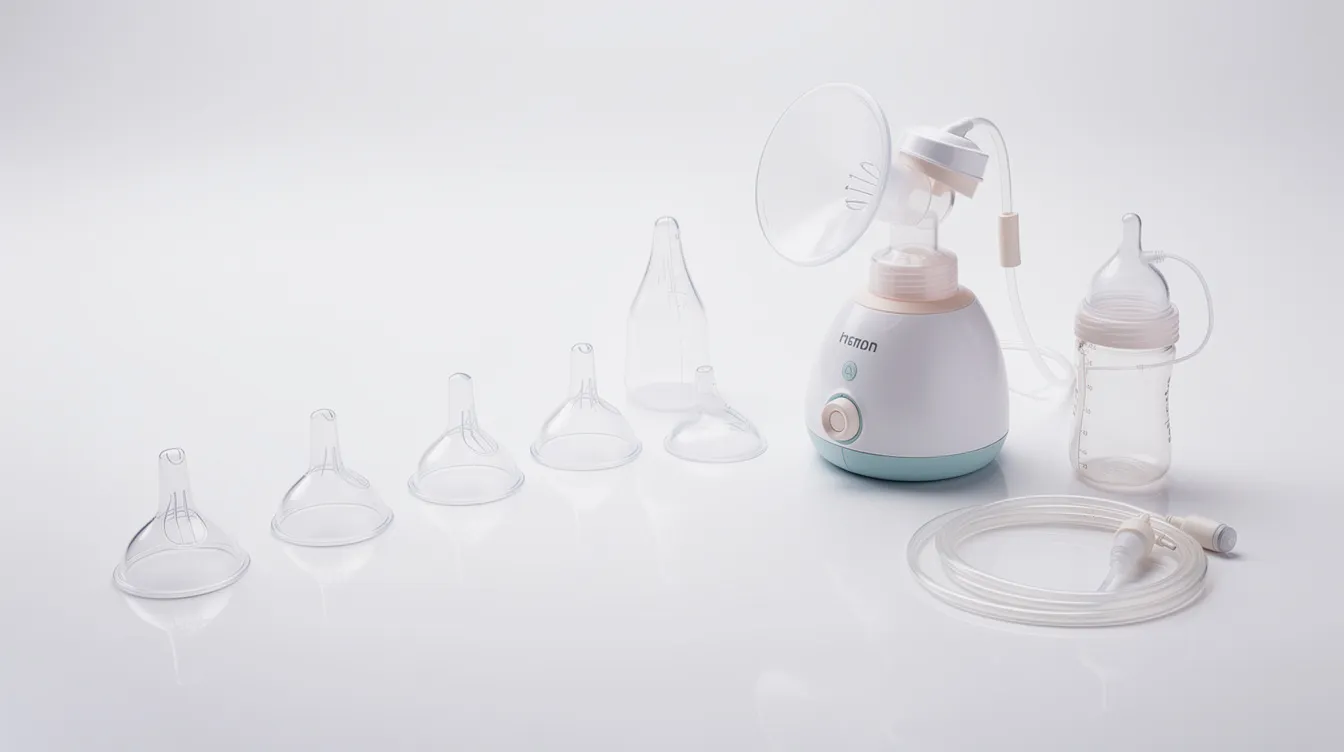
Breast Pump Tips For Flat And Inverted Nipples
A breast pump can be a valuable tool, but getting the setup right matters.
Choose pump frequency based on feeding needs - if supplementing or exclusively pumping, aim for 8–12 sessions per day initially
Measure your nipple for correct flange size - the flange opening should match your nipple base diameter; an incorrect fit can flatten tissue further or cause discomfort
Trial different flange sizes - many women need to experiment; flanges designed for flat or inverted nipples may improve comfort
Use gentle suction buildup - start with low suction and increase gradually. Rapid high suction can cause pain or draw the nipple inward rather than outward
Pumping With Flat Or Inverted Nipples
Pump after feeding to stimulate supply and help draw nipples outward through repeated gentle suction
Try a manual pump for sensitive nipples - hand pumps give you more control over pressure and pace, which matters when nipple tissue is tender
Track output - monitor pumped volume alongside baby's weight gain and wet diapers to assess whether your pump routine is effective. Flat nipples can affect breastfeeding but do not change milk supply, so low output usually points to fit or technique issues rather than a production problem
If output drops or the pump feels painful, revisit your flange size before assuming something is wrong with your supply.
Devices And Nipple Inversion Tools
Nipple shields can assist breastfeeding by creating a firmer target for latching. They're thin silicone covers placed over the nipple that give baby something to grip. Use them with professional support-shields can reduce milk transfer if used long-term without monitoring.
Non-surgical nipple correctors (suction cups, inverted syringe technique, commercially available devices) use negative pressure to draw the nipple outward. Trial these cautiously:
A randomized trial on the inverted syringe technique found only ~14% compliance, with no statistically significant improvement in exclusive breastfeeding at one month
A newer 2026 study on a Device for Flat or Inverted Nipples (DFIN) showed improvements in latch speed, nipple length, and exclusive breastfeeding rates
Caution: Unsupervised prolonged device use can cause skin damage, infection, or tissue injury. Never stick with a device that causes increasing discomfort without consulting your care provider.
If Only One Nipple Is Inverted
When only one nipple is flat or inverted, targeted practice helps:
Offer the affected breast first when baby is calm and alert-they're more patient with a tricky latch when not desperately hungry
Keep nipples dry between feeds to avoid maceration
Use breast shells between feeds on the affected side to encourage gentle, sustained pressure
Document your progress: note when latch improves, track feed duration on each side, and monitor diaper output. If the other breast feeds well, your overall milk supply should remain adequate.
Inverted Nipples Flat: When Nipples Retract Or Change
A new or sudden change in nipple shape should be evaluated by a healthcare provider. When a previously normal nipple flattens or inverts-especially on just one side-it may signal:
Ductal changes or masses
Paget's disease (presents as nipple rash or scaling)
Inflammatory breast cancer
Seek urgent review if you notice discharge (especially bloody), skin changes, dimpling, or a palpable lump. In most cases, the cause is benign, but prompt assessment matters.

Surgical Options And Considerations
For women with extensive experience trying non-surgical methods without success, or those seeking correction for cosmetic reasons, surgery is an option.
Consult a surgeon about your goals, especially if breastfeeding is still planned. Techniques vary-some preserve milk ducts, others don't
Risks to milk ducts: Severing ducts eliminates breastfeeding ability on that side. Discuss duct-sparing approaches if future nursing matters to you
Outcomes: A meta-review of 3,369 inverted nipples showed an average correction rate of ~88.7% with recurrence around 3.9%. Most patients retain good projection and report high satisfaction
Procedure details: Surgical correction of flat nipples is performed under local anaesthetic. The procedure is typically quick, with recovery measured in days rather than weeks. Flat nipple surgery is primarily cosmetic, not medically necessary
Cost: Check insurance coverage-many plans classify this as a cosmetic procedure and may not cover it
Troubleshooting When Most Nipples Don't Protrude
When most nipples won't protrude despite your efforts:
Check for engorgement first - engorgement can make it harder for babies to latch. Resolve swelling through feeding, pumping, warm compresses, or massage before attempting to nurse
Repeated latch practice - try various positions, use breast compressions, and ensure baby takes enough areola into their mouth
Monitor baby outcomes - adequate wet and dirty diapers, audible swallowing, and steady weight gain indicate sufficient milk transfer even if latch looks imperfect
If baby isn't gaining weight despite consistent effort, consider temporary supplementation (cup, syringe, or bottles) while continuing to work on latch with support.
When To Seek Professional Help For Nipple Inversion
See your GP for sudden nipple changes, lumps, discharge, or skin alterations
Request referral to an IBCLC for persistent latch issues after trying positioning adjustments, devices, and pump modifications. Lactation consultants can provide personalized support for breastfeeding challenges that generic advice can't solve
Consult a surgeon if non-surgical methods fail and you're interested in correction as a cosmetic procedure, or if severe inversion prevents feeding despite maximum support
FAQ And Key Takeaways About Flat Or Inverted Nipples
Can I breastfeed with flat nipples? Yes. Breastfeeding is possible with flat nipples with the right techniques and support. Breastfeeding success is possible with flat or inverted nipples-many flat nipples are protractile and respond to stimulation, latch practice, and devices.
What home techniques help with attachment?
Reverse pressure softening before feeds
Manual stimulation and massage
Breast shells worn inside your bra between feeds
Nipple shields during feeds (with guidance)
Brief cold compress to encourage nipple firmness
When should I seek urgent medical evaluation?
Sudden unilateral inversion or flattening
Bloody or serous nipple discharge
Skin rash, scaling, or dimpling around the areola
A new palpable lump in breast tissue
Around 3 to 10% of women have flat or inverted nipples. This is a normal anatomical variation, and in most cases, it doesn't prevent successful feeding or require medical treatment.
Resources And Next Steps
Contact local lactation services - search for IBCLCs in your area through your hospital, birthing center, or pediatrician's office
Read evidence-based guidance - organizations like the American Academy of Pediatrics and La Leche League publish free, peer-reviewed breastfeeding resources
Schedule a consultation - whether prenatal or postnatal, a single session with a lactation consultant can save weeks of frustration and help you nurse with confidence
Flat and inverted nipples are far more common than most people realize. With the right support-whether that's a simple technique adjustment, a well-fitted pump, or professional guidance-you can feed your baby effectively and comfortably. Start the conversation early, and don't hesitate to ask for help.
Frequently Asked Questions
What is the difference between flat nipples and inverted nipples?
Flat nipples lie level with the surrounding areola and sit flush against breast tissue. Inverted nipples retract inward into the breast rather than protruding outward. Treatment options and latch strategies differ between the two conditions.
How common are flat or inverted nipples?
Approximately 10% to 23% of individuals have flat nipples. Inverted nipples affect 3% to 10% of women specifically. Around 10%-20% of women are born with at least one inverted nipple.
What causes flat or inverted nipples?
Causes include congenital variations from underdeveloped milk ducts, engorgement during breastfeeding, prior breast surgery, aging, and infections like mastitis. Up to 50% of congenital cases may be hereditary. Sudden changes warrant evaluation.
What preparation strategies help before breastfeeding with flat nipples?
Discuss nipple shape prenatally with your healthcare provider. Practice skin-to-skin contact after birth to trigger rooting reflexes. Learn hand expression techniques before delivery to understand nipple manipulation and engorgement management.
What techniques help a baby latch when nipples are flat?
Use positioning holds like football, side-lying, or cross-cradle to make the areola accessible. Align baby's nose to the nipple and encourage a wide mouth to take in plenty of areola. Feed frequently and consider lactation consultant support.


-2.jpg?width=2000&height=2000&name=Copy%20of%20YouTube%20Thumbnail%20-%20Life-Changing%20Cosmetic%20Surgery!%20(Document)-2.jpg)


