Fat transfer breast augmentation is a cosmetic procedure that uses your own fat to increase breast volume and improve contour. Instead of synthetic devices, a plastic surgeon harvests excess fat from areas like the abdomen or thighs, purifies it, and injects it into the breasts. The result is a natural breast augmentation that avoids risks associated with implants like rupture, capsular contracture, and implant rejection. Fat transfer provides a more natural look and feel than implants, making it an increasingly popular option for patients seeking subtle breast enhancement.
But it's not a one-size-fits-all solution. This guide covers candidacy, procedure details, recovery, results, risks, and how fat grafting compares to breast implants.
Learn more: Eyelid Surgery at Leva Medical
Overview of Fat Grafting and Breast Augmentation
The fat transfer process follows three core stages: harvest, purify, inject.
Harvesting: Liposuction collects fat from donor areas like the abdomen, flanks, back, or outer thighs. A tumescent solution is injected into the donor site to minimize bleeding and trauma. Gentle suction through blunt cannulas preserves viable fat cells during extraction.
Purification: Harvested fat is processed through centrifugation, filtration, or washing. Fat is purified to remove fluids and impurities before injection, leaving behind purified fat cells ready for grafting. This fat purification step is critical-poorly processed fat leads to higher cell death and lower retention.
Injection: Purified fat is injected into the breasts through small incisions using microinjection cannulas. The surgeon deposits fat in tiny aliquots across multiple tissue layers to maximize contact with blood supply and promote survival of grafted fat cells.
Fat transfer typically increases breast size by one cup size, with surgeons injecting approximately 150–250 mL per breast. Surgeons inject more fat than needed to account for absorption, since not all transferred fat cells survive in their new location. The procedure also allows for permanent fat removal from donor areas, giving patients body contouring benefits alongside breast enhancement.
Fat transfer can enhance breast shape without visible scars. The tiny incisions used for both liposuction and injection heal to near-invisible marks, making this a minimally invasive procedure compared to traditional implant surgery.

Who Is a Candidate: Body Fat and Enough Fat
Not every patient qualifies for a breast fat transfer. Candidacy depends on several measurable factors:
Sufficient fat reserves: Candidates must have sufficient body fat for the procedure. The surgeon needs enough fat from at least one donor site to harvest meaningful volume. Patients with low body fat may not be candidates.
BMI range: Ideal candidates have a BMI below 25 kg/m2, though patients slightly above this range may also qualify depending on fat distribution.
Health status: Candidates must be healthy adults who do not smoke. Smoking compromises oxygenation and dramatically reduces graft survival.
Stable weight: Significant weight fluctuations alter fat cell size in both donor and recipient sites, making results unpredictable. Patients should maintain a stable weight before and after surgery.
Realistic expectations: Candidates should have realistic expectations of results. This procedure is not designed for dramatic size increases-it's a natural breast enhancement with inherent volume limitations.
If you don't have excess body fat for transfer, implants or composite approaches become the primary alternatives.
Clinicians should assess enough fat during consultation through physical examination and possibly body composition analysis, then clearly communicate the expected limits of breast volume increase.
Procedure Steps: Liposuction, Purification, Injection
The fat grafting procedure unfolds in carefully sequenced stages. Understanding each step helps patients prepare for what to expect on surgery day.
Planning the Procedure
Common fat harvesting sites include the lower abdomen, flanks, inner and outer thighs, and the back. The surgeon identifies donor sites with adequate fat deposits and marks both harvest and injection areas preoperatively.
Preoperative imaging or 3D photography helps measure existing breast volume and plan the desired increase. For patients wanting a larger size jump, the surgeon may advise planning for multiple fat transfer procedures staged several months apart, since there's a safe limit to how much fat can be placed in one session.
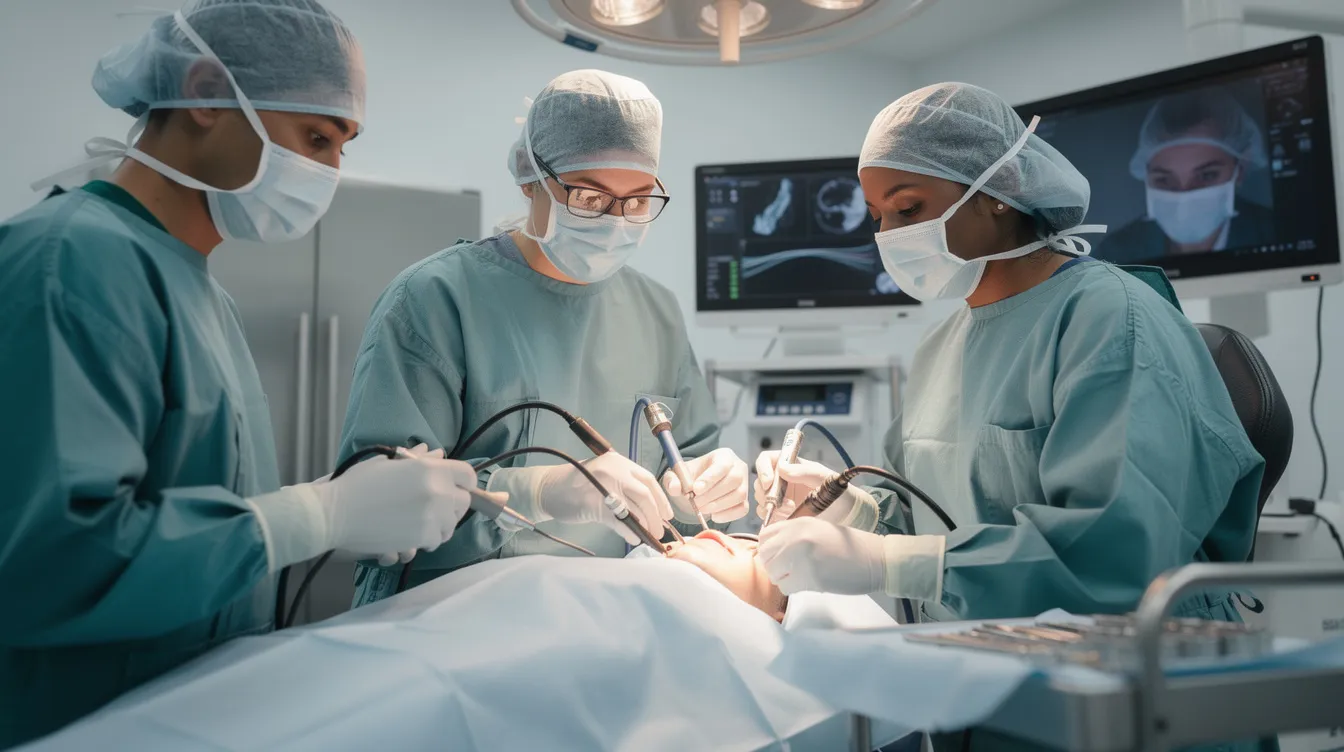
During the Procedure
This is typically an outpatient procedure performed under general anesthesia, though some surgeons use local anesthesia with sedation for smaller-volume cases.
The surgeon will:
Extract fat from the planned donor site using liposuction through tiny incisions
Process the harvested fat to remove fat cells that aren't viable, along with blood, oil, and debris
Inject purified fat into the breast tissue using microinjection cannulas, layering small deposits to maximize graft survival
The procedure typically lasts 2–4 hours. Volumes harvested, processed, and injected should all be documented separately for tracking fat transfer results over time.
Recovery Timeline and Aftercare
Downtime after fat transfer breast augmentation averages 48 hours for basic mobility, though fat transfer can involve longer recovery due to dual surgical sites.
Timeframe | What to Expect |
|---|---|
Days 1–3 | Swelling and bruising are common after the procedure. Rest at home, wear a surgical bra and compression garments at donor sites. Resting and sleeping on your back is recommended post-surgery. |
Days 4–7 | Patients should take a week off work for recovery. Swelling peaks then begins to subside. Wear loose fitting clothing to avoid pressure on the breasts. |
Weeks 2–3 | Most patients fully recover after a couple of weeks. Light activity resumes, but avoid vigorous exercise and direct chest pressure. |
Weeks 4–6 | The healing process continues as graft take occurs-transferred fat establishes blood supply connections. |
Up to six months | Breast volume stabilizes. Final results typically become apparent by 6 months to one year. |
Follow-up appointments at 1 week, 1 month, 3 months, and 6 months allow the surgeon to assess graft survival and catch complications early.
Results and Expectations for Breast Enhancement
Setting accurate expectations is essential for a successful fat transfer outcome.
Fat transfer typically increases breast size by only one cup size per session. Some patients in ideal conditions achieve up to two cup sizes, but this requires ample donor fat and excellent surgical techniques. About 30% of transferred fat may be reabsorbed by the body, which is why surgeons intentionally overcorrect during injection.
Studies show retention rates between 40–80% at 3–6 months, depending on technique, patient health, and whether cell-enrichment methods were used. Fat transfer results are less predictable than implants, and fat transfer cannot achieve significant volume increases like implants can in a single session.
Expect your breasts to look slightly overfilled immediately after surgery due to swelling. Volume will decrease over the first few weeks as some cells die and swelling resolves.
Final-result photographs should be taken at 6 months, once breast volume has stabilized and the healing process is complete. Natural breast augmentation results tend to improve in appearance over this period as swelling fully resolves and fat settles into soft, natural contours.
Comparing Options: Breast Implants, Capsular Contracture, Versus Fat Transfer
Factor | Fat Transfer | Breast Implants |
|---|---|---|
Volume increase | 1 cup size typical | Multiple cup sizes possible |
Feel | Natural | Can feel firmer |
Capsular contracture risk | None | Present |
Implant rupture risk | None | Present |
Maintenance | Minimal | May need replacement every 10–15 years |
Predictability | Variable | Highly predictable |
Scarring | Minimal | More visible incisions |
Donor fat requirement | Yes | No |
Breast implants remain the better choice when a patient wants to increase breast size dramatically, has insufficient fat for harvesting, or needs precise upper pole fullness. Fat transfer is ideal for patients wanting modest, natural breast enhancement with the added benefit of removing fat from unwanted areas using their own body as the source material.
Combining Fat Transfer With Breast Lift or Implants
When sagging breasts are present, a breast lift (mastopexy) may be combined with fat transfer to address both volume loss and excess skin. A lift repositions the nipple and tightens the breast envelope, while fat grafting adds fullness-especially useful when the patient has more fat cells available than the volume loss alone would require.
Fat grafting can also serve as an adjunct to implants. A plastic surgeon may use fat injections to camouflage implant edges, smooth contour transitions, or improve cleavage definition. This composite approach lets patients use a smaller implant while still achieving their desired look.
Staging versus simultaneous surgery depends on the complexity of the case. Some surgeons prefer to perform the breast lift first, then add fat in a second session once healing is complete.

Safety, Risks, and Breast Cancer Screening
Like any plastic surgery, the fat transfer procedure carries risks. Common complications include:
Fat necrosis: Fat necrosis can occur if injected fat does not secure a proper blood supply, leading to firm lumps
Oil cysts: Pockets of liquefied fat that may require drainage
Asymmetry: Uneven reabsorption between breasts requires possible touch-up
Infection or hematoma: Rare but possible at donor or recipient sites
Contour irregularities: At the donor site where fat was removed
Breast cancer screenings may require special imaging if fat transfer is performed. Fat grafting can produce microcalcifications or benign cysts that mimic early cancer signs on mammography. Patients should obtain baseline mammographic imaging before surgery and inform their radiologist about the procedure. Fat transfer does not increase breast cancer risk, but it can create diagnostic confusion that requires additional views, ultrasound, or MRI to resolve.
Informed consent documentation should explicitly cover fat reabsorption rates, the possibility of needing more fat cells injected in follow-up sessions, effects on breast imaging, and donor site risks.
Fat Transfer for Breast Reconstruction
In breast reconstruction after mastectomy or lumpectomy, fat grafting plays a valuable role. Surgeons use it for volume replacement, contour refinement, improving skin quality over radiation-damaged tissue, and providing soft-tissue coverage over implants or expanders.
Reconstruction breasts requires multiple sessions in most cases, as scarring and prior radiation reduce the tissue's capacity to support large volumes of transferred fat at once. Outcomes in reconstructive settings may differ from cosmetic augmentation due to these tissue quality factors.
When There Is Not Enough Fat: Alternatives and Fillers
When a patient doesn't have enough fat for a meaningful transfer, breast implants become the primary alternative. Some surgeons offer a composite approach-using a smaller implant combined with limited fat grafting to achieve softer edges and more natural contours with less implant volume.
Injectable synthetic fillers for breast augmentation are not widely approved and carry significant safety concerns. Patients with low body fat should discuss body contouring trade-offs honestly with their board certified plastic surgeon, as aggressive liposuction from limited donor sites can cause contour irregularities.
FAQs and Patient Counseling Points
How long do results last? Once grafted fat cells establish blood supply and survive (typically by 3–6 months), they behave like normal fat. Results are long-lasting but will change with significant weight gain or loss, aging, and hormonal shifts. Maintaining a stable weight protects your investment.
Will there be visible scarring? This is a minimally invasive procedure. Incisions for both liposuction and injection are just a few millimeters. Scarring is minimal. Temporary sensory changes in the nipple area are possible but rarely permanent.
How many sessions will I need? Many patients achieve their goals in one session. However, if you want a larger increase or have limited donor fat, multiple fat transfer procedures may be necessary, spaced several months apart. Clinical data shows that even with 300–350 mL grafted per breast, retention at one year averages around 54–56%.
Can I remove fat cells from areas I don't want them? Yes. The fat harvesting process doubles as body contouring. Common sites where surgeons remove fat include the abdomen, flanks, and thighs-areas where many patients carry unwanted volume. The fat removed from these areas is gone permanently.
Consultation Checklist and Next Steps
When you meet with your board certified plastic surgeon, come prepared with the following:
Medical history: Include prior breast surgery, family history of breast cancer, pregnancies, breastfeeding history, current medications, and smoking status
Body assessment: Your surgeon will evaluate fat harvesting sites and breast tissue to determine if you have sufficient fat for the desired result
Preoperative imaging: Baseline mammogram or ultrasound, plus photographs and measurements (possibly 3D imaging) for surgical planning
Pre-op instructions: Stop smoking at least 4 weeks before surgery, avoid aspirin and NSAIDs, maintain your current weight
Fat transfer breast augmentation offers a path to natural breast enhancement-but only with the right expectations, the right preparation, and the right surgeon. Use this guide as your starting point, bring your questions to your consultation, and make sure you understand both the possibilities and the limitations before moving forward.
Frequently Asked Questions
How much breast size increase can fat transfer provide?
Fat transfer typically increases breast size by approximately one cup size. Surgeons inject 150-250 mL per breast and inject more than needed to account for fat absorption, since not all transferred fat cells survive in their new location.
What are the main candidacy requirements for fat transfer breast augmentation?
Candidates need sufficient body fat for harvesting, a BMI below 25 kg/m² (or slightly higher depending on fat distribution), good health, non-smoking status, stable weight, and realistic expectations about volume limitations since this procedure provides natural enhancement rather than dramatic size increases.
Where is fat harvested from during the procedure?
Fat is harvested from areas with excess fat deposits, commonly including the lower abdomen, flanks, inner and outer thighs, and back. A tumescent solution is injected at donor sites to minimize bleeding and trauma during gentle liposuction extraction.
How long does the fat transfer breast augmentation procedure take?
The procedure typically lasts 2-4 hours and is usually performed as an outpatient surgery under general anesthesia, though some surgeons use local anesthesia with sedation for smaller-volume cases.
What is the recovery timeline after fat transfer breast augmentation?
Basic mobility recovery averages 48 hours. Most patients take one week off work, with swelling peaking around days 4-7. Full recovery typically occurs within 2-3 weeks, though vigorous exercise should be avoided for 4-6 weeks while grafted fat establishes blood supply.
-2.jpg?width=2000&height=2000&name=Copy%20of%20YouTube%20Thumbnail%20-%20Life-Changing%20Cosmetic%20Surgery!%20(Document)-2.jpg)


