You look in the mirror after a long night and notice something off beneath your eyes. Maybe it's puffiness. Maybe it's darkness. Maybe it's both. Most people use "eye bags" and "dark circles" interchangeably, but they are fundamentally different conditions with different causes - and they demand different solutions.
Eye bags refer to swelling or puffy, convex bulges beneath the lower eyelids, typically involving fluid retention, fat deposits, or sagging tissue. Dark circles describe hyperpigmentation under the eyes - flat discoloration that ranges from brown to blue-violet, driven by melanin, visible blood vessels, or structural shadows. Both dark circles and eye bags can be inherited traits, which is why your parents may have dealt with the same concerns.
Getting rid of either one starts with knowing which one you actually have. This article covers the causes, visual differences, and targeted treatments for both, plus when it's time to see a specialist.
Learn more: Lower Eyelid Surgery (Eye Bags) at Leva Medical
Quick Comparison: Eye Bags Vs Dark Circles
Feature | Eye Bags | Dark Circles |
|---|---|---|
Appearance | Puffy, convex bulge | Flat discoloration |
Color | Skin-toned swelling, may cast shadows | Brown, blue, or violet |
Main causes | Fluid retention, fat prolapse, tissue laxity | Pigmentation, thin skin, vascular visibility |
Texture | Soft, sometimes saggy | Smooth, no palpable bulge |
If your puffiness appears intermittently - worse in the morning, after salty meals, or during allergy season - home care is often a reasonable first step. Persistent structural bagging or deep pigmentation that doesn't respond to lifestyle changes usually needs professional attention.
What Causes Dark Circles
Dark circles result from poor circulation under the eyes, excess melanin production, or a combination of both. Hyperpigmentation is an excess production of melanin, and it's one of the most common drivers of noticeable darkness beneath the eye contour.
Several factors contribute:
Genetics. Family history is the strongest predictor. Genetics can cause thinner under-eye skin revealing blood vessels, making darkness more pronounced regardless of lifestyle.
Fatigue. Fatigue and sleep deprivation can dilate blood vessels under the skin, creating a bluish-purple appearance that makes you look tired even after rest.
Lack of sleep makes blood vessels more visible under the eyes, intensifying that dark, transparent look.
Allergies. Allergic reactions may cause blood vessels to dilate under the eyes. Allergies and nasal congestion may lead to darker skin under the eyes through chronic rubbing and inflammation.
Aging. Ageing causes skin to lose collagen and elasticity, worsening dark circles as the delicate skin beneath the eyes grows thinner with age.
Pigment changes. Dark circles may arise from pigment changes in the skin triggered by sun damage, hormonal shifts, or post-inflammatory responses (like eczema or chronic rubbing).
The under eye area has some of the thinnest skin on the body, with fewer fat deposits acting as a cushion. This makes even minor changes in pigmentation or blood flow immediately visible.
How Under Eye Bags Develop
Eye bags are caused by fat deposits under the eyelids that push forward as supporting tissues weaken. Cheek descent with age can make them more noticeable.
Key triggers include:
Fluid retention. Fluid retention may occur due to high-salt diets or allergies, causing morning-heavy swelling that often improves by afternoon.
Fat prolapse. Orbital fat pads, normally contained by connective tissue, herniate forward with age - creating those characteristic puffy bulges.
Tissue laxity. Genetics influence the presence of under-eye bags and laxity, determining how early and how severely your lower eyelids lose structural support. Excess skin develops as collagen and elastin break down.
Allergies. Chronic nasal allergies can cause puffiness around the eyes through sinus inflammation and fluid leakage into surrounding tissues.
If your parents had noticeable bags, you're more likely to develop them earlier in life.
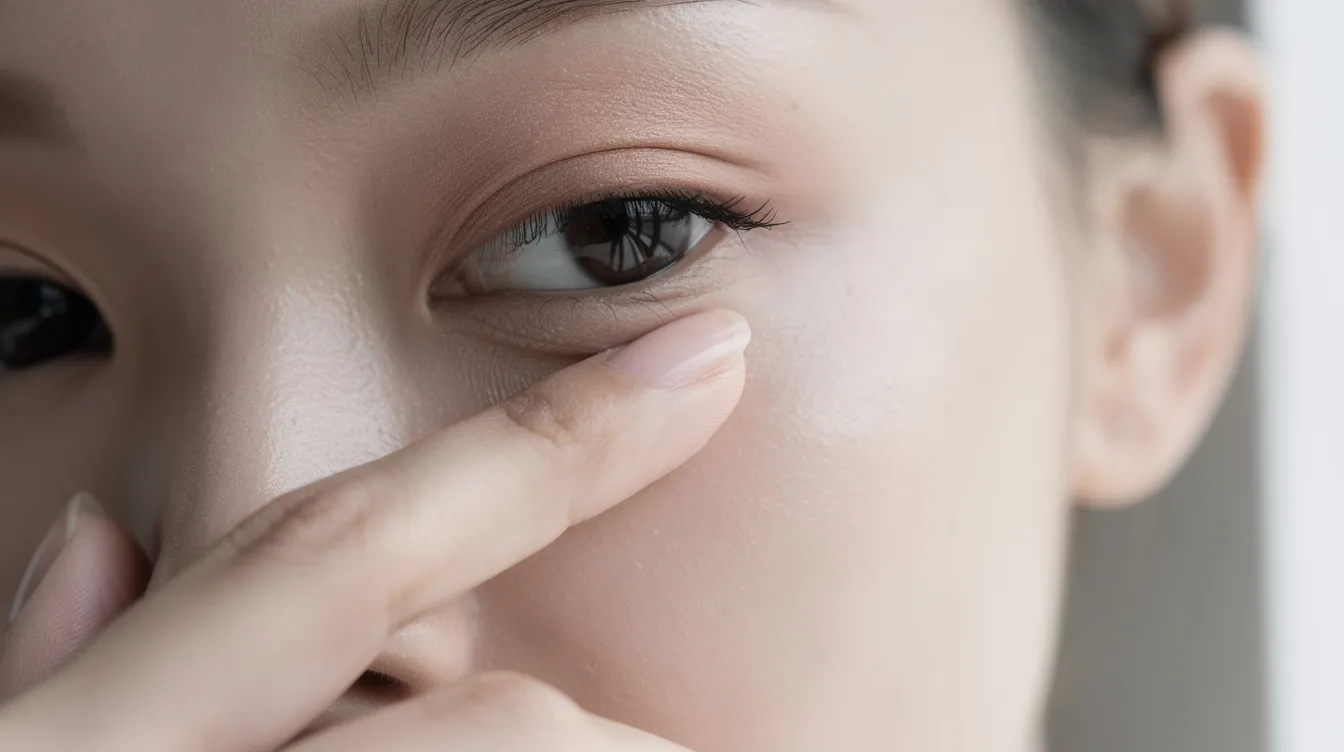
Visual Differences Between Eye Bags And Dark Circles
The difference is straightforward once you know what to look for:
Eye bags present as convex, pillowy bulges. They're three-dimensional - you can see and often feel the swelling. They may cast shadows beneath them, which can mimic darkness.
Dark circles are flat. The discoloration sits within the skin itself, without any raised contour. Colors range from brown to violet depending on the cause.
The stretch test helps distinguish shadows from true pigmentation. Gently pull the skin beneath your eye taut. If the darkness lightens, you're likely dealing with structural shadowing or vascular visibility. If the color stays, pigmentation is the primary factor.
Many people have a mix of both - bags pushing forward creating shadows, with underlying pigmentation making the area look even darker.
Color Clues: Circles Under The Eyes
The color of your circles under the eyes reveals a lot about their origin:
Brownish tones point to melanin-driven pigmentation - either epidermal or dermal. This type responds best to brightening agents and pigment-targeting treatments.
Bluish-violet tones indicate vascular visibility. Dark circles can appear blue or violet due to blood accumulation beneath thin, transparent skin. These often fade slightly when skin is stretched or when you're well-rested.
Understanding your specific color clue helps you choose active ingredients that actually address the root cause rather than masking it.
Targeted Treatments For Circles And Under Eye Issues
Matching your treatment to your diagnosis is essential. Here's what works and why:
Topical brighteners (vitamin C, kojic acid, niacinamide, azelaic acid) target melanin-based pigmentation. They suppress melanin production and brighten the under eye area over 8–12 weeks.
Caffeine-containing products constrict blood vessels and reduce puffiness temporarily. Use an eye cream with caffeine to boost circulation and reduce eye puffiness.
Hyaluronic acid hydrates thin skin, plumping it enough to reduce the transparent quality that makes vessels visible. Hydrate with an eye cream containing hyaluronic acid for visible moisture improvement.
Retinoids stimulate collagen production, thickening the dermis over time.
Addressing Circles And Under Eye Puffiness
For quick relief from circles and under eye puffiness:
Cold compresses. Apply a cold compress for 10–15 minutes to reduce puffiness. Cool temperatures cause vasoconstriction and temporarily tighten skin.
Gentle massage. Use facial rollers to boost circulation and reduce puffiness. Light lymphatic drainage movements help move trapped fluid away from the eye area. Avoid aggressive rubbing - it can worsen pigmentation.
Sleep elevation. Elevate your head while sleeping to prevent fluid build-up. Adding an extra pillow reduces overnight fluid migration to the periorbital area.
When Circles Under Your Eyes Need Medical Care
If topical agents don't improve persistent circles under your eyes after 8–12 weeks, it's time to consult a dermatologist. Deeper pigmentation (dermal melanin) often requires stronger depigmenting agents, chemical peels, or laser skin treatments that can't be replicated at home.
For structural eye bags with significant fat prolapse or skin laxity, a surgeon can evaluate whether lower eyelid surgery is appropriate. Ask about your surgeon's experience at your consult. These patients typically need anatomical correction rather than skincare solutions.
Routine Steps For Brighter Eyes
A consistent daily routine prevents worsening and supports treatment results:
Daily SPF. Sun exposure can lead to overproduction of melanin under the eyes. Apply broad-spectrum sunscreen to the under eye area every morning, even on overcast days.
Gentle hydration. Use an emollient or humectant-based cream morning and night to maintain your skin barrier and reduce the appearance of fine lines that accentuate shadows.
Consistent sleep. Aim for 7–9 hours on a regular schedule. While sleep alone won't cure pigmentation, adequate rest reduces vascular dilation and visible signs of fatigue.
Avoid smoking and dehydration. Lifestyle habits like smoking and dehydration contribute to dark circles by accelerating collagen breakdown and reducing skin quality.
At-Home Quick Fixes For Eye Bags And Dark Circles
When you need results before a meeting or event:
Chilled tea bags. Place used, cooled tea bags over closed eyelids for 10 minutes. The caffeine constricts vessels while the cold temperature helps reduce swelling.
Refrigerated eye patches. Gel or hydrogel patches stored in the fridge deliver cooling plus active ingredients for immediate de-puffing.
Diet adjustments. Reduce salt and alcohol intake - both promote fluid retention and make bags more pronounced overnight.
Allergy management. If you suspect an allergic component, a short trial of antihistamines can reduce edema and prevent the habitual eye-rubbing that worsens pigmentation.

Ingredients To Look For
When shopping for eye products, look for these active ingredients based on your skin type and concern:
Ingredient | Best For | How It Works |
|---|---|---|
Vitamin C | Brightening darkness | Inhibits melanin, boosts collagen, antioxidant |
Caffeine | Reducing puffiness | Constricts blood vessels, reduces swelling |
Niacinamide | Barrier support, mild brightening | Reduces melanin transfer, anti-inflammatory |
Hyaluronic acid | Plumping thin skin | Draws moisture, reduces transparency |
Retinol | Long-term thickness | Stimulates collagen, thickens dermis |
Aloe vera | Soothing irritation | Calms inflammation, lightweight moisture |
A well-formulated eye cream will often combine two or three of these. Prefer fragrance-free formulas designed specifically for the eye contour to avoid irritation.
Professional Procedures For Persistent Eye Bags
When home care has reached its limits, a range of professional options exist:
Tear-trough fillers. Hyaluronic acid filler is FDA-approved for under-eye hollows and can soften a hollow and the shadow it casts, but it cannot remove a bag.
Blepharoplasty. Lower eyelid surgery removes or trims the fat pads from inside the lower lid, so there is no visible scar, and usually places a small amount of your own fat along the under-eye line for a smooth look. It addresses structural bagging that no cream can fix. This is the solution for patients with significant fat prolapse and tissue laxity.
Laser skin treatments and chemical peels. These improve pigmentation-based darkness and skin texture, but they do not remove fat pads. These carry some risk of post-inflammatory hyperpigmentation, particularly in darker skin types, so they require careful selection by an experienced provider.
Professional procedures deliver the most dramatic results, but they also carry the highest risk. Ask about your surgeon's experience at your consult.
Final Recommendations For Brighter Eyes
Here's a simple routine to discover what works for your specific concern:
Morning:
Cleanse gently around the eye area
Apply vitamin C serum or niacinamide to brighten
Layer an eye cream with caffeine or hyaluronic acid
Finish with SPF
Evening:
Remove makeup thoroughly but gently
Apply retinol-based eye cream (start 2–3 nights per week)
Seal with a hydrating cream to lock in moisture
The solution to brighter eyes isn't a single miracle product - it's matching your treatment to the actual cause. Start with home care for 8–12 weeks, track your progress, and if the signs of darkness or puffiness persist, consult a dermatologist who can identify whether you need pigment-targeting therapy, volume restoration, or a combination approach. The right diagnosis makes all the difference.
Frequently Asked Questions
What is the main difference between eye bags and dark circles?
Eye bags are puffy, three-dimensional bulges caused by fluid retention, fat deposits, or sagging tissue. Dark circles are flat discoloration ranging from brown to blue-violet, caused by pigmentation, visible blood vessels, or structural shadows. They are distinct conditions requiring different treatments.
Can eye bags and dark circles be inherited?
Yes, both can be inherited traits. Family history is the strongest predictor of dark circles, and genetics influence under-eye bag development and severity. If your parents had these concerns, you're more likely to develop them earlier in life.
What causes dark circles under the eyes?
Dark circles result from poor circulation, excess melanin production, thin skin revealing blood vessels, fatigue-induced blood vessel dilation, allergies, aging-related collagen loss, sun damage, or hormonal shifts. The under-eye area has thin skin with minimal fat cushioning, making these changes immediately visible.
How do I know if I have pigmentation or just shadows under my eyes?
Use the stretch test: gently pull the skin beneath your eye taut. If darkness lightens, you have structural shadowing or vascular visibility. If the color remains, pigmentation is the primary factor. Many people experience a combination of both.
When should I seek professional help for eye bags or dark circles?
If puffiness appears intermittently and worsens in the morning or with allergies, home care may help. Persistent structural bagging or deep pigmentation unresponsive to lifestyle changes typically warrants professional evaluation and targeted treatment options.
Does lack of sleep cause dark circles?
Sleep deprivation can temporarily worsen the appearance of darkness by dilating blood vessels and increasing fluid retention. Genetics and pigmentation usually play a larger role.
Can makeup get rid of dark circles?
Makeup hides but does not treat causes. Concealers and light-reflecting formulas can brighten the appearance temporarily, but without addressing the underlying pigmentation, vascular issues, or structural shadows, the darkness returns as soon as the makeup comes off.


-2.jpg?width=2000&height=2000&name=Copy%20of%20YouTube%20Thumbnail%20-%20Life-Changing%20Cosmetic%20Surgery!%20(Document)-2.jpg)


