If you have stubborn fat pockets that refuse to budge despite diet and exercise, you've probably come across two cosmetic procedures that dominate the conversation: coolsculpting and liposuction. Both target fat cells beneath the skin, both deliver permanent fat reduction, and neither is designed for overall weight loss. The difference lies in how much fat you need gone, how quickly you want results, and how you feel about going under the knife. This guide breaks down everything you need to know so you can choose with confidence.
Introduction to CoolSculpting and Liposuction
CoolSculpting is a nonsurgical procedure that uses controlled cooling to destroy fat cells beneath the skin without incisions or anesthesia. Liposuction is an invasive surgical procedure that physically extracts fat through a thin tube (cannula) after small incisions are made.
Consider CoolSculpting when you want to reduce fat in small, localized areas with minimal recovery time. Consider liposuction when you need to remove unwanted fat in larger volumes and want immediate and lasting results from one liposuction procedure.
Body Contouring Procedures Overview
Body contouring isn't limited to these two medical procedures. Other common options include laser lipolysis (SmartLipo), ultrasound-assisted liposuction (VASER), radiofrequency skin tightening, injectable fat dissolvers (like deoxycholic acid for double chin), and skin excision procedures such as a tummy tuck.
Among noninvasive options, CoolSculpting remains one of the most established and widely used, FDA-cleared for body contouring across multiple areas including the abdomen, outer thighs, flanks, upper arms, and submental region.
What Is CoolSculpting Procedure?
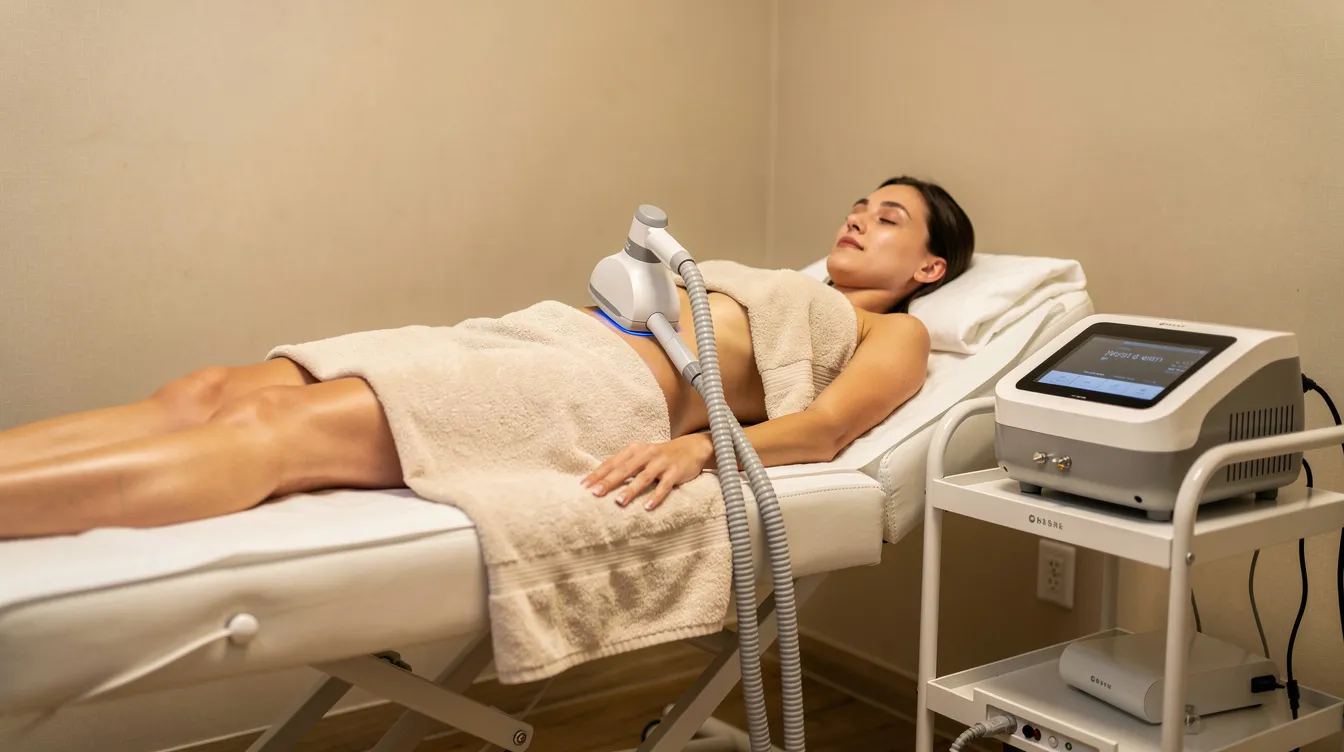
The coolsculpting procedure is a non surgical procedure that works through fat freezing, or cryolipolysis. An applicator is placed on the treatment area, where controlled cooling brings the fat tissue beneath the skin to temperatures that trigger apoptosis in targeted fat cells. Over the following weeks and months, the body naturally eliminates these dead fat cells through its lymphatic and immune systems.
CoolSculpting sessions last between 30 to 60 minutes per area, which is why it's often referred to as a "lunchtime" procedure. CoolSculpting is a non-invasive procedure with no downtime. Clinical studies show that CoolSculpting reduces fat by 20–25% per treated area per session, with greater reduction possible through multiple treatment sessions.
What Is Liposuction Cosmetic Surgery?
Liposuction is a surgical procedure requiring anesthesia and incisions. During the liposuction procedure, a surgeon injects tumescent solution to minimize bleeding, then inserts a cannula - a thin tube - through small incisions to physically suction out excess fat.
Depending on the scope, patients may receive local anesthesia, sedation, or general anesthesia. Variants include power-assisted, ultrasound-assisted, and laser-assisted techniques. Because this is an invasive procedure, it carries risks associated with cosmetic surgery, including scarring, fluid shifts, and anesthesia complications. However, liposuction can remove 5–8 liters of fat in one session, making it the go-to for immediate fat removal and dramatic shape changes.
Comparing CoolSculpting vs Liposuction
When evaluating coolsculpting vs liposuction, four comparison criteria matter most: results, recovery, risks, and cost. Here's how the two cosmetic procedures stack up across each.
Results and Fat Reduction: Dramatic Results
This is where the gap between these body contouring procedures is most apparent.
Criteria | CoolSculpting | Liposuction |
|---|---|---|
Fat reduction per session | 20–25% of treated area | 50–70% of treated area |
Results timeline | 2–3 months after treatment | 2–4 weeks post-surgery |
Sessions needed | Require multiple treatments | Typically one procedure |
Volume removed | Moderate, gradual | Up to 5–8 liters in one session |
CoolSculpting results appear gradually over weeks to months as the body clears dead fat cells. In one multi-cycle study, treatment responders saw skinfold thickness drop from approximately 35.4 mm to 22.2 mm - about a 40% reduction - after three or more cycles over 12 weeks. CoolSculpting requires multiple sessions for optimal results.
Results from liposuction can change body contours dramatically. Liposuction provides immediate fat removal with visible results, and liposuction results become noticeable between 2–4 weeks post-surgery as swelling subsides. If you're after dramatic results and want how much fat removed to be significant, liposuction delivers more in a single procedure.
If you're comparing before-and-after galleries, keep in mind that CoolSculpting photos reflect multiple sessions, while liposuction photos often show results from one procedure.
Comfort Level and Recovery Expectations
CoolSculpting requires no downtime after the procedure. Most patients return to normal activities immediately, with only mild soreness, numbness, or tingling that typically resolves within a few weeks.
Liposuction involves a longer recovery period. Liposuction requires a recovery period of 1 to 3 weeks before returning to work, with full healing process completion at around 4–6 weeks. Patients must wear compression garments, limit physical activity, and avoid heavy lifting. Side effects for liposuction can include swelling and bruising lasting several weeks.
The recovery time difference is substantial. CoolSculpting offers minimal recovery time, making it a less invasive procedure for those who can't afford extended time away from daily life. Liposuction, as a more invasive procedure, demands patience during the recovery period before final results emerge.

Side Effects, Safety, and Cosmetic Surgery Risks
CoolSculpting has a very high safety profile with a low risk of complications. Common side effects include temporary redness, swelling, bruising, skin sensitivity, tingling, and numbness in the treated area. These typically resolve on their own.
The rare but notable risk unique to CoolSculpting is paradoxical adipose hyperplasia (PAH), where fat tissue in the treated area increases instead of decreasing. Meta-analysis data across over 13,000 patients puts PAH incidence at approximately 0.22%, or about 1 in 455 patients.
Liposuction carries more significant surgical risks:
Infection and poor wound healing
Contour irregularities or asymmetry
Blood clots and deep vein thrombosis
Fat embolism
Nerve damage and prolonged numbness
Fluid imbalance (especially in large-volume cases)
Sagging skin or loose skin if skin elasticity is poor
As an invasive surgery, liposuction demands careful patient selection and an experienced surgeon to minimize these risks.
Treatment Process: CoolSculpting Treatment vs Liposuction Procedure
CoolSculpting treatment steps:
Consultation to assess the treatment area and medical history
Gel pad applied; applicator positioned to draw fat into the vacuum
Controlled cooling for 35–60 minutes per applicator
Post-treatment massage to help break up crystallized fat
Resume daily activities immediately; schedule follow-up cycles in 4–8 weeks
Unlike liposuction, a coolsculpting treatment is a noninvasive procedure that often requires 2–3 sessions per area for the desired outcome.
Liposuction procedure steps:
Pre-operative evaluation and anesthesia planning
Anesthesia administered (local, sedation, or general)
Small incisions made; tumescent fluid injected
Cannula inserted to loosen and suction out body fat
Incisions closed; drains placed if needed; compression garments applied
Post-operative care including wound management and follow-ups
Liposuction is typically completed as an outpatient procedure in a single session. Final results become fully visible at 3–6 months as residual swelling resolves.
Treating Excess Fat: Who Is Best for Each Option
Ideal CoolSculpting candidate:
Near their target weight with localized fat deposits (lower abdomen, flanks, double chin, inner thighs)
Candidates for CoolSculpting should have firm skin and good muscle tone, with minimal skin laxity
Wants a non surgical procedure with no anesthesia or incisions
Understands that multiple treatments are needed and results are gradual
CoolSculpting is ideal for individuals near their target weight
CoolSculpting is suitable for small, localized fat deposits
Ideal liposuction candidate:
Liposuction works best for adults within 30% of their ideal weight
Needs to reduce fat across larger areas or wants a flat stomach contour
Good overall health; able to tolerate an invasive surgical procedure
Accepts the longer recovery period, compression garments, and activity restrictions
Liposuction is effective for stubborn fat not responding to diet and exercise
Neither procedure addresses visceral (internal) fat. Both only target subcutaneous fat, and neither is a substitute for weight loss through diet and exercise.

Choosing a Board Certified Plastic Surgeon
Whether you're considering coolsculpting or liposuction, always consult a board certified plastic surgeon. This applies even for the coolsculpting procedure - provider experience directly affects outcomes.
Questions to ask during your consultation:
How many of these procedures have you performed in my specific area?
What are your complication rates (PAH for CoolSculpting; infection and contour irregularities for liposuction)?
Can I see before-and-after photos from patients with a similar body type?
What anesthesia will be used, and what is the full cost breakdown?
What's your plan if results are asymmetric or if the desired results aren't achieved?
Verify credentials through professional associations, hospital privileges, and facility accreditation.
Cost Comparison and Value
Cost Factor | CoolSculpting | Liposuction |
|---|---|---|
Average per session | ~$3,200 | N/A (single procedure) |
Typical range | $2,000–$4,000 per session | $3,500–$5,000 per area |
Total for full treatment | $6,000–$12,000 (multiple sessions) | $3,000–$8,000 total |
Average surgeon fee | N/A | ~$4,711 |
CoolSculpting averages $3,200 per session, and because results require multiple sessions, total liposuction cost may actually be comparable or even lower than a full CoolSculpting regimen. Liposuction costs range from $3,000 to $8,000 by 2025 depending on the number of areas treated.
Long-term, both liposuction and CoolSculpting permanently remove fat cells. However, weight gain can enlarge remaining fat cells elsewhere, so maintenance of results from these procedures requires a stable, healthy lifestyle.
Combining Procedures and Advanced Body Contouring Procedures
Sometimes neither procedure alone delivers the desired outcome. Common combinations include:
Liposuction paired with radiofrequency or laser skin tightening to address loose skin
CoolSculpting used post-liposuction to refine small residual stubborn fat areas
CoolSculpting combined with RF treatments for patients who want a fully non surgical approach
Both liposuction and CoolSculpting can be part of a broader contouring strategy. If you have significant excess fat plus sagging skin, your surgeon may recommend liposuction combined with a tummy tuck or other skin excision procedure.
Final Recommendation and Next Steps
The right choice between coolsculpting vs liposuction depends on your goals, your body, and your tolerance for a more invasive procedure versus a gradual, noninvasive procedure approach. Both procedures are not intended for overall body weight loss - they're tools for contouring and reducing stubborn fat.
Chicago has a high concentration of cosmetic procedure providers offering these treatments, but wherever you are, your next step should be the same: schedule an in-person consultation with a board certified plastic surgeon who can evaluate your body composition, discuss realistic expectations, and recommend the approach most likely to deliver your desired results.
Prioritize safety, board certification, and honest expectations over marketing promises. The best cosmetic procedures are the ones planned around your specific anatomy and goals - not the ones that sound easiest.
A healthy lifestyle remains the foundation. Whichever path you choose, maintaining a stable weight through diet and exercise is what keeps your results lasting.
Frequently Asked Questions
What is the main difference between CoolSculpting and liposuction?
CoolSculpting is a nonsurgical procedure using controlled cooling to destroy fat cells, while liposuction is surgical, physically removing fat through a thin tube after anesthesia and incisions. CoolSculpting requires no downtime; liposuction involves recovery time and anesthesia risks.
How much fat can each procedure remove in one session?
CoolSculpting reduces fat by 20-25% per treated area per session. Liposuction can remove up to 5-8 liters of fat in one procedure, typically reducing 50-70% of fat in treated areas.
How long does it take to see results from each procedure?
CoolSculpting results appear gradually over 2-3 months as the body eliminates dead fat cells. Liposuction provides immediate fat removal with visible results becoming noticeable 2-4 weeks post-surgery as swelling subsides.
What is the recovery time for each procedure?
CoolSculpting requires no downtime; patients return to normal activities immediately with mild soreness or tingling lasting weeks. Liposuction requires 1-3 weeks before returning to work, with full healing at 4-6 weeks and mandatory compression garments.
How many treatment sessions does each procedure typically require?
CoolSculpting typically requires multiple sessions for optimal results, with studies showing greater reduction after three or more cycles. Liposuction usually achieves desired results in one procedure, making it more efficient for larger volume removal.
Learn more: Body Contouring at Leva Medical


-2.jpg?width=2000&height=2000&name=Copy%20of%20YouTube%20Thumbnail%20-%20Life-Changing%20Cosmetic%20Surgery!%20(Document)-2.jpg)


