Choosing breast implants can feel overwhelming when you're trying to translate numbers into real-world results. A breast implant sizes cc chart helps bridge that gap, giving you a visual reference for how implant volume relates to cup size changes, body proportions, and overall appearance. This breast implant size guide is written for anyone considering breast augmentation or reconstruction who wants to walk into their consultation informed, prepared, and confident.
Learn more: Eyelid Surgery at Leva Medical
Breast Implant Sizing Basics and Implant Volume
Breast implant size refers to the volume of the implant, measured in cubic centimeters (cc). One cc is equivalent to one milliliter, making it a precise, universal measurement that doesn't depend on brand or style.
Commonly, breast implant sizes range from 150 cc to over 800 cc. Implants from 125 cc to 800 cc are available across manufacturers, though the typical sweet spot for cosmetic breast enhancement falls between 200 cc and 600 cc. Surgeons prefer discussing cc volume rather than bra cup size because cubic centimeters provide an exact number, while cup sizes shift dramatically between bra brands and band sizes.
Implant Volume Versus Bra Cup Size and Bra Size Variability
One of the biggest misconceptions in plastic surgery is that a specific cc volume translates directly to a specific bra cup size. It doesn't. Cup sizes vary significantly across different bra brands. A B cup in one brand may be a C cup in another. Research has shown that the standard deviation across manufacturers for a single labeled cup size can exceed 120 cc, meaning two "D cup" bras might hold substantially different volumes.
Approximately 200 cc increases breast size by one cup size, but this is a rough guideline that depends on your band size, existing natural breast tissue, chest width, and the implant profile chosen. Volume does not guarantee a specific cup size due to individual differences in anatomy and frame. Many women assume a single number will give them a guaranteed result, but two patients receiving the same implant size can end up in different corresponding cup sizes.
CC-to-Cup Conversion Chart
The following breast implant size chart maps approximate cc ranges to expected cup size increases. These figures assume a 34–36 band size and a starting point of minimal breast tissue.
Starting Cup → Goal Cup | Implant Volume (cc) | Key Notes |
|---|---|---|
A → B cup (to b cup) | 200–250 cc | More volume needed for wider chests or band sizes above 36. |
A → C cup | 300–350 cc | 300 cc to 350 cc implants typically ranges within this bracket. Moderate profile works well. |
A → D cup | 370–430 cc | High profile implants help maximize projection on smaller frames. |
B → C cup | 250–300 cc | Subtle enhancement; 300 cc is a common breast implant size for this goal. |
B → D cup | 350–400 cc | 350 cc to 400 cc is a popular range. Results depend on body frame. |
B → DD / E cup | 400–450 cc | Significant change; profile choice is crucial for desired fullness. |
C → D cup | 300–350 cc | Existing tissue reduces cc needed for the next cup level. |
C → E cup | 450–550 cc | More dramatic transformation; anatomy may limit options. |
300-400 cc implants can yield one to two cup size increases depending on starting anatomy. Average breast implant size chosen across cosmetic cases is between 300 cc and 500 cc.
Chart Notes and Usage Guidance
Use this breast implant cc sizes chart as a rough starting point, not a guarantee. Small differences in volume of 25 to 50 cc may be difficult to notice visually after surgery, so don't agonize over tiny increments.
Always confirm your final sizing with a board certified plastic surgeon who can evaluate your anatomy in person.
No chart can replace hands-on evaluation of your rib cage, skin elasticity, and tissue coverage.
Breast Implant Profiles and Projection
Breast implant profiles determine how far implants project from the chest wall for a given base width. Two implants with identical breast implant volume can look completely different depending on the profile selected. The same cc volume can look different based on the profile chosen.
Standard profile tiers include:
Low profile implants – wide base, minimal projection; creates a natural slope
Moderate profile – balanced width and projection; moderate profile implants provide natural results with balanced projection
Moderate-plus – slightly more forward projection without an extremely narrow base
High profile implants – narrow base with significant projection; creates a fuller, rounder look
Ultra-high – maximum projection, narrowest base; the most dramatic silhouette
Implant profile affects how breast implants appear on the body and plays a major role in achieving your desired results.
How Profile Affects Perceived Volume
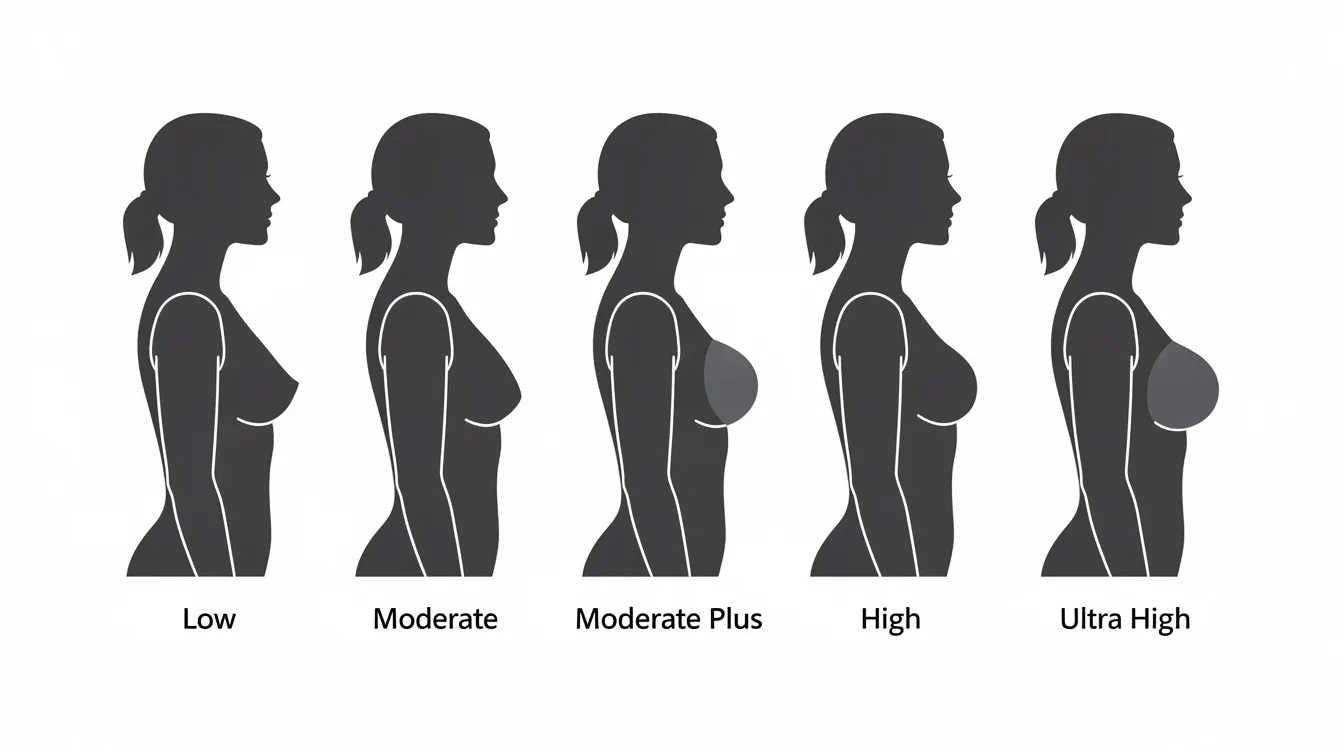
When comparing profile implants side by side, the differences become obvious. A 400 cc low profile implant has a wider implant base and spreads volume laterally, producing a flatter side profile. A 400 cc high profile implant concentrates the same volume into more forward projection, creating greater upper pole fullness and more visible cleavage.
High-profile implants have a narrow base and a fuller appearance, which many women prefer for a more dramatic transformation. Moderate profiles deliver natural looking results with a gentle natural slope. Skin thickness impacts how natural the appearance of implants is, with thicker tissue smoothing transitions regardless of profile.
Implant Shapes, Types of Breast, and Silicone Implants
Breast implant types fall into two primary shapes:
Round implants – provide uniform projection; more upper pole fullness depending on profile
Teardrop shaped implants – mimic the natural breast contour with more volume in the lower pole and a tapered upper portion
Silicone implants filled with silicone gel are the most popular choice for their natural looking feel, especially for patients with limited natural breast tissue. Cohesive silicone ("gummy bear") implants add shape retention. Saline implants offer adjustability during surgery since fill volume can be fine-tuned, though they may feel less natural and show more rippling in thinner patients.
Selecting the Right Implant Size for Your Body Frame
Finding the ideal breast implant size starts with your body, not a number on a chart. Surgeons consider chest width and breast spacing when choosing implant size, ensuring the implant diameter matches your natural breast footprint.
Frame-based guidelines:
Smaller frames (narrow rib cage, petite build) – patients with smaller frames often prefer smaller implants with moderate to high profiles. Active lifestyles may lead to choosing moderate implant sizes for comfort during exercise.
Average frames – moderate or moderate-plus profiles with implants range of 300–450 cc typically deliver natural proportions
Curvy or broad frames – wider chests can accommodate larger implants and lower profiles without looking disproportionate; larger breast implants in the 450–600+ cc range may be appropriate for a more dramatic look
Chest width measurements guide the selection of implant diameter. Lifestyle factors such as activity level can influence implant size preferences, so athletes or highly active patients often prefer smaller implants that don't interfere with movement.

Sizers, 3D Imaging, and Bra Cup Trials
Consultation processes may include physical sizers and 3D imaging for visualization. In-office sizer trials let you place different volumes under clothing to see how they look in your favorite outfits. This hands-on approach is far more reliable than guessing from a chart.
3D imaging technology can simulate your results from multiple angles, helping you align expectations with what's surgically achievable. Bring photos of your desired look, your preferred bra, and examples of the breast size you're aiming for.
Measuring and Recording Implant Dimensions and Implant Volume
When planning surgery, document these key factors:
CC volume – the implant's total volume
Base diameter – width of the implant in centimeters
Projection depth – how far the implant extends from the chest wall
Profile type – low, moderate, high, etc.
Shape – round or anatomical
Manufacturer and model
Implant dimensions should match the natural breast footprint for aesthetic results. Photograph your measurements and bring them to every consultation so your surgeon has a complete picture.
Common FAQs About Implant CC, Cup Size, and Bra Cup
How many cc equals one cup? A 200 cc increase typically raises one cup size, assuming an average band size of 34–36 and moderate profile. Patients with a smaller band size may need fewer cc; those with a larger band size may need more volume for the same perceived change.
Does cc directly equal bra cup? No. Bra cup size is inconsistent across bra brands, and breast tissue and individual anatomy influence how implants appear. The right breast implant size depends on your starting point, not just a number.
What is the most common implant size? The most common breast implant size is around 400 cc. Common implant sizes range from 300 to 400 cc for cosmetic augmentation, with reconstructive cases also clustering in this range. The perfect breast implant size varies based on personal aesthetic goals.
Preparing for Consultation to Choose the Right Implant
Arrive at your consultation with:
Underbust (band) and overbust measurements in both inches and centimeters
Breast base width measurement
Your current bra size and a well-fitting bra
Photos of your desired breast size and shape
Notes on whether you prefer natural results or a more dramatic transformation
Discuss silicone implants versus saline, profile preferences, incision options (inframammary, periareolar, transaxillary), and placement (subglandular versus submuscular). Ask about breast lift if you have concerns about skin laxity. The right implant choice accounts for all of these variables.
Post-Op Bra Size Changes and Aftercare
Expect noticeable swelling in the first few weeks. Implants typically settle over three to six months, and breast size may appear to decrease slightly as swelling resolves and implants drop into position.
Wear surgical support garments as directed for the first several weeks
Wait at least three months before investing in new bras for accurate fitting
Band size usually stays the same; cup size will increase permanently once healed
Weight changes and pregnancy can further affect fit over time
Watch for signs of capsular contracture or unusual changes and report them to your surgeon promptly.
Appendix: Sample Breast Implant Sizes CC Chart and Tools
Use this printable checklist when preparing for your consultation:
Measurement | Your Value |
|---|---|
Underbust (band size) | inches / cm |
Overbust (fullest point) | inches / cm |
Breast base width | _ cm |
Desired profile | Low / Moderate / High |
Desired shape | Round / Teardrop |
Target cc range | cc to cc |
Preferred look | Natural / Enhanced / Dramatic |
spinner white decorative
Record candidate implant options in a worksheet format: note the manufacturer, model number, cc volume, base diameter, and projection for each option your surgeon recommends. Comparing two or three options side by side makes the decision clearer.
Resources, References, and Next Steps to Find the Right Implant
The single most important step you can take is scheduling a consultation with a board certified plastic surgeon who specializes in breast augmentation. Look for surgeons who offer sizer trials and 3D imaging as part of their consultation process.
Before your appointment:
Review before-and-after photo galleries, filtering for patients with a similar body frame and starting breast size
Read about breast implant types and profiles so you can ask informed questions
Write down your personal aesthetic goals and any concerns about recovery or long-term maintenance
The right implant is the one that fits your anatomy, supports your lifestyle, and delivers natural looking results you'll feel confident about for years to come. Don't let a chart make the decision for you - let it start the conversation.
Frequently Asked Questions
What is the relationship between cc volume and bra cup size?
Cup size doesn't translate directly to cc volume. Approximately 200 cc increases breast size by one cup size as a rough guideline, but results depend on band size, existing tissue, chest width, and implant profile. Cup sizes vary significantly between bra brands.
What breast implant size range is most commonly chosen?
The average breast implant size chosen in cosmetic cases falls between 300 cc and 500 cc. The typical range across manufacturers spans 200 cc to 600 cc, though sizes from 125 cc to 800 cc are available.
Why do surgeons use cc measurements instead of cup sizes?
Cubic centimeters provide exact, universal measurements independent of brand or style. Bra cup sizes vary dramatically between manufacturers. Standard deviation for a single cup size label can exceed 120 cc across different brands.
How does implant profile affect the appearance of the same cc volume?
Implant profile determines projection from the chest wall. A 400 cc low profile spreads volume laterally for a flatter look, while a 400 cc high profile concentrates volume forward, creating more fullness and cleavage projection.
Can two patients with identical implant sizes end up looking different?
Yes. Two patients receiving the same implant size can end up in different cup sizes due to individual differences in anatomy, frame size, existing breast tissue, chest width, and chosen implant profile.


-2.jpg?width=2000&height=2000&name=Copy%20of%20YouTube%20Thumbnail%20-%20Life-Changing%20Cosmetic%20Surgery!%20(Document)-2.jpg)


