If you’ve noticed vertical bands appearing on your neck or early signs of sagging skin creeping in, you’re not alone. Turkey neck affects most adults by their mid-40s, and many are searching for effective solutions that don’t involve surgery. Neck Botox has emerged as a popular option for those looking to smooth neck lines and restore a more youthful neck contour without the commitment of a surgical procedure.
Learn more: Botox & Fillers at Leva Medical
Key Takeaways
Botox for turkey neck targets the platysma muscle and mild neck sagging without surgery, relaxing neck bands to create a smoother neckline.
Neck Botox can soften visible vertical neck bands and neck lines but does not remove large amounts of loose skin or address a pronounced double chin caused by excess fat.
Results from Botox for turkey neck typically begin to appear within 3 to 5 days after treatment, with full effects visible by 10 to 14 days, lasting about 3-4 months before maintenance is needed.
A surgical neck lift remains the gold standard for severe skin laxity and extensive loose sagging skin that Botox cannot correct.
Always review before and after photos and choose an experienced, board certified plastic surgeon or qualified injector who understands neck anatomy for optimal safety.
What Is a “Turkey Neck” and Why Does It Happen?
Turkey neck refers to sagging skin and visible neck bands resembling a turkey’s wattle, typically becoming noticeable from the mid-40s onward. This turkey neck appearance develops gradually as part of the natural aging process.
The neck area is particularly vulnerable to aging because the neck skin is remarkably thin—only 0.5-1mm compared to 2mm on the face. Turkey neck is primarily caused by aging, which leads to a reduction in skin elasticity and collagen production, resulting in sagging skin and wrinkles. Collagen production declines by approximately 1% annually after age 20, while elastin fibers fragment from cumulative damage.
The platysma muscle plays a central role in this condition. The platysma muscle runs from the collarbone to the jawline and contributes to a sagging look when overactive. The weakening of the platysma muscles in the neck contributes to the appearance of turkey neck, as these muscles can separate into bands that affect the neck’s contour.
Several factors accelerate neck sagging:
Genetics influencing connective tissue strength
Sun exposure over time breaking down collagen and elastin crucial for skin firmness
Weight fluctuations causing fat redistribution and skin stretching
Smoking reducing collagen synthesis by 20-40%
Tech neck from chronic forward head posture creating horizontal lines
Excess fat in the neck area, particularly beneath the chin, can exacerbate the appearance of turkey neck, and weight loss can also lead to loose, sagging skin. Studies show that approximately 70% of patients over 50 exhibit some degree of platysmal banding.

How Neck Botox Works for Turkey Neck
Turkey neck Botox offers a non surgical approach to smoothing neck bands and addressing mild sagging. Botox neck injections temporarily relax specific neck muscles to reduce the downward pull on skin that creates visible aging signs.
Botox injections for turkey neck work by relaxing the platysma muscles, which helps to reduce the appearance of vertical neck bands and sagging skin. The treatment uses botulinum toxin type A to block acetylcholine release at neuromuscular junctions, preventing muscle contraction for several months.
By softening platysma contraction, vertical bands look less prominent—studies show 50-80% band reduction in mild cases. Non-surgical treatments for turkey neck, such as Botox, can relax the platysma muscles, reducing the appearance of vertical neck bands and creating a smoother neckline.
Botox helps to improve jawline definition by injecting the muscles that pull the jawline down, providing a subtle lift. The Nefertiti Lift refers to the combination of Botox injections along the jawline and neck to create a defined profile without surgery.
Key distinctions from facial Botox:
Different injection patterns targeting the platysma specifically
Careful attention to avoid affecting swallowing or head movement
Superficial injections (2-4mm depth) to avoid deeper structures
Botox effectively targets mild to moderate sagging and vertical bands but does not remove significant excess skin. It cannot dissolve fat cells or address severe skin laxity.
Who Is (and Isn’t) a Good Candidate for a Botox Neck Lift?
A consultation is required to assess neck anatomy and determine the appropriate dosage of Botox, typically between 25 and 50 units. During this assessment, your provider evaluates your skin quality, medical history, and aesthetic goals.
Ideal candidates include:
Characteristic | Why It Matters |
|---|---|
Visible platysma bands when grimacing | Indicates dynamic muscle activity Botox can address |
Mild to moderate skin laxity | Skin still has enough elasticity to respond |
Good skin tone with minimal crepiness | Better baseline for visible improvement |
Age 35-60 with early signs | Optimal window for prevention and treatment |
Patients seeking a tighter neck with modest submental fullness but minimal loose skin often see the best results. The pinch test (skin recoiling within 2 seconds) helps determine skin elasticity.
Poor candidates include those with:
Severe skin laxity (Grade 3+ Baker classification) with accordion folds
Heavy sagging jowls requiring tissue repositioning
Significant unwanted fat requiring reduction first
Double chin primarily caused by fat accumulation rather than muscle banding
Contraindications requiring exclusion or delay:
Pregnancy or lactation
Neuromuscular disorders like myasthenia gravis
Recent neck surgery
Allergies to Botox components
Certain medications (aminoglycosides)
Botox Turkey Neck Procedure: Step by Step
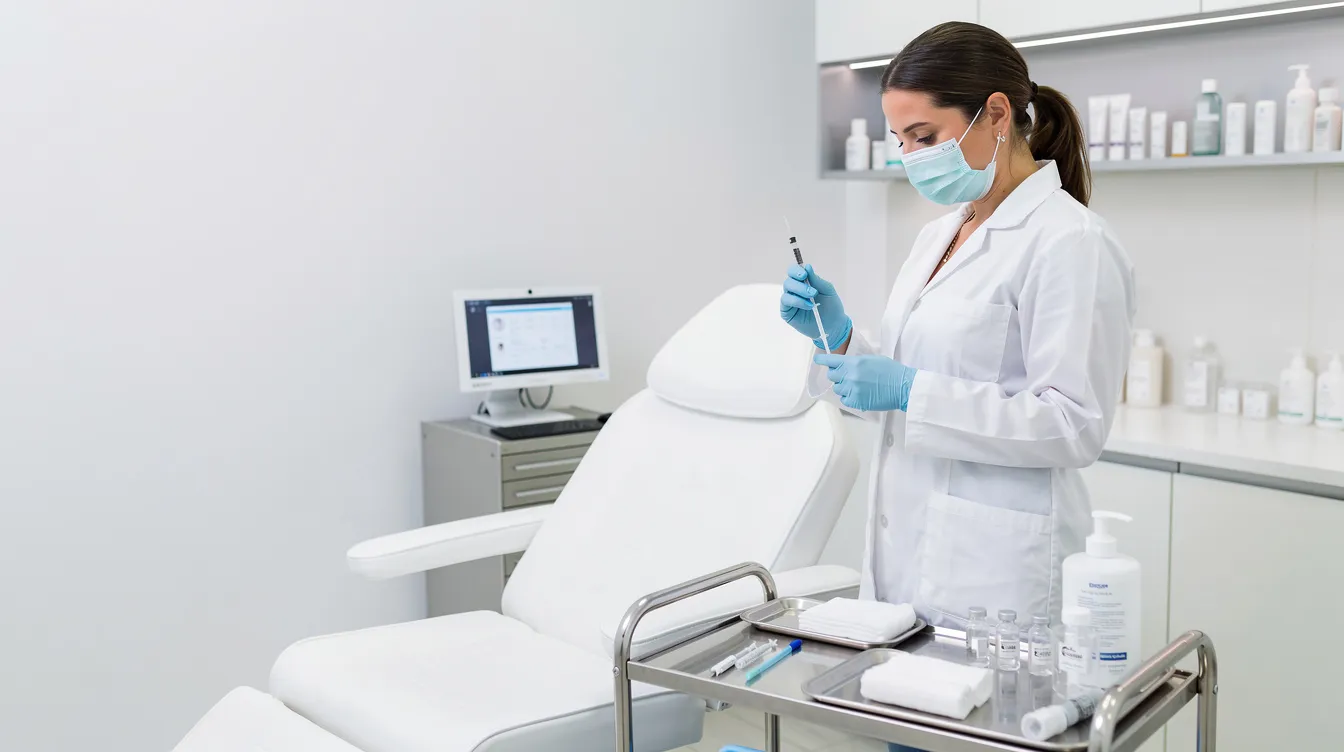
Botox for turkey neck is a quick, minimally invasive procedure that usually takes about 15 to 20 minutes to complete, with no downtime required. The entire process occurs in-office without general anesthesia.
Pre-treatment preparation:
Photography of neck in neutral and contracted states
Marking injection points along vertical bands
Mapping jawline sites if performing Nefertiti-style treatment
The injection process:
Very fine 32-gauge needle delivers small aliquots (0.1-0.2mL)
Multiple injection sites along each band (typically 4-8 sites bilaterally)
Nefertiti pattern adds 20-25 units along the jawline
The sensation involves quick pinches or mild discomfort comparable to small bee stings. Topical numbing cream or ice can be offered but often isn’t essential.
Immediate aftercare:
Remain upright for 4-6 hours post-treatment
Avoid intense exercise or heat for 24 hours
No rubbing or massaging the neck area
Studies report less than 5% bruising incidence
Most patients return to their daily routine immediately after the Botox treatment for turkey neck, as there is little to no downtime involved.
Results, Longevity, and Before & After Photos
Results from Botox for turkey neck typically begin to appear within 3 to 5 days after treatment, with full results visible by 10 to 14 days. Peak neuromuscular blockade occurs around days 10-14, with approximately 80% effect visible by day 7.
What to expect:
60-90% band softening by week 2
Smoother skin texture along the neck
Improved cervicomental angle (5-10 degrees subjectively)
Slightly more defined jawline (1-2mm perceived lift)
The effects of Botox for turkey neck generally last between 3 to 4 months, after which maintenance treatments are recommended to preserve results. Some patients maintain results up to 6 months depending on metabolism and dosing.
Before and after photos typically show:
Before | After |
|---|---|
Prominent 2cm vertical bands | Faint shadows or smooth contour |
Tech neck horizontal lines | Softened neck lines |
Blurred jaw-neck transition | Sharper, more youthful contour |
Uneven skin texture | Improved skin tone |
Consistent maintenance sessions every 3-4 months help prevent deepening of muscle-related neck lines and can build cumulative improvement over time.
Benefits of Botox for Turkey Neck vs. Other Neck Treatments
Choosing the right treatment depends on whether your primary concern is loose skin, neck bands, or excess fat. Each option addresses different aspects of neck rejuvenation.
Neck Botox benefits:
Non surgical with 95% experiencing no downtime
Quick office visit (15-20 minutes)
Natural softening without a “frozen” look
Cost-effective at $500-1200 per session
Potential subtle turkey neck lift effect
Preventative when started early
Surgical neck lift comparison:
Factor | Botox | Neck Lift Surgery |
|---|---|---|
Downtime | None | 2 weeks |
Duration | 3-4 months | 5-10+ years |
Addresses loose skin | Minimal | Yes |
Anesthesia | None | Required |
Cost | $500-1200/session | $8,000+ |
Surgical procedures like platysmaplasty can remove excess skin and reposition deeper tissues, making them more appropriate for severe skin laxity.
Complementary skin tightening treatments:
Radiofrequency microneedling (Morpheus8): boosts collagen 30-50% over 3 sessions
Ultrasound tightening (Ultherapy): stimulate collagen production in deeper layers
Laser therapy and intense pulsed light: improve skin texture and skin quality
Collagen induction therapy: promotes smoother skin through controlled injury response
For a double chin caused by fat cells rather than muscle banding, treatments like Kybella (dissolving 20-25% fat over 2-4 treatment sessions) or liposuction to address excess fat are necessary since Botox cannot target adipose tissue.
Risks, Side Effects, and Safety Considerations
When performed by an experienced injector who understands neck anatomy, neck Botox is generally safe with a 1-2% serious complication rate.
Common side effects (resolving quickly):
Common side effects of Botox injections can include temporary redness, swelling, or bruising at the injection sites, resolving within a few hours to days. Mild swelling or tenderness at the injection site is normal and usually fades within a few hours to a couple of days after treatment.
Mild bruising (10-20% incidence, fades 3-7 days)
Pinpoint bleeding at injection site
Slight edema
Less common issues:
Temporary neck muscle weakness
Mild difficulty holding head up (resolves within 1 week, occurs in ~5%)
Feeling of tightness when swallowing
Rare but serious risks:
Difficulty swallowing (dysphagia) if over-dosed beyond 60 units
Voice changes from toxin diffusion
Breathing problems from incorrect technique (0.1% incidence)
Safety recommendations:
Choose providers who routinely perform neck Botox
Verify credentials (dermatologists and plastic surgeons typically have better outcomes)
Ensure conservative dosing protocols
Complete thorough medical history review
Avoid anticoagulants pre-treatment when possible
Recovery from Botox for turkey neck is typically quick, easy, and requires minimal interruption to your routine, with most patients experiencing only mild, short-lived side effects.
Botox Turkey Neck Cost and Treatment Planning
Costs vary significantly by geographic location, number of units required, and whether jawline injections are included.
General pricing structure:
Treatment Scope | Typical Cost Range |
|---|---|
Mild neck bands only | $400-600 |
Moderate banding | $600-1000 |
Full Nefertiti (jaw + neck) | $1000-1500 |
Annual maintenance (4 sessions) | $2000-4000 |
Regional variations exist—expect $1500+ in NYC versus $600 in Midwest clinics. Pricing is typically calculated per unit ($10-20/unit in 2026) or per treatment area.
Factors affecting cost:
Stronger platysma muscles require more units
Men typically need higher doses due to thicker muscles
Adding forehead lines or other areas increases total
Injector expertise and clinic location
Budget planning tips:
Ask about package pricing for committed patients
Inquire about membership programs
Explore financing options for long-term rejuvenation
Budget for maintenance every 3-4 months since results are temporary

Combining Neck Botox with Other Neck Rejuvenation Options
Comprehensive neck rejuvenation often pairs Botox with skin-tightening or volume-adjusting treatments for optimal results. A rejuvenated neck typically requires addressing multiple concerns simultaneously.
Energy-based combinations:
Morpheus8 combines microneedling with fractional radiofrequency energy to improve skin elasticity and firmness, making it effective for treating turkey neck and tech neck. Studies show combining Botox with RF treatments improves laxity outcomes by approximately 40%.
FaceTite is a non-surgical treatment that uses Radiofrequency-Assisted Liposuction (RFAL) to tighten skin and reduce fat in the neck area, promoting collagen production for firmer skin over time.
Addressing multiple concerns:
Concern | Primary Treatment | Supporting Treatment |
|---|---|---|
Neck bands | Botox | RF tightening |
Moderate skin laxity | RF/Ultrasound | Botox maintenance |
Double chin | Kybella/Liposuction | Botox for bands |
Horizontal lines | Dermal fillers (cautiously) | Botox |
Crepey texture | Collagen induction therapy | Retinoids |
Sequencing considerations:
Address unwanted fat reduction first
Follow with Botox and skin tightening
Layer in skincare for skin healthy maintenance
Treatment sequencing should be customized after in-person assessment of neck skin, fat, and muscle balance by a qualified provider.
Aftercare and How to Maintain a Youthful Neck
Post-treatment care is straightforward but helps reduce mild bruising risk and ensures Botox stays where intended.
Immediate aftercare (first 24-48 hours):
Avoid rubbing or massaging the neck
No strenuous exercise or hot saunas
Remain upright for several hours post-injection
Skip alcohol to minimize bruising risk
Long-term skin protection:
Apply daily broad-spectrum SPF 50 on neck and chest (prevents 80% of photoaging)
Avoid tanning beds and prolonged sun damage
Quit smoking to preserve collagen and elastin
Practice good posture to prevent tech neck progression
Supportive skincare routine:
Topical retinoids (0.05% boosts collagen 20%)
Antioxidant serums (vitamin C)
Peptide-based neck creams
Hydrating moisturizers to improve skin texture
Schedule periodic follow-up consultations to adjust Botox dosing as your neck muscles change and to determine if more youthful contour goals might eventually require a surgical neck lift.
FAQ
Can Botox get rid of a double chin or only help with neck bands?
Botox primarily relaxes muscles and effectively addresses vertical neck bands and some neck lines, but it does not remove fat. A true double chin caused by excess submental fat requires fat-targeting treatments such as Kybella injections, liposuction, or energy-based contouring devices. Combining fat-reduction methods with neck Botox can improve both fullness and banding for a more refined neck’s appearance and defined jawline.
At what age do people typically start neck Botox for turkey neck?
Many patients begin considering neck Botox in their late 30s to 50s when early neck bands and lines first appear. However, candidacy depends more on visible neck changes and skin quality than a specific age. Addressing muscle-related neck lines early serves as a preventative measure, potentially slowing the progression of deep bands before they become etched into the skin.
How many units of Botox are usually needed for a turkey neck treatment?
Dosage varies widely depending on neck length, band severity, and muscle strength. A mild case might need 20-30 units, while a full Nefertiti-style lower-face and turkey neck lift can require 40-60 units total. Most patients should rely on an in-person consultation where muscle assessment determines appropriate dosing rather than expecting fixed “per-neck” numbers.
Will neck Botox affect my ability to turn my head or exercise?
When injected correctly into the superficial platysma, Botox should not significantly affect the deeper neck muscles used for turning your head (like the sternocleidomastoid and scalenes). Some patients notice mild tightness when extending the neck fully, which typically improves within days. Avoid intense workouts for the first 24 hours, but normal exercise resumes safely once initial settling occurs.
How do I know if I should choose Botox or a surgical neck lift?
Botox is best for dynamic neck bands and mild sagging when the main problem is muscle pull rather than large amounts of loose skin. A surgical neck lift is usually recommended when there is significant loose skin, heavy neck fullness, or muscle banding that cannot be adequately softened with minimally invasive injections. Seek an in-person evaluation where your neck skin, fat, and muscles are examined, and review before and after photos of both approaches to make an informed decision.

-2.jpg?width=2000&height=2000&name=Copy%20of%20YouTube%20Thumbnail%20-%20Life-Changing%20Cosmetic%20Surgery!%20(Document)-2.jpg)


