Introduction to Blepharoplasty in Queens, New York
Blepharoplasty is a surgical procedure that rejuvenates the eyelids by removing or repositioning excess eyelid skin, muscle, and fat from the upper eyelids, lower eyelids, or both. It is designed to refresh the eye area and create a more rested, natural look. Many people in Queens, NY consider eyelid surgery because they notice a tired look in the mirror: drooping upper eyelids that make them appear older, puffiness that won't go away no matter how much sleep they get, or under-eye bags that have become more prominent over the years.
What many people don't realize is that eyelid surgery can address both cosmetic concerns and functional issues. When heavy upper lid skin droops over the lash line, it can obstruct part of your upper field of vision. An upper blepharoplasty can relieve that obstruction while also improving the appearance of the eyes. The aim is subtle enhancement rather than dramatic change, so you still look like yourself, just more rested.

What Blepharoplasty Can Improve
Eyelid surgery can target the upper eyelids, the lower eyelids, or both in what is sometimes called a quad blepharoplasty. The right approach depends on your concerns and the assessment made during your consultation.
You might notice that your upper lids feel heavy or that sagging skin is resting on your lashes, making it harder to apply eye makeup. The natural aging process can also cause fat to bulge beneath the eyes, creating persistent puffiness. Fine wrinkling along the lower lids and overall skin laxity can contribute to a sad or aged expression that doesn't match how you feel.
What blepharoplasty can improve:
- Drooping eyelids and hooded upper lids
- Excess skin resting on lashes
- Under-eye bags and puffiness from excess fat
- Fine wrinkling and loose skin on the lower lids
- A tired, sad, or aged appearance around the eyes
- Visual field obstruction from heavy upper eyelids
What blepharoplasty does not directly treat:
- Deep forehead lines or frown lines
- Sagging brows
- Dark circles caused by skin pigmentation
- Midface volume loss or sagging cheeks
- Crow's feet or tear trough hollowing, which may respond better to injectables or fat transfer
Types of Eyelid Surgery
Each procedure is planned around your anatomy, concerns, and goals. Whether you need work on the upper lids, the lower lids, or both, the plan is built around natural-looking results.
Upper Blepharoplasty
Upper blepharoplasty focuses on the upper lid, where excess skin often accumulates with age. Redundant skin is removed and, when necessary, small amounts of fat are repositioned or removed. The incision is placed within the natural crease of the eyelid, so the eventual scar hides in a fold that already exists.
Lower Blepharoplasty
Lower blepharoplasty addresses puffy bags, loose skin, and fat bulges beneath the eyes. The incision may be placed just beneath the lower lash line (transcutaneous approach) or on the inside of the eyelid (transconjunctival approach). The inside approach works well when the main concern is fat bulging without much excess skin, while the external approach allows removal of both fat and loose skin.
Combined (Quad) Blepharoplasty
When both upper and lower eyelids show signs of aging, combined blepharoplasty treats all four lids in a single surgery. This means one procedure, one recovery period, and a balanced rejuvenation of the whole eye area.
Preserving Your Natural Features
Queens is home to diverse communities, and preserving the features that reflect your heritage is part of a result that looks authentically you. Whether that means keeping a specific eyelid crease type, respecting skin thickness, or honoring your natural eye shape, the goal is rejuvenation, not alteration.

How the Blepharoplasty Procedure Works
Blepharoplasty is usually an outpatient procedure, so most patients go home the same day with detailed recovery instructions. The process begins with marking while you sit upright, so the areas of drooping skin can be planned precisely. Local anesthesia is an option for many eyelid cases; the anesthesia plan for your case is discussed at your consultation.
During the procedure, excess fat is removed or repositioned, redundant skin is trimmed, and surrounding support structures may be tightened as needed. Fine sutures close the incisions, with careful alignment so scars fall into existing creases.
Techniques to minimize visible scarring include:
- Placing upper lid incisions within the natural folds of the eyelid
- Positioning lower lid incisions at the lash line or inside the eyelid
- Using fine sutures and precise closure
Non-Surgical Alternatives to Eyelid Surgery
Not everyone is ready for eyelid surgery. Neuromodulator injections can relax muscles around the eyes, subtly lifting the brows and softening fine lines. Dermal fillers can help with hollowing under the eyes by restoring lost volume. Laser treatments may improve skin texture and fine lines around the eyes.
These options are generally suited to mild concerns or as a way to delay surgery. Their results are temporary and need maintenance, and they cannot remove excess skin or fat the way blepharoplasty can. A consultation helps clarify which approach fits your anatomy and goals.
Combining Eyelid Surgery with Other Procedures
Upper and lower eyelid surgery are often done together for a balanced result. For broader facial rejuvenation, eyelid surgery may also be combined with procedures such as a facelift or neck contouring, so that several concerns are addressed in a single recovery period.
Fat grafting can also be used alongside eyelid surgery. Transferring your own fat to areas like the tear trough or cheeks can restore lost volume and soften hollows, complementing the refreshed look from blepharoplasty. Whether combining procedures makes sense for you is discussed during your consultation.
Cost of Blepharoplasty
The cost of eyelid surgery depends on whether the upper eyelids, lower eyelids, or both are treated, and on the complexity of your case.
At Leva Medical, upper eyelid surgery starts at $5,500 and lower eyelid surgery starts at $6,500.
The exact price is set at the consultation.
Cosmetic procedures are self-pay. Payment options can be reviewed in office after the exact plan and total are known.
We offer financing through Cherry and Alphaeon, subject to credit approval.
We also offer an in-house save-up plan with no credit check.
Recovery After Eyelid Surgery in Queens, New York
Most patients experience swelling, bruising, tightness around the eyes, and temporary light sensitivity during the first days. Mild discomfort is common, but severe pain is not typical and should be reported to your surgical team.
Recovery Timeline
First few days: Rest, keep your head elevated, even while sleeping, and use cold compresses as directed. Avoid bending over, straining, or activities that raise blood pressure to the face.
First week to ten days: Bruising typically lasts about 7 to 10 days and fades gradually. Many patients are back to work after about one week, and residual bruising can often be hidden with makeup or glasses once cleared.
Following weeks and months: Swelling continues to subside gradually as the thin eyelid skin settles, and scars mature and fade over several months.
Care Instructions
- Gently cleanse the eyelid area as directed by your surgical team
- Use prescribed ointments or eye drops as instructed
- Avoid heavy lifting, strenuous exercise, and activities that strain your face until cleared
- Protect your eyes from sun and wind with sunglasses
- Do not rub your eyes while healing
- Avoid eye makeup and contact lenses until you are cleared

Risks, Safety, and Who Is a Good Candidate
All surgery carries some risk. A thorough pre-operative evaluation, including your medical history, medications, eye health, and smoking status, helps determine whether you are a good candidate.
Common Temporary Side Effects
- Swelling and bruising around the eyes
- Mild discomfort, tightness, or soreness
- Temporary blurred vision
- Dry or watery eyes
- Light sensitivity
- Temporary numbness or altered sensation along the eyelid margin
Less Common Risks
- Infection at the incision site
- Noticeable or hypertrophic scarring
- Asymmetry between the eyes
- Difficulty fully closing the eyelids (lagophthalmos)
- Eyelid malposition, such as the lower lid pulling downward
- Rarely, double vision (strabismus), orbital hemorrhage, or vision loss
Who Makes a Good Candidate?
- Adults in good general health
- Non-smokers, or those willing to quit before and after surgery
- People with realistic expectations
- Individuals bothered by sagging eyelids or under-eye puffiness
- Those without significant untreated eye conditions such as severe dry eye or thyroid eye disease
When heaviness comes mainly from a low brow or from a weak eyelid muscle rather than excess skin, eyelid surgery alone may not be the right answer. These nuances are reviewed during your consultation.
Preparing for Your Blepharoplasty Consultation
At the consultation, your medical history is reviewed, your eyes and eyelids are examined, photos are taken for your record, and your goals are discussed.
What to bring:
- A list of all medications and supplements you take
- Information about prior eye or eyelid surgeries
- Details about eye dryness, contact lens use, or vision concerns
- Photos of yourself at a younger age, if available
Questions you may want to ask:
- How will incisions be placed on my anatomy?
- What type of anesthesia is recommended for my case?
- What recovery should I plan for?
- How visible will my scars be?
- Are there risks specific to my health history?
Frequently Asked Questions
How long do blepharoplasty results last?
Results from eyelid surgery are long-lasting, though the aging process continues after your procedure. Your eyelids will generally look more rested than they would have without surgery, even as time passes.
Will there be visible scars on my eyelids?
Incisions are placed in natural folds, within the upper eyelid crease or along the lower lash line. For some lower lid procedures the incision is made inside the eyelid, leaving no external scar. Scars usually fade into thin lines over time, though scarring is a possible risk, and sun protection and wound care help.
Can eyelid surgery improve my vision?
When excess upper lid skin hangs over your lashes and blocks your upper field of view, upper blepharoplasty can improve that obstruction. The degree of improvement depends on your anatomy and is assessed at your consultation.
Is eyelid surgery painful?
Most patients describe mild to moderate discomfort, such as tightness or soreness, managed with cold compresses, head elevation, and short-term medication. Severe pain is unusual and should be reported to your surgical team.
When can I return to work?
Many patients return to work after about one week. Bruising typically lasts about 7 to 10 days, and strenuous activity is resumed only once you are cleared.
How much does eyelid surgery cost?
The cost section above gives the starting price, and the exact price is set at the consultation.
About Leva Medical
Leva Medical has offices in Queens (94-06 59th Ave, Suite E9, Elmhurst, NY 11373) and in Northport, Long Island (320 Laurel Rd, Northport, NY 11768).
Call (718) 699-9737 to book a consultation with a board-certified surgeon.
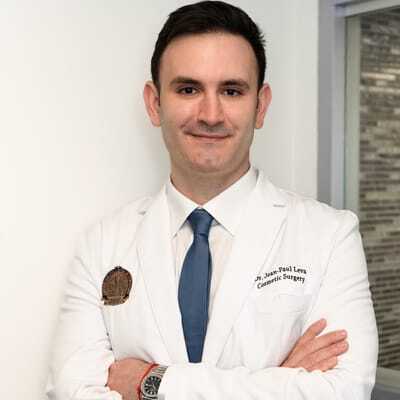
Dr. Jean-Paul Leva
Dr. Jean-Paul Leva, FACS is board certified in cosmetic and general surgery. Dr. Jean-Paul Leva, FACS obtained his Doctor of Osteopathic Medicine degree from ...