If you're a man noticing heavy upper lids, persistent under eye bags, or a tired appearance that doesn't match how you actually feel, you're not alone. This guide covers everything you need to know about blepharoplasty for men-from the anatomy-specific techniques surgeons use to preserve masculine features, to recovery timelines, risks, and what to ask at your consultation.

Why Male Patients Choose Eyelid Surgery
Men pursue male eyelid surgery for reasons that fall into three categories: cosmetic, functional, and professional.
Cosmetic motivations. Droopy eyelids can make men appear tired and less approachable-even after a full night's sleep. Excess skin on the upper lids, puffiness beneath the eyes, and dark circles create a tired or aged appearance that skincare alone can't reverse. Many male patients view cosmetic eyelid surgery as part of a modern grooming routine, similar to maintaining a sharp haircut or investing in quality skincare.
Functional reasons. Beyond appearance, excess skin on the upper eyelids can physically obstruct peripheral vision. Eyelid surgery can improve peripheral vision by removing excess skin.
Professional-image benefits. Many men report improved professional interactions after eyelid surgery. In careers where first impressions matter-sales, media, leadership roles-looking alert and energetic carries real weight. The procedure can improve professional interactions and confidence without anyone knowing you had work done.
Understanding Male Blepharoplasty and Eyelid Lift
Male blepharoplasty is a surgical procedure that reshapes the upper and lower eyelids by removing or repositioning skin, muscle, and fat. The goal is straightforward: reduce signs of aging around the eyes while maintaining a natural, masculine appearance.
This is where male blepharoplasty diverges sharply from techniques used on female counterparts. Surgical techniques in male blepharoplasty require careful planning to maintain masculine aesthetics. Here are the key anatomical differences:
Feature | Men | Women |
|---|---|---|
Eyelid crease height | 6–8 mm above lash line | 8–10 mm above lash line |
Skin thickness | Thicker | Thinner, more delicate |
Brow position | Lower, flatter, at orbital rim | Higher, more arched |
Fat preservation priority | Higher | Lower |
Brow position and shape differ significantly between men and women. A male brow sits lower and flatter, so any blepharoplasty technique that inadvertently lifts or arches the brow risks a feminized result. Male blepharoplasty preserves fuller eyelid contours and avoids the hollowed-out look that can occur with aggressive fat removal.
Male blepharoplasty addresses both upper and lower eyelid concerns. The surgery minimizes signs of aging without feminizing features-a distinction that requires a surgeon experienced in male facial anatomy.
Upper Eyelid Surgery
Upper eyelid surgery for men removes only redundant skin-the loose skin that folds over the natural crease and contributes to a heavy, droopy lid. The approach is conservative by design.
Incision placement: Hidden within the natural eyelid fold, approximately 6–8 mm above the lash line in Caucasian males. Male eyelid surgery avoids over-resecting the upper eyelid crease, keeping it lower than what's typical for women.
Skin excision: A precise elliptical excision removes excess fat and skin without thinning the lid excessively. The upper lids should retain enough tissue for natural blink function.
The goal with upper eyelid surgery is subtle correction-enough to restore an alert look without creating a surprised or over-opened expression.
Lower Blepharoplasty (Lower Eyelid Surgery)
Lower eyelid surgery targets puffiness, under eye bags, and tear trough hollows that make men look chronically exhausted.
Fat repositioning: Rather than wholesale fat removal, many surgeons now reposition herniated fat to fill the tear trough groove. This avoids the skeletal, hollowed appearance that aggressive removal can cause.
Transconjunctival vs. external approach: The transconjunctival approach places the incision inside the lower eyelid-no visible scar. It works well when only fat needs addressing. The external (transcutaneous) approach allows skin-muscle flap correction for significant skin laxity but carries higher risk of visible scarring or ectropion.
Limited skin excision: A "pinch" technique removes minimal skin horizontally, reducing wrinkles without heavy intervention.
Resurfacing combination: For fine lines and skin texture concerns, combining lower blepharoplasty with laser resurfacing can deliver comprehensive results. Timing matters-allow initial healing before adding resurfacing to protect skin vascularity.
Procedure Details for Male Eyelid Surgery
Male eyelid surgery is typically performed under local anesthesia with sedation for upper-only procedures. Combined upper and lower work may require deeper sedation or general anesthesia.
Duration estimates:
Upper blepharoplasty alone: 45–90 minutes
Combined upper + lower: 2–3 hours
Surgeons must avoid over-correcting in male blepharoplasty to prevent feminizing effects. This means keeping the crease low, preserving muscle thickness, limiting volume loss, and avoiding any manipulation that would arch or elevate the brow.
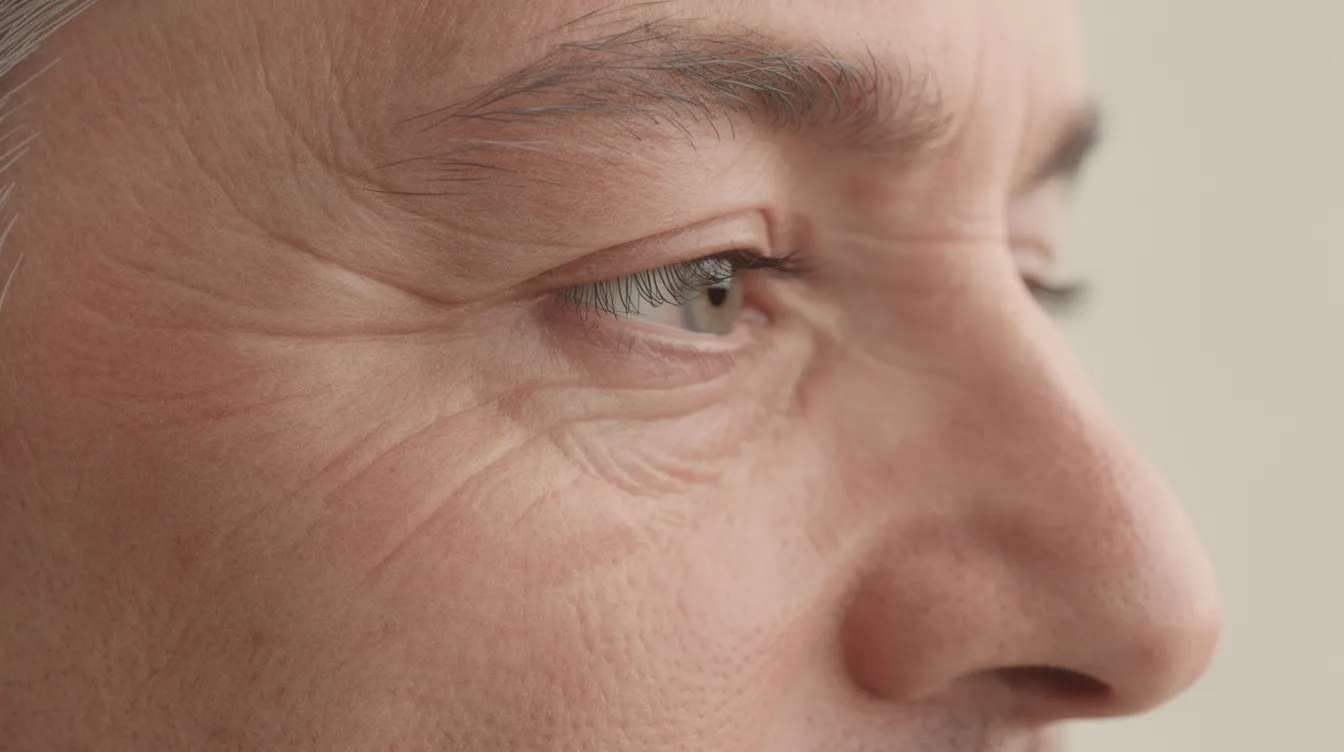
Fat Repositioning and Muscle Preservation
Fat preservation is often more important in male blepharoplasty than in female procedures. Removing too much orbital fat creates hollowing that ages the face rather than rejuvenating it.
Key intraoperative principles include:
Single-step fat repositioning: Herniated fat is transposed into the tear trough in a single movement, smoothing the lid-cheek junction.
Orbital septum preservation: The septum is opened only as needed for fat pad access, maintaining structural support.
Meticulous suturing: Fine, often buried sutures minimize scarring and promote clean healing. Muscle-sparing excision preserves orbicularis oculi function, reducing the risk of lagophthalmos and maintaining natural eyelid movement.
Complementary Procedures: Laser Resurfacing
Sometimes eyelid surgery alone does not address every concern. When skin texture needs improvement, a complementary treatment can enhance the overall outcome. Brow position also matters: when the brow itself has descended, eyelid surgery alone may not fully correct lateral hooding. Brow surgery is a separate procedure with its own risks, including visible scarring and hairline changes, and it is not covered in this guide.
Laser Resurfacing
Laser resurfacing addresses fine lines, pigmentation, and skin texture through collagen remodeling. Benefits include:
Improved skin smoothness around the lower eyelid
Reduction in wrinkles and age spots
Enhanced results when combined with lower blepharoplasty
For combined procedures, the surgical work is typically done first, initial healing is allowed, and laser treatment follows. Male skin is thicker and may require adjusted laser settings. Adequate sun protection during recovery is essential.
Candidates, Timing, and Age for Male Eyelid Surgery
Ideal candidates are men in their mid-40s or older, though men may need surgery younger due to genetic factors like hereditary fat herniation or early skin laxity. Most male patients seeking eyelid surgery are in their mid-40s or older.
Candidate criteria:
Candidates should be in good overall health with no uncontrolled conditions affecting healing
Non-smoker or willing to quit before and after the procedure
Candidates should have realistic expectations about results
Eyelid surgery is not suitable for those with certain health conditions, including uncontrolled diabetes, thyroid disease, or significant dry eye syndrome
Evaluate whether your concerns are hereditary or age-related. Family photos from your parents' or grandparents' younger years can help your surgeon understand your natural anatomy.
Recovery Timeline and Risks
Recovery from blepharoplasty includes bruising for about 7 to 10 days, with swelling settling over the following weeks. Healing timelines and techniques vary based on individual anatomy and desired outcomes, but here's a general roadmap:
Milestone | Timeline |
|---|---|
Upper eyelid bruising resolves | About 7–10 days |
Lower eyelid bruising resolves | 7–10 days |
Swelling and bruising subside | Within two weeks |
Return to work | About 1 week |
Final results visible | 2–3 months |
Common temporary side effects:
Swelling and bruising around the eyes
Dry eye sensation or irritation
Tight feeling on the eyelids
Mild pain managed with medication
Rare but serious complications:
Hematoma or infection
Ectropion (lower lid pulling away from the eye) or another change in lid position
Lagophthalmos (inability to close lids fully)
Vision changes (extremely rare)
Unfavorable scarring or asymmetry
Most men return to work after about one week. Strenuous activity should be avoided for 3–4 weeks.

Results Longevity and Scarring
Results from upper eyelid surgery can last 10-15 years. Lower eyelid structural changes-particularly fat repositioning-tend to be more enduring, though the aging process continues and skin laxity will gradually return.
Male blepharoplasty restores a youthful, alert appearance. Final results of eyelid surgery are visible in 2-3 months, once residual puffiness resolves and incision lines mature.
Scar placement strategies:
Upper lid: incision hidden in the natural crease, virtually invisible once healed
Lower lid (transconjunctival): no external scar at all
Lower lid (external): subtle incision just below the lash line, fading over months
Sun protection and consistent skincare extend the longevity of long lasting results.
Before and After: Male Eyelid Surgery Cases
At your consultation, ask to see varied male before-and-after photos that include:
Upper blepharoplasty only
Lower blepharoplasty only
Combined upper and lower procedures
Cases combined with laser resurfacing
Each case should be captioned with the specific procedures performed and show recovery at multiple stages-1 week, 1 month, and 3 months. Look for natural looking results where the eye shape remains unchanged, the brow position is preserved, and the patient simply looks rested rather than "done."
Questions to Ask at Your Consultation
A consultation is the right place to talk through your goals and how the procedure would be tailored to male anatomy. Useful questions include:
Male-specific planning: How will the crease height and brow position be kept masculine?
Technique questions: Will the orbicularis muscle be preserved, will fat be repositioned or removed, and which incision approach suits your lower lids?
Before-and-after photos: Can you see male cases similar to your age and anatomy?
Consultation quality: A thorough consultation should include photographic documentation, crease design measurements, and a discussion of brow positioning.
First Step: Consultation and Assessment
The first step toward addressing your concerns is booking a comprehensive in-office consultation. During this visit, the eyelid area is examined in detail, including skin excess, fat herniation, eyelid function, tear film health, brow symmetry, and visual field.
How to prepare:
Bring recent photos of yourself in natural lighting, with varying expressions
If possible, bring family photos showing inherited eyelid characteristics
Write down your aesthetic goals and any functional concerns like obstructed vision
You'll leave with a personalized surgical plan covering which eyelids to address, the amount of skin and fat to remove or reposition, anesthesia type, the procedure timeline, and the cost.
At Leva Medical, upper eyelid surgery starts at $5,500 and lower eyelid surgery starts at $6,500.
The exact price is set at the consultation.
Cosmetic procedures are self-pay. Payment options can be reviewed in office after the exact plan and total are known.
Eyelid surgery is a popular facial rejuvenation procedure for a reason: with careful planning, it can deliver natural, refreshed results with a manageable recovery. The right candidate and a clear plan make all the difference.
Frequently Asked Questions
Why do men choose eyelid surgery?
Men typically pursue eyelid surgery for cosmetic reasons, such as droopy or puffy eyelids that can make them look tired, functional reasons, such as excess upper eyelid skin obstructing peripheral vision, and sometimes professional reasons related to first impressions.
How does male blepharoplasty differ from the procedure performed on women?
Male blepharoplasty accounts for anatomical differences, including thicker skin, a lower eyelid crease, and a lower, flatter brow position. Surgeons aim to keep the crease lower, preserve more fat, and avoid lifting or arching the brow, which helps prevent a feminized result.
What does upper eyelid surgery involve for men?
Upper eyelid surgery typically removes only redundant skin and some fat through an incision hidden within the natural lid fold, about 6 to 8 mm above the lash line. The amount of tissue removed is kept conservative to preserve a natural, masculine look.
What are the main options for lower eyelid surgery?
Options include fat repositioning to fill the tear trough rather than removing fat entirely, and either a transconjunctival approach with an incision inside the lower lid or an external approach for significant skin laxity. Limited skin removal or combining surgery with resurfacing may also be considered, depending on the patient's anatomy and goals.
How long does male eyelid surgery take?
Upper blepharoplasty alone usually takes about 45 to 90 minutes, while combined upper and lower procedures often take 2 to 3 hours. Upper-only cases are commonly done under local anesthesia with sedation, while combined or brow-related work may require deeper sedation or general anesthesia.
About Leva Medical
Leva Medical has offices in Queens (94-06 59th Ave, Suite E9, Elmhurst, NY 11373) and in Northport, Long Island (320 Laurel Rd, Northport, NY 11768).
Call (718) 699-9737 to book a consultation with a board-certified surgeon.
Learn more: Eyelid Surgery at Leva Medical