Loose, hanging skin on the upper arms affects how clothing fits, how skin feels during daily movement, and how comfortable you are in short sleeves. If diet and exercise haven't resolved the issue, arm lift surgery may be worth evaluating. This guide covers what brachioplasty involves, who qualifies, what affects the cost, and how to prepare for a consultation.
What Is Arm Lift Surgery in Queens?
Brachioplasty is a cosmetic surgery procedure that removes excess skin and fat from the upper arms, typically from the armpit to the elbow. The surgery reshapes the arm contour when loose skin persists after weight loss, aging, or genetic changes in skin elasticity. Exercise builds muscle tone but does not reverse skin laxity once collagen and elastin have broken down.
Patients in Queens often raise three concerns during their search for arm lift information:
Scarring: where the incision sits (inner arm, posterior surface) and how visible scars will be over time
Recovery: how long they will need off work and when they can resume normal life
Cost: how pricing differs based on surgeon experience, geographic location, and whether liposuction is added
Arm lifts can improve clothing fit and reduce skin irritation caused by chafing in upper arm folds. Brachioplasty also reduces bulky arm fat when excision is combined with liposuction.
Brachioplasty is not a weight-loss procedure. It addresses excess skin and fat that remain after your body has already changed shape.
Who Is a Good Candidate for an Arm Lift?
Candidates for arm lifts must be in good health and have realistic expectations about what the procedure can and cannot deliver. Surgeons assess candidates based on the degree of upper arm skin laxity, overall health, and readiness for recovery.
The clinical profile of a good candidate includes:
Excess skin on the upper arms that does not respond to exercise or diet
A body weight that has been stable for several months before surgery (surgeons recommend maintaining a stable weight to protect results)
No uncontrolled chronic conditions such as diabetes or vascular disease
Non-smoker status, or willingness to stop before and after surgery
Nicotine restricts blood flow and impairs wound healing during recovery. Surgeons will ask you to stop all tobacco and nicotine products weeks before the procedure.
Good physical health lowers surgical risks for arm lift candidates. If you have a BMI over 30 or a history of lymphedema, axillary node removal, or radiation, your surgeon will need to evaluate whether the procedure is appropriate. Medical clearance from other doctors may be required depending on your health history.
Realistic expectations matter: scars do not go away, final results take months, and aging will continue to affect skin over time.

Arm Lift Options for Queens Patients
Not every patient needs the same arm lift. The right approach depends on how much loose skin you have, where it sits, and whether your skin still has enough elasticity to contract.
Full arm lift runs an incision from above the elbow to the armpit, removing skin along the entire inner arm. This is the standard approach for patients with extensive redundancy after major weight loss.
Mini arm lift uses a shorter incision confined near the armpit. A mini arm lift targets the upper arm area in patients with mild to moderate skin laxity. Mini arm lifts involve smaller incisions than full arm lifts, which means less visible scarring but less skin removal. Candidates often have mild to moderate skin laxity that is concentrated near the armpit rather than extending down toward the elbow.
Liposuction alone removes fat but not skin. It works when the skin is still elastic enough to contract around the reduced volume. When laxity is moderate or severe, liposuction alone will leave visible sagging.
Patients with minimal laxity may qualify for a limited-incision lift hidden inside the armpit. This option leaves the least visible scar but addresses only localized excess.
Extended brachioplasty extends the incision onto the lateral chest wall to address skin folds that reach beyond the arm itself. This correction is common in patients after massive weight loss.
Some patients combine arm lifts with breast lifts or body contouring when skin laxity is widespread. Combining procedures affects risk, recovery, and total cost; your surgeon should evaluate whether this is clinically appropriate for your body.
How Arm Lift Surgery Works
The process starts with a consultation. Your surgeon examines skin quality, thickness, fat distribution, and the amount of excess skin and fat. Measurements and photographs are taken. You discuss goals, scar placement, and trade-offs between incision length and skin removal.
Arm lift procedures typically take one to two hours, depending on complexity. Here is what happens during surgery:
Marking: The surgeon draws incision lines along the inner or posterior arm surface. For extended lifts, markings continue onto the chest wall.
Anesthesia: General anesthesia or local anesthesia may be used. Your anesthesia plan will depend on your health and the scope of the procedure.
Excision: The surgeon removes excess skin and fat through direct excision. Liposuction may be added to refine contour.
Closure: Layered suturing minimizes tension on the skin surface. Drains may be placed to prevent fluid buildup.
Your surgeon will explain the anesthesia plan, where the procedure takes place, and how to prepare during your consultation.
Arm Lift Recovery and Results
Post-Surgical Care
Surgeons typically require patients to wear compression sleeves to control swelling after surgery. A compression garment is usually worn continuously for the first one to two weeks, then for four to six weeks total to minimize swelling and support healing tissues.
Incision care instructions from your surgeon will include keeping the site clean and dry, using silicone sheets or topical scar treatments, and protecting scars from sun exposure. Scar massage may begin several weeks after the procedure.
Prescribed medications typically include antibiotics to prevent infection and pain medication that transitions from stronger prescriptions to over-the-counter options within the first week or two.
Potential complications of arm lifts include infection, seroma (fluid collection), and poor wound healing. Following your surgeon's care instructions reduces these risks.
Activity Restrictions
During the first one to two weeks, limit arm lifting and avoid strenuous upper arm activity. You will need assistance with daily tasks during this period.
Between weeks two and six, light activity gradually returns. Full lifting and heavy exercise are generally cleared around six weeks if healing is on track. Arrange transportation after surgery; you should not drive until you are off narcotic pain medication and can move your arms comfortably.

Scars and Final Results
Visible scarring is an unavoidable consequence of brachioplasty surgery. Incision scars are placed along the inner arm or posterior crease, where they are least visible when arms are at your sides. Extended lifts include scarring on the chest area.
Scars generally fade and flatten over 12 to 18 months after brachioplasty, transitioning from red or pink to a pale line. Improvements in scar appearance continue throughout this period. Results are typically visible within a few months, but full skin settling and scar maturation can take up to 12 months or longer.
Removed skin and fat do not grow back, resulting in long-lasting arm contour improvements. Future weight gain, weight loss, or aging will affect the skin over time, but the contour correction holds if your weight remains stable.
Arm Lift Cost in Queens
The cost of arm lift surgery depends on the extent of skin removal, whether liposuction is included, whether a mini, full, or extended lift is needed, the anesthesia type, and whether other procedures are combined.
At Leva Medical, arm lift surgery starts at $7,500.
The exact price is set at the consultation.
Cosmetic procedures are self-pay. Payment options can be reviewed in office after the exact plan and total are known.
We offer financing through Cherry and Alphaeon, subject to credit approval.
We also offer an in-house save-up plan with no credit check.
Ask for a clear written breakdown of what your quote includes, such as anesthesia, compression garments, medications, and follow-up visits.
Preparing for Your Arm Lift Consultation
A consultation is the place to get answers specific to your body. Before the visit, it helps to gather a few things:
Health history: a list of medications, supplements, past surgeries, and conditions such as diabetes, lymphedema, or prior lymph node removal or radiation.
Weight history: how much weight you have lost or gained and how long your weight has been stable.
Goals: what bothers you most about your upper arms, such as hanging skin, chafing, or clothing fit.
Before-and-after photographs: ask to review cases with a body type and skin laxity similar to your own, including scar appearance at different stages of healing.
Be open about smoking or nicotine use, since it affects wound healing. A clear conversation about risks, scars, and recovery helps you decide whether the procedure is right for you.
Questions to Ask About an Arm Lift
A consultation gives you the chance to discuss your goals, understand what the procedure involves, and get a personalized cost estimate. Bring these questions:
How much skin excess do I have, and which procedure type fits my body?
Where will the incision and scars be placed?
What is the total cost, and what services are included?
What is the expected recovery timeline for my work and life schedule?
What are the risks, such as infection, seroma, and poor wound healing, and how are they managed?
During this visit your skin is examined, your health history is reviewed, and the expected process is explained. If you are considering an arm lift in Queens, a consultation is the first step toward a plan that fits your body and goals.
Frequently Asked Questions
What is an arm lift (brachioplasty), and what does it remove?
Brachioplasty is a cosmetic surgery that removes excess skin and fat from the upper arms, usually from the armpit to the elbow. It is most often considered when loose skin remains after weight loss, aging, or changes in skin elasticity, and when exercise and diet have not resolved the issue.
Who is generally considered a candidate for an arm lift?
Candidates are typically in good health, have stable body weight for several months, and have upper arm skin laxity that does not respond to exercise or diet. Surgeons also assess chronic conditions, smoking status, and whether expectations are realistic before recommending the procedure.
Where are arm lift scars located, and do they go away?
Incisions are usually placed along the inner or posterior arm, and a mini lift keeps the incision near the armpit. Scars do not go away, although they typically fade over time, and their final appearance depends on the incision type and individual healing.
How should patients prepare for and choose a surgeon for an arm lift?
Patients should book a consultation to review their health history, goals, scar placement, and recovery plan. Smokers are asked to stop nicotine weeks before surgery, and medical clearance may be required depending on health history.
About Leva Medical
Leva Medical has offices in Queens (94-06 59th Ave, Suite E9, Elmhurst, NY 11373) and in Northport, Long Island (320 Laurel Rd, Northport, NY 11768).
Call (718) 699-9737 to book a consultation with a board-certified surgeon.
Learn more: Arm Lift at Leva Medical
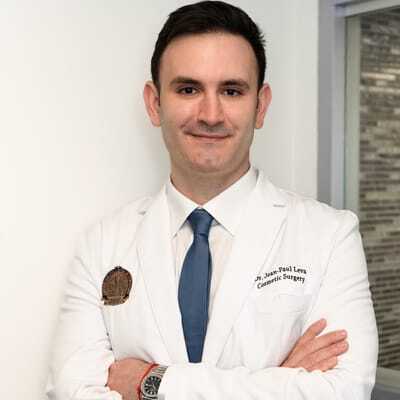
Dr. Jean-Paul Leva
Dr. Jean-Paul Leva, FACS is board certified in cosmetic and general surgery. Dr. Jean-Paul Leva, FACS obtained his Doctor of Osteopathic Medicine degree from ...