Hair loss and thinning are common problems for many men and women. As the quest for effective treatments continues, Platelet-rich Plasma (PRP) and Platelet-rich Fibrin (PRF) have emerged as options worth considering. Both are autologous treatments, meaning they utilize a patient's own blood to stimulate hair growth. However, they are not the same. This article delves into the differences between PRP and PRF and their efficacy in treating hair loss.
What is Platelet-rich Plasma (PRP)?
PRP therapy involves drawing a small amount of a patient's blood, processing it to concentrate the platelets, and then injecting it into the scalp. Platelets are a type of blood cell that are rich in growth factors. These growth factors, when injected into areas of thinning hair, can stimulate the hair follicles, promoting hair growth and thickness.
Procedure

- Blood is drawn from the patient.
- It is then placed in a centrifuge, which spins at high speeds to separate the components of the blood.
- The PRP is extracted and injected into the scalp where hair loss has occurred.
What is Platelet-rich Fibrin (PRF)?
PRF is considered to be the second generation of PRP. Like PRP, PRF also uses the patient's blood, but the processing is slightly different.
Procedure
- Blood is drawn from the patient.
- It is then placed in a centrifuge at a lower speed and for less time compared to PRP.
- The PRF, which is a more solid form than PRP, is extracted and then injected into the scalp.
Key Differences
1. Composition
- PRP contains a higher concentration of platelets and plasma but has a low concentration of white blood cells and no fibrin network.
- PRF contains not only a high concentration of platelets but also a rich fibrin matrix, and a small number of white blood cells, which are crucial for the healing process.
2. Processing
- PRP requires anticoagulants to prevent the blood from clotting during processing.
- PRF doesn't require anticoagulants. It forms a fibrin matrix which makes it more gel-like compared to PRP.
3. Release of Growth Factors
- In PRP, growth factors are immediately released upon injection.
- In PRF, the fibrin matrix allows for a slow release of growth factors over time.
4. Application Form
- PRP is liquid and therefore disperses quickly throughout the tissue.
- PRF is more of a gel and stays localized at the injection site for a longer time.

Which One is Better for Hair?
Both PRP and PRF therapies are used to address hair loss. PRP has been around for a longer time and has a larger body of research behind it. However, the slow release of growth factors in PRF is thought by some clinicians to offer more sustained benefits.
It's important to note that individual responses can vary, and what might work for one person might not work for another. The cause of hair thinning, how long it has been going on, overall health and the number of sessions all play a role in how the scalp responds. A consultation with a doctor who is experienced in both procedures is the right place to review your scalp, your goals and which option fits you.
Results from either treatment build gradually and are not instant. Many people need a series of sessions followed by maintenance treatments to keep the improvement going, and some mild redness, tenderness or swelling at the injection sites is common for a short time afterward.
In conclusion, PRP and PRF are innovative treatments that utilize the body's own healing properties to combat hair loss. While they are similar, the subtle differences in composition and processing can make them more suitable for different individuals and conditions.
Frequently Asked Questions
What are Platelet Rich Plasma (PRP) and Platelet Rich Fibrin (PRF)?
PRP and PRF are autologous platelet concentrates derived from a patient's own blood. PRP is a plasma fraction rich in platelets, while PRF is a second-generation platelet concentrate that also includes a spongy fibrin matrix. Both are used in regenerative medicine for tissue repair and healing.
How are PRP and PRF products prepared?
To prepare PRP and PRF, blood is drawn from the patient and processed. For PRP, the blood sample is typically spun at a higher speed, and acid citrate is added to prevent clotting. PRF involves a lower spin speed, which creates distinct layers including a platelet layer, and does not use anticoagulants.
How do PRP and PRF contribute to healing and tissue regeneration?
PRP and PRF release growth factors and other proteins that promote cell growth, collagen production, and tissue regeneration. PRF's spongy fibrin matrix also provides a scaffold for new cell growth, which may support healing further.
Are PRP and PRF injections painful?
PRP and PRF injections can cause mild discomfort. Doctors typically use a topical anesthetic to ease the discomfort during the procedure.
How long does it take to see improvement after PRP or PRF treatment?
Patients usually start to see improvement within a few weeks after treatment. The healing and regeneration process continues to progress, and optimal results are typically achieved a few months after the treatment.
What is the final product in PRP and PRF?
The final product in PRP is a liquid that contains a high concentration of platelets in plasma. In contrast, the final PRF product is a gel-like substance containing platelets, white blood cells, and a fibrin matrix.
About Leva Medical
Leva Medical has offices in Queens (94-06 59th Ave, Suite E9, Elmhurst, NY 11373) and in Northport, Long Island (320 Laurel Rd, Northport, NY 11768).
Call (718) 699-9737 to book a consultation with our board-certified doctors.
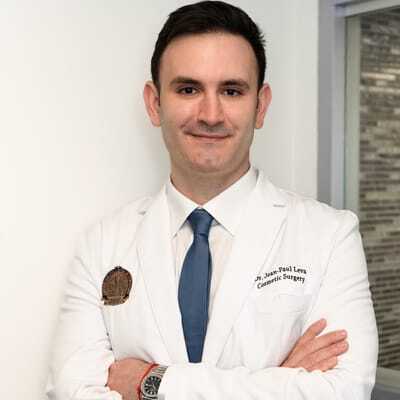
Dr. Jean-Paul Leva
Dr. Jean-Paul Leva, FACS is board certified in cosmetic and general surgery. Dr. Jean-Paul Leva, FACS obtained his Doctor of Osteopathic Medicine degree from ...